The Witch’s Tree at a ditch near you
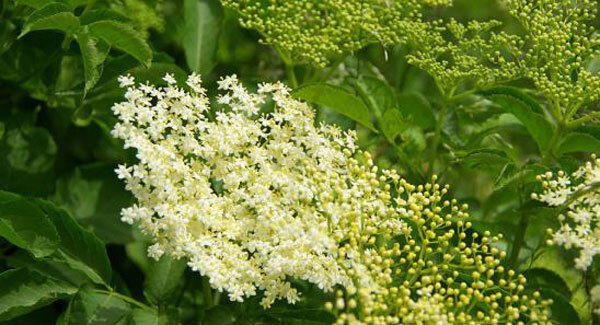
No other flower heralds summer quite like the elderflower bringing promise of cordials and hazy summer days.
Its heady, sweet scent permeates country lanes, roadsides, graveyards, parks and gardens and its sprays (umbels), containing hundreds of tiny five-petalled flowers, have more uses than any other single species of blossom.
Elder (Sambucus nigra) will make itself at home in the most neglected of areas and its untidy form comes into its own at this time of year. These deciduous straggly shrubs flower profusely each year and seldom grow more than 10m tall.
These factors, combined with their weed-like nature, makes them one of the most accessible foraged foods around.
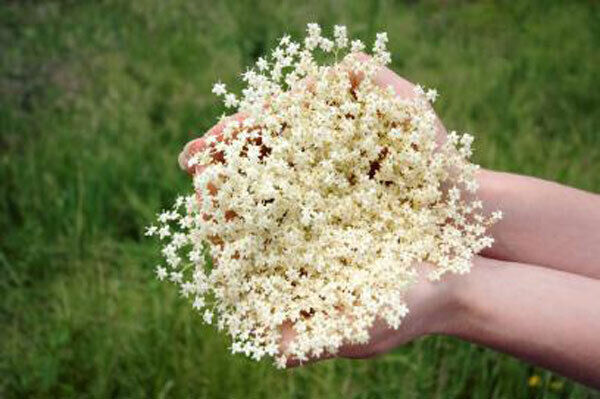
Despite the fact that the smell of elderflowers is sometimes compared to that of cat’s urine, when infused they actually have a unique delicate flavour not unlike the aroma of Muscat grapes.
Hence they are commonly used to make wine, cordial, sorbet, jam, deserts and sauces.
Elderflowers bloom for about three weeks and are not only valued for their culinary use, but also prized for their medicinal qualities.
Elderflower extracts are used in a wide variety of vitamins and tonics, in skin ointments and eye lotions. Elderflowers are rich in Vitamin A, B and used for the treatment of colds, flus and hay fever.
They help correct kidney functions and also aid to clear catarrh, enhance immunity and cleanse the system. Elderflower has anti-inflammatory properties and is therefore a natural remedy for ulcers, burns, cuts and other wounds.
Elderflowers make a great decorative and nutritional addition to salads and can be used to flavour sauces, vinegars, pickles and preserves (they’re especially good with gooseberries).
They can be dipped in batter and deep fried to make fritters and can be used fresh or dried for herbal teas.
However, in my opinion the best use for elderflowers is by infusing them with fresh lemon juice and water to make a highly concentrated deeply refreshing and uplifting summer drink — elderflower cordial.
This is unlike other traditional recipes that involve complicated processes and lengthy periods of maturing.
With a small amount of effort, these flowers can be transformed into an exquisite floral flavoured drink overnight, with mass appeal to children and adults alike.
Always avoid collecting flowers on busy roadsides or from fields sprayed with chemicals.
Harvest flowers on a warm sunny day when the fragrance and nectar are at their best. Bring a garden hoe to help reach the high branches where the umbels are often the most desirable.
Choose creamy-coloured blossoms rather than white and avoid washing the flowers as this will spoil the fragrance.
It is advisable to let the flowers sit for about an hour to let all the little insects crawl out. Treat your flowers gently so as not to lose the valuable pollen.
900g (2lb) organic sugar
30g (11/4oz) citric acid (available to buy in chemist stores)
600ml (1 pint) boiling water
1 lemon preferably organic and unwaxed
10 elderflower heads (using a scissors, remove as many as the green stalks as possible.)
Place sugar in a large heatproof, acid-resistant bowl eg. stainless steel or glass. Add the boiling water and stir until all the sugar has dissolved. Stir in the citric acid.
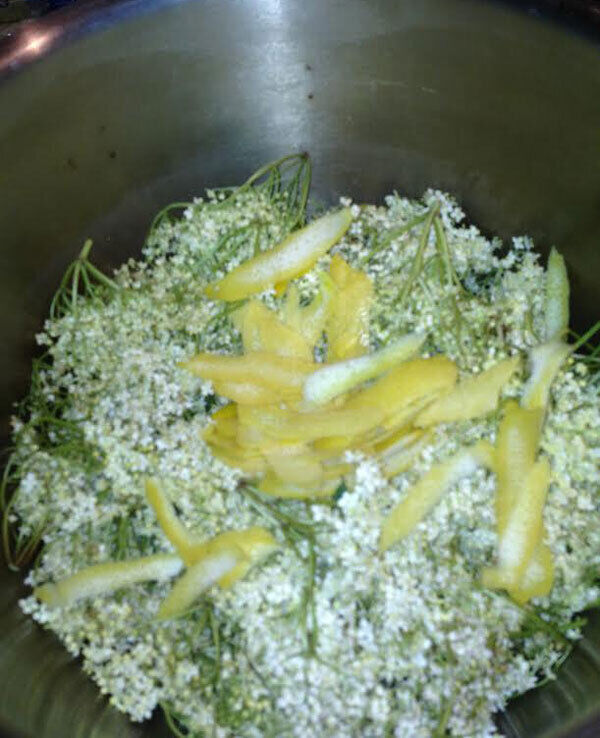
Grate the lemon and add the rind to the bowl. Slice the lemon and add the slices to the bowl with the elderflower blossom, cover and allow to stand for 12 hours.
Exchange the lemon for grapefruit or orange if you fancy a different flavour. Strain through muslin and bottle. Best stored in a cool dark place.
This cordial is highly concentrated and needs to be diluted with water to taste. It is especially good with sparkling water, a slice of lime and a sprig of mint and makes a wonderful alternative to soft drinks.
A few drops also enliven a gin or vodka and tonic and make sensational sprinters with white wine and champagne. It is very versatile adding a wonderfully unique flavour to sorbets and a variety of deserts, or over pancakes or ice-cream.
During the winter months it can be diluted with hot water to make a soothing drink that helps cure sore throats and ward off winter flu’s.
Sambucus nigra ‘Black Lace’ with its dark finely cut foliage and pink flowers is a good choice for the garden.
It is much more decorative than its indigenous relative with the added bonus that its pink umbels make a fabulous pink cordial.
CONNECT WITH US TODAY



Be the first to know the latest news and updates