Nature Table: Sitka Spruce (Picea sitchensis)
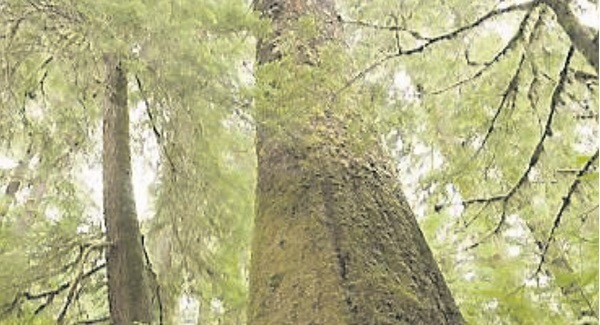
This is because it’s the main component of Coillte plantations, particularly more recent ones, and is also commonly used in private forestry plantations.
Younger trees (and specimens in commercial plantations seldom grow old) have a distinctly blue-grey appearance.
Another way to distinguish them from similar species, such as Norway spruce, is that their needles feel sharp and prickly if you run your hand over them.
If the tree has cones the Sitka’s short, wrinkled ones are quite different to the long, smooth, cigar-shaped cones of Norway spruce.
Sitka spruce is a native of the Pacific coast of North America from northern California up to southern Alaska.
It likes cool, humid conditions but can be damaged by severe and prolonged frost.
The timber that is produced here is mostly pulped because our fast growth rates result in a loss of structural strength.
The tallest one in Ireland seems to be at Caledon Castle in Co Tyrone but it has died back from 54 metres to around 50.