Colourfence no barrier to beauty
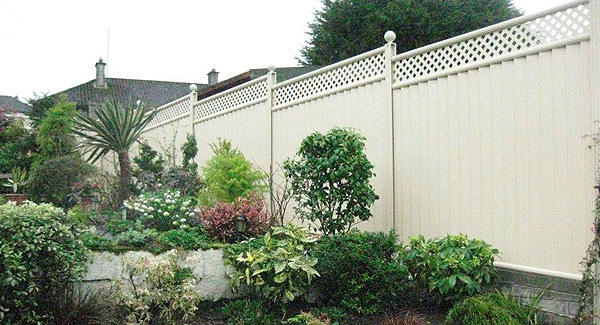
Minimalism is the new buzz word in gardening. The power of simplicity is the excitement of a single big plant, or a sculptural form beautifully executed, and, best, an aesthetically stunning boundary fence.
I have been looking at Colourfence since that frightfully cold winter two years ago. Then, thousands of hedges died in the arctic conditions, yet many remain, gaunt and naked, their owners hoping life will return to the barren twigs. It won’t. Some gardeners have replanted with hardier stock; others have erected larch lap timber fencing. The problem with these is maintenance and rising costs. Colourfence, the no-maintenance alternative to timber and hedges, is the most cost-effective fencing. It won’t rot, warp or peel, and has no maintenance costs. It has strength, security and durable good looks.
Use as a boundary (in place of hedges or timber fencing) or to shield bins, oil tanks, and equipment. Colourfence is made from Colorbond, one of the most advanced steel products. It can be installed with or without decorative trellis. It is component-based, so you can mix post, rail and infill colours. The Munster contact is Ger Baker at ger.baker@colourfence.eu.
¦ When hedge-making, do not dig out small planting holes along the row, instead of a trench. Individual holes will act like sumps, filling up with water in wet weather and killing the roots.
¦ Small planting holes also makes it difficult for new roots to penetrate into new ground, unless the soil around them has been broken up. This ground preparation will be advantageous when hedge-making on heavy, poor-draining, clay soils.
¦ The correct approach is to dig a trench a little less than one metre wide down the length of the row.
¦ As you dig, sprinkle a few ounces of fertiliser, such as fish, blood and bone (stable manure or pelleted chicken guana), on the dug area.
¦ Remove all weeds, especially perennials such as dandelion, thistle and dock.
¦ When the length has been dug and fertilises, walk back over the area to settle and firm it. Individual holes can now be taken out for each plant.
¦ These will come to you either as pot-grown specimens or bare root.
¦ These latter plants are available from now until the end of March. They come with no root covering, so drying out must be avoided. Whichever is the case, always ensure that the roots are watered thoroughly before planting.
¦ If the compost appears dry (on potted stock), dunk the pot in a bucket of water until all air bubbles have finished coming to the surface.
An established tree peony growing near to where I write now looks utterly dismal! Denuded of leaves, and dead looking to its core, it stands gaunt and black in the gathering winter gloom. Talk about November misery! Not a sign of life remains, no swelling spring buds, no greenery, nothing. Its naked skeleton is ugly and gangling. Is this the same plant that in May last carried over two dozen enormous flowers detectable by their scent 20 yards away? Were they really as large as soup plates and was the handsome palmate foliage as deeply cut and divided as I remember?
Have you ever wondered why the planting of tulips is not recommended before mid-November? Most spring bulbs are put in during September and October, but the tulip is last to be settled before winter. It has to do with a debilitating virus known as ‘tulip fire’. This causes tulips to show above ground in spring with twisted and distorted foliage and flower buds which seldom open to their full potential. Infected tulips should be dug up and burned. The virus thrives in sun-warmed soil, so waiting until the first frosts have cooled it down is highly recommended. Tulips varieties may be early, mid or late flowering, so in order to prolong your display choose similar colours from at least two flowering times. Do not mix too many shaped forms (or colours) as that will dilute the impact. Plant tulips as deep as you can and if your soil is heavy or of clay, sprinkle horticultural grit in the bottom of each hole to prevent the bulbs from rotting in excess wet.
Bedding wallflowers on sale at some outlets since late September would hardly win prizes for elegance for many are small, spindly and totally starved looking! Lismore, Co Waterford, must surely be the best place to source these. These will waft a sherbet-sweet fragrance through the tulip bed come the spring apart altogether from providing brilliant colours. There is still time, just about, to source and plant wallflowers should you be lucky enough to find good quality plants. Firm well once set in place. The traditional method is to plant them with tulips in bold blocks, but if you don’t like the ‘parks department’ look, remember that they also make good gap-fillers among perennials.
Generally the month seldom fails to provide at least some fine settled spells which bring us a unique kind of light, one which is soft and penetrating creating in the process a countryside that virtually glows. I hope as many readers as possible were able to get outside during the past few weeks.
CONNECT WITH US TODAY



Be the first to know the latest news and updates