A hidden gem tucked away near Kinsale
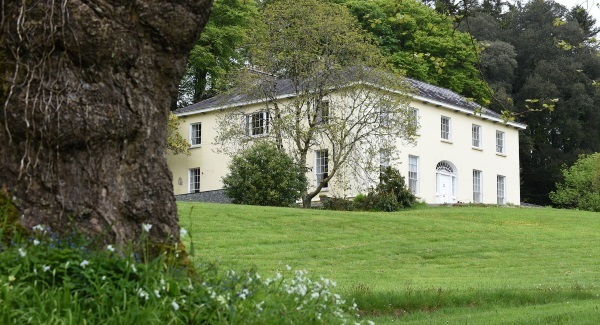
discovers a large refurbished Victorian home nestling in woods outside Riverstick in Co Cork.
It's not just cushioned from the world outside, it’s cocooned.
That’s the verdict on Glendooneen House, a Georgian style/Victorian era home within the broad Kinsale catchment area, delivered by Michael O’Donovan of Savills, as he’s about to ‘blow its cover’ on the property market, for the first time in over 40 years.
Set on the most-private 40 acres, and most of it is woodland, it’s unseen from just about everywhere (except on Google Earth), though passers-by on the back roads west from Cork city, towards Kinsale, might be intrigued by fleeting glimpses of its pillared and cast iron railed entrance, with original 1830s gate lodge, with its postcard pretty lattice windows.
‘Hmm, something nice up there?’ you might think, as its long approach avenue winds out of sight, into the shelter belt of ancient trees, and then it’s back to concentrating on the bad bends on this woodland stretch, and on what awaits in coastal hot-spot Kinsale, ten minutes down the way.
Actually, it turns out, Google Earth isn’t the only place to whet an appetite about Glendooneen House: over the past few years, it’s been advertised online as five-star, self-catering accommodation, highly rated, and at c €3,200 per week for its main living spaces, and four first-floor en-suite bedrooms.
The rock-solid, five-bay period home is Georgian in demeanour, but Victorian in age, and built over a lower ground level that’s effectively self-contained, with two en- suite bedrooms and living quarters plus wine cellar, all dry as a bone and bright within to boot.

Glendooneen was built day one by a Rev John Stoyte, just after the famine, in the black spell of 1846 to ’48, and it is understood its gate lodge predated it, possibly going back to 1830, and it was followed by the Durah school house, in the 1860s, at a time when Glendooneen itself stood on at least 250 acres.
Now, it still has considerable acreage, about 40 acres, which do indeed give it a cocoon, and even weather and wind protection, and for next owners, looking perhaps for the ultimate in security and manageable private demesne, it could be a fine fit, indeed.
Add in to the balance of the equation the proximity to Kinsale, the very robust and thorough overhaul it got back in 2010 to set it up for receiving PGs’, paying guests, the 20-minute commute back to Cork city and international airport, the wonders of the woods and abundant fuel therein for its many fine open marble fireplaces, its long block of stone-built, slate-roofed old stables and coach-house building, modern steel farm building, restored gate lodge, a derelict farm worker’s cottage (and, thus an additional planning/build prospect) and there surely is a whole lot here to play for.

Plus, there’s one other thing, a field of five or six acres that is simply outstanding in its beauty, right now, full of long, verdant grasses and wild flowers, and completely ringed by deciduous trees, many 100 if not 200 years old, including some evergreen oaks.
The current owner, now downsizing, had considered building an eco house in this sublime field setting and a pre-planning meeting in the field indeed did get a positive response, once what was to be built was contemporary, and not aping what’s over the treeline, true to its age and period.
Savills’ Michael O’Donovan guides the solid 6,300 sq ft home at €2m, noting there’s considerable value in the house’s own quality and condition, in the acreage, as well as in the gate lodge and ruined cottage and possible other site potential, but accepts it’s most likely that whoever buys will buy for private use primarily, valuing the lot as an entire.

The fine home passed through Stoyte family hands up until 1926, having survived some tumultuous years of arson afflicting other big houses, and after the death of a Capt William Stoyte’s widow Mary, it sold to a Commander Cecil Chearnley of Ballyfeard House.
In 1962, it was purchased by a German man, Herr Heinz Obenhaus for his wife Ernestine, while he himself lived elsewhere shortly after acquiring it. Ernestine brought a bit of 1960s style to it, with unexpected decor choices, and some unusual furniture commissions.
The black and white polished concrete/terrazzo floor in the hall, is likely to have been one of her alterations, as was possibly the decision to replace the main sash window’s lower sections multi-panes with large, single panes at ground level.
From outside, the nine-pane-over-one gives the disconcerting effect of suggesting the lower sections are missing, while from within, it give a more unobstructed/less ‘framed’ view of the views out. Where the glazing bars were cut out all those decades ago can still be discerned, should Glendooneen’s next owners decide to restore the original authenticity and detailing.

The winsome 1930s gate lodge, minded by electric gates, and with a second set of gates between it and the main residence, was done up in the late 1990s by the couple who bought Glendooneen in 1975, having moved there from Currabinny in Cork harbour, and it’s now owned and being sold by the next family generation, who invested very significantly in its renovation in 2010.
The work included installing an RSJ under the ground floor, making all bedrooms en-suite without overly imposing on their proportions, and it has been replumbed, with new boilers and a bank of garden-sited solar panels for hot water, re-wired, new floors have been laid on the lower ground floor as well as installing effective damp proofing, and there are two saunas, on the top and lower ground floors.

Best rooms are to the front, left and right of the hall, which has a grace-note of a wonderful rear staircase with large and elegant arched windows half way up the wide stairwell, and another, less ornate, window on the equally wide stairs to the lower ground level.
These reception rooms — sitting room and dining room, with a long table to accommodate 14 diners, have tall ceilings, original fireplaces and simple coved plasterwork ceilings — unusually they are minus any centre roses.
Also at this level is a full commercial/catering kitchen and breakfast room, guest WC, and family living room/study, with French doors to a west-facing terrace, overlooking a lower garden which may have once accommodated a tennis court, or a croquet lawn, and could do once again, with a bit of effort with a garden roller.
For working the land, and machinery, there’s a modern steel-framed machinery shed that’s 40ft x 40ft, with roller shutter door, and the old lofted coach-house/stable block also has considerable capacity and includes four stables and tack/feed rooms, some of them currently chock-a-block with chopped timber, handy, as most if not all of Glendoonagh’s many fireplaces are operating for full country-living effect.
As a prospect now for new owners, it appears that all the heavy lifting has been done in the main residence — much of it the out of sight, but critically important sort of stuff like heating and plumbing — so buying now allows the new buyer the chance to do the pretty stuff.

That might include landscaping in the house’s immediate vicinity, to add colour and interest, or perhaps reinstating the original sash window pane configuration in the main reception rooms while a private-use buyer is likely to want to take out the commercial kitchen and to replace it there, or elsewhere, with something more domestic: options of where else to site it include in the the family room to the back/side with terrace access, or down in the basement/lower ground.
Further down the line, and enticing for those with discretionary extra funds, there’s the prospect of restoring the existing disused garden cottage, or of building something special in the adjacent, but wholly removed, five-acre very special field.
Glendooneen is a home to consider buying for now, and for family generations to come.VERDICT: Attractive in its own right, and factor in the allure of being in an outer Kinsale address, and it becomes something even more desirable for local, national and international buyers.