Letters to the Editor: DNA profiling of dogs should be mandatory
This is an opportunity to protect livestock, consumers, and children from dog bite injuries
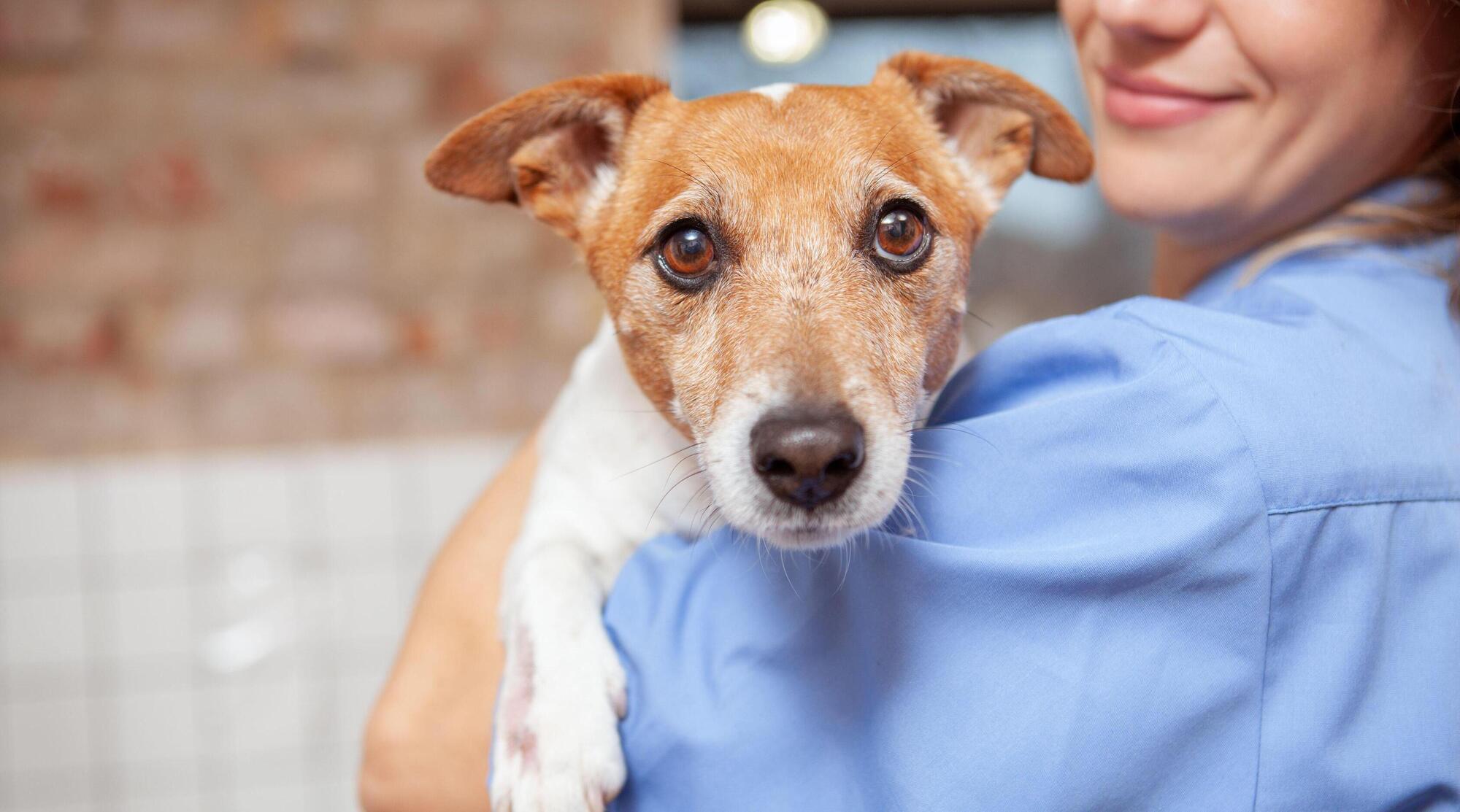
'A compulsory national dog DNA database would help identify dogs responsible and hold their owners accountable.' File picture

'A compulsory national dog DNA database would help identify dogs responsible and hold their owners accountable.' File picture

Irish sheep farmers know the distress and financial losses caused by dog attacks on livestock. A compulsory national dog DNA database would help identify dogs responsible and hold their owners accountable. But its benefits would extend far beyond protecting sheep. The current pre-legislative process for the Dog Breeding Establishments (Amendment) Bill 2026 provides a timely opportunity to demand this change.

While farming organisations and several independent politicians have repeatedly called for a compulsory national dog DNA database, the present debate on the dog breeding industry is too good an opportunity for sheep farmers, pet lovers, and consumers to pass up.

Without a DNA database, the approximately 45,000 people who adopt, purchase, or otherwise acquire a dog each year have no reliable way of knowing their new family member’s genetic coefficient of inbreeding. This is a material fact affecting inherited disease risks and animal welfare. There is no reason to justify consumers being denied access to this information before purchase or adoption.

Over the past decade, Ireland’s commercial puppy-farming industry has reportedly produced around 100,000 puppies annually. Concerns about inbreeding and the effectiveness of oversight make independent, verifiable genetic information — coupled to microchip registration — increasingly important.

Mandatory DNA profiling, linked to microchip identification and appropriate genetic testing, could help trace livestock attacks, expose irresponsible breeding practices, improve animal welfare, and give responsible breeders a means of demonstrating their standards. It could also give buyers greater confidence in the dogs they acquire. This measure alone would significantly reduce local authority inspection time and costs.

Sheep farmers have a direct interest in this reform. They should urge their representative organisations and public representatives to seek mandatory DNA certification for every dog in Ireland while the 2026 bill is under consideration.

This is an opportunity to protect livestock, consumers, and children from dog bite injuries.

Ciaran Walsh, Newbridge, Co Kildare

Planning for accessibility

Your report, ‘Pressure mounts for safety fix at busy junction in Clonakilty’ raises a frustrating question: Why are we addressing foreseeable safety problems after housing development has already increased pressure on our roads?

The report describes substantial housing growth around the Miles and Lady’s Cross junction, while pedestrian infrastructure has failed to keep pace. Disabled people have warned of risks to pedestrians for years.

When new homes are planned, we already know residents will need safe routes to schools, shops and services. Accessible footpaths and safe crossings should be planned and delivered alongside those homes. They should not depend on residents having to campaign for improvements afterwards.

As an ambulatory wheelchair user, I know how inaccessible streets can
restrict independence. Being able to leave your home and move safely through your community is a basic need. I welcome councillors seeking urgent action and the council’s commitment to examine smaller safety improvements. However, with initial recommendations from Clonakilty’s local transport plan not expected until the first quarter of 2027, residents need clarity on what can be done immediately and when a permanent solution will follow.

Cork County Council, Transport Infrastructure Ireland, and developers must co-ordinate their responsibilities early enough to prevent these gaps arising.

We urgently need more homes, and those homes need safe, accessible connections to the communities around them. Planning must account for children, disabled people, older residents, and everyone travelling on foot, as well as motorists. This situation illustrates why local government needs to be proactive and not continue with reactive policies. Foreseeable problems should be addressed before residents are left navigating them every day.

Evie Nevin, West Cork

Community radio

Is there any point in putting taxpayers’ money into community radio when many of the stations are barely on the air with very poor signal strength?

It is claimed by Craol, the community radio forum in Ireland, that a whopping 40% of Irish adults listen to community radio. While I have my doubts, this does help the case for public funding. Community broadcasters get hundreds of thousands of allocated money on various schemes, but for all this what is the audience or impact of community radio or TV?

As far as community TV is concerned has anybody seen any of that? According to Oireachtas sources: over €935,000 was awarded to community broadcasters in 2025 and the sum of €10m in Budget 2025.

Many community radio stations, broadly defined, fade to nothing with presenters lasting only months. Equipment can be poorly maintained or not working. The management, loosely defined, can be there half the time or not at all and unclear chains of command.

In her book, Community radio in Ireland, the foremost expert in community radio in this country, Rosemary Day, was deeply critical of management and employment practices in some of these community radio stations, citing multiple failings. She cites “cliques and in groups” at these stations having little time for new blood and those “who have been there for too long”. Yet, significant amounts of taxpayers’ money have been flowing into community broadcasting which is now being pumped up to the millions.

It has long been argued that community media has been a talent feeder for commercial broadcasters. It serves hardly any other purpose than that and paid jobs for permanent staff which could be running a station on automation much of the time.

Maurice Fitzgerald, Shanbally, Co Cork

No wonder strikes occurred

As a former public servant who didn’t get the chance to picket for better pay and conditions, I totally support those public servants who have been picketing.

They are the people who ensure that the public services are maintained.

The cost of going to work, renting accommodation, paying mortgages, and paying for sundries like food, fuel, and electricity, as the gap between wages and inflation has reached 5%, has brought us to this pivotal moment.

Messrs Chambers and Harris did nothing to alleviate that burden for ordinary workers, they added to it. They retained the USC which was only supposed to be a temporary measure.

The reality is cost pressures have added to workers’ woes.

Electricity and gas prices will add €300 to household bills, while those commuting to work in their cars will see the cost of diesel or petrol adding an extra €450 for every 1,000 litres used.

Then there is the issue of home heating oil, where prices have gone up in the past number of months, thanks to Trump’s Iran war, which will see, on average, another €300 added to the cost of 500 litres or €1,000 more for using 1,500 litres during the winter months.

Then there is grocery inflation, where an average family will dole out an extra €250 by 2027 just to keep fed. This on top of €300 extra for health insurance, along with ECB interest hikes for those on tracker mortgages, makes any tax cuts meaningless, Workers on industrial wages will be no better off while those on social welfare payments will be €520 better off.

This is what the Government won’t admit to. Ordinary workers who want to contribute to the state services are being treated worse than those who contribute little or nothing.

And they wonder why public servants are striking?

Christy Galligan, Letterkenny, Co. Donegal

A song for Garvaghy Road

Back in 1986 the British band The Housemartins had a number one hit with the song Caravan of Love. This song contains important lyrics like “every woman every man join the caravan of love. Stand up! Stand up!”

These words, I feel, express well the essence of what every religion should rightly stand for. But the Orange Order in Portadown should surely reflect on these lyrics everytime their members plan to march full circle on the Garvaghy Road.

All the residents too who are presently living on the Garvaghy Road should along with the Orange Order also seek to reflect deeply on these important lyrics too. That’s if they all really do consider themselves to be in anyway truly religious?

Sean O’Brien, Kilrush, Co Clare

Tiger was not to blame

People want a tiger put down in Yorkshire because someone jumped into its pen. That is ridiculous.

The tiger is only in Yorkshire because we put it there. Tigers do not live in Britain. Someone decided a Yorkshire zoo or wildlife park needed one, so they imported it, built a pen, and charged people to look at it. Then a person climbed or jumped the barrier on purpose and got too close. Now the argument is that the tiger has to die for doing what a tiger does when a human suddenly appears in its space.


That makes no sense. The animal did not choose to be in a concrete enclosure in the middle of Yorkshire. It did not invite anyone in. We created the whole setup — the captivity, the barriers, the viewing area — and then someone ignored the only rule that keeps people safe. Killing the tiger does not fix any of that. It just means the animal pays for human decisions it had nothing to do with.

Yorkshire is not tiger country. Keeping one there already requires constant human management. When the arrangement goes wrong because a person enters the pen, the answer should be better fences, clearer warnings, or a serious look at whether we should be keeping large exotic predators in enclosures at all. Instead, the loudest response is to demand the tiger’s death as if that restores some kind of order.

It does not. It just lets everyone pretend the real problem was the animal rather than the series of choices that put a tiger in a pen and then let someone jump into it. That is not a serious way to deal with risk. It is people refusing to own their own folly and looking for something else to blame.

N Strudwick, Inistioge, Kilkenny

More in this section

Revoiced

Newsletter

Had a busy week? Sign up for some of the best reads from the week gone by. Selected just for you.

Cookie Policy Privacy Policy Brand Safety FAQ Help Contact Us Terms and Conditions

© Examiner Echo Group Limited