Letters to the Editor: Mental health needs of older people requires a far better response
'Ireland needs more staff, but it must also recognise and effectively deploy the skilled workforce already available'
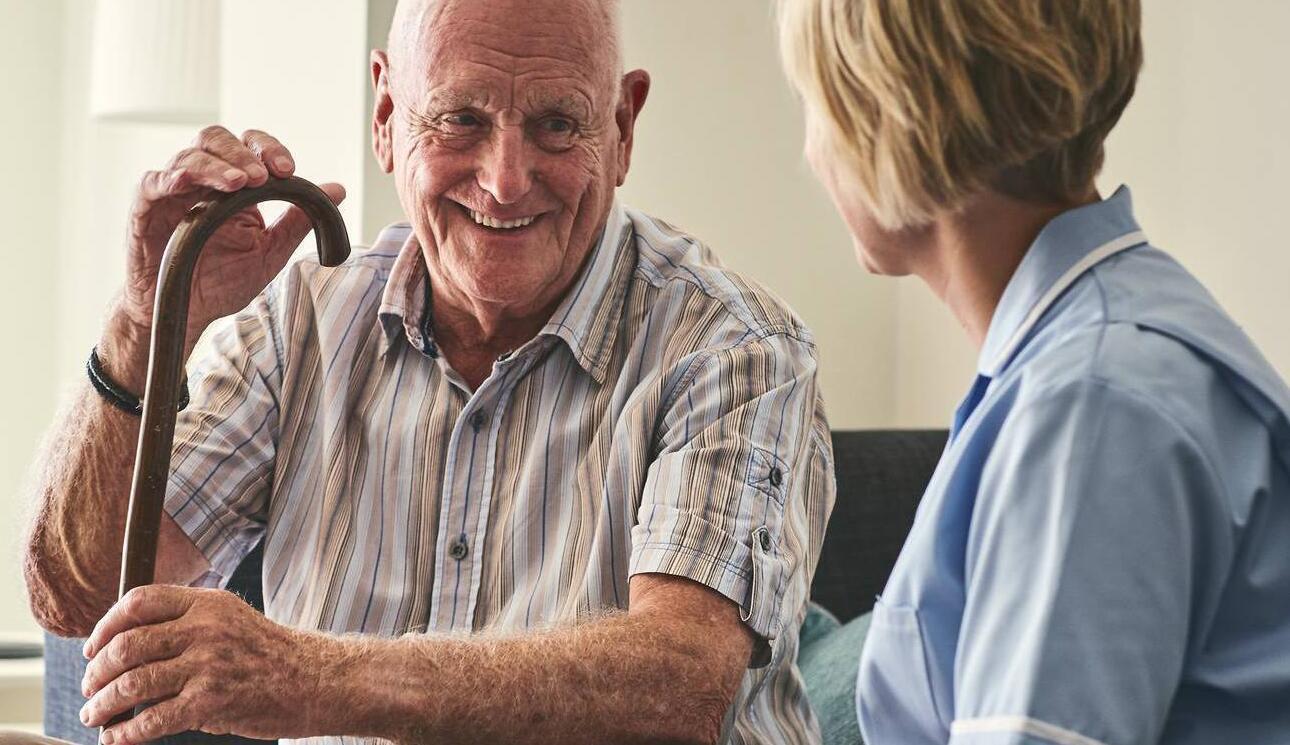
Older people’s mental health is a complex and distinctive field. Picture: iStock

Older people’s mental health is a complex and distinctive field. Picture: iStock

The staffing figures reported for specialist mental health services for older people are deeply concerning — Teams looking after mental health of older people ‘staffed at only a fraction of the required level’ (Irish Examiner, August 14).

A workforce with only 35% of the required psychologists and 44% of occupational therapists cannot provide the comprehensive, multidisciplinary care envisaged in the HSE’s 2019 Model of Care.


This, however, is not simply a numbers problem. 

Older people’s mental health is a complex and distinctive field. Teams must respond to depression, anxiety, psychosis, and enduring mental illness alongside dementia, cognitive change, physical illness, bereavement, isolation, and loss of independence. Assessment and treatment therefore require specialist knowledge, advanced clinical judgement and the ability to distinguish between overlapping psychological, cognitive, social, and medical presentations.

Increasing undergraduate places may strengthen the future workforce, but recruiting more graduates will not, by itself, close the present skills gap. Newly qualified practitioners require structured specialist development, protected supervision, and experience within properly constituted multidisciplinary teams. They cannot immediately substitute for experienced clinicians.

Ireland also has an existing workforce of trained cognitive behavioural therapy practitioners accredited through IABCP/BABCP, many who are also trained mental health nurses, social workers, and occupational therapists. Their training, supervised clinical practice, and independently assessed competence could make an important contribution to treating depression, anxiety, and other psychological difficulties inclusive of cognitive and physical problems among older people. This workforce should be recognised and incorporated appropriately within multidisciplinary service planning.

Likewise, “alternative access routes” must not mean shortened education, reduced clinical supervision, or less rigorous competence assessment. Expanding entry can be positive, but every route must lead to the same transparent standards. Workforce urgency must not create a two-tier system, especially when caring for people with complex needs and heightened vulnerability.

Coru has standards for counsellors and psychotherapists, but the statutory registers are not yet open. 

During this gap, robust professional accreditation remains essential. IABCP/BABCP accreditation provides assurance of specialist training, supervised practice, assessed competence, ethical accountability, and continuing professional development.

The Government’s response must therefore be fully funded, time-bound, and skills-based. 

Ireland needs more staff, but it must also recognise and effectively deploy the skilled workforce already available.

Colin Hughes, Chair of the Irish Association for Behavioural and Cognitive Psychotherapy and senior lecturer at the School of Nursing and Midwifery, Queen’s University Belfast

Birds on Dursey Island

I refer to a letter from Tony Lowes, Friends of the Irish Environment, about the Dursey Island cable car and the wild bird population — ‘Conservation tools for Dursey cable car’ (Irish Examiner, August 1).

Many years ago, I lived in that area. 

Chows were very plentiful at that time. They were then called ‘chow’ because that is the sound they make when communicating. Now some people call them “choughs”. There were also many seagulls, some grey crows, and a few hawks. 

There were no common rooks, possibly due to the absence of trees.

In the 1960s, rural electrification reached this isolated area. Soon afterwards common rooks came on the scene as a kind of invasive species. They had followed the ESB lines out from Castletownbere where they were quite numerous. The chows then went into decline.

The number of residents in or visitors to Dursey has no effect on the chow population. Humans do not compete for food with chows. Common rooks compete for food aggressively with other bird species and among themselves. 

The only way to protect the chow is to cull every common rook from the top of Gour west and let the more timid chows have full use of their traditional feeding areas.

A trip to Dursey Island is surely the highlight of a visit to Beara. Ideally, there should be a second cable car. Better still, construct a bridge.

Michael O’Sullivan, Killarney, Co Kerry

Litter on Cork City riverbed

It is sad to see large amounts of rubbish littering the riverbed stretching from Hanover St social welfare office and Wandesford Quay to beyond the new footbridge leading to Crosses Green in Cork city centre. 

Traffic cones, roadworks signs, glass bottles, unused plastic pipes, bicycles and bicycle frames, trolleys, and assorted domestic rubbish currently litter the riverbed.

This mess poses a threat to wildlife and marine life. Build-ups of debris also increase the risk of flooding. The council needs to clean out the riverbed and should regularly inspect the riverbeds in the city centre.

Furthermore, I would suggest installing a CCTV camera on Crosses Green to deter illegal dumping into the river and anti-social behaviour.

Shane O’Sullivan, South Terrace, Cork

Act now for Bessborough

When the war in Ukraine started, we, the people of Ireland, opened our hearts and our doors to welcome the unfortunate people fleeing from almost impossible-to-imagine horror. We fed them, we clothed them, we even took them into our own homes and nurtured them.

The government also played its part; allowances were allocated, including children’s allowance. Housing was acquired and indeed new houses built to cater for the people of Ukraine. All of this is to be lauded as the most humane and welcoming of acts of human kindness. ‘Ireland of the welcomes’ was seen in all its true form.

Now we turn to our own people, and in particular, the women who were incarcerated in mother and baby institutions. They were, over the years, dehumanised, belittled, punished for what was considered a ‘sin’ and locked up for many years, without a human right of any kind, in these unholy places.

When at last the horrors of these institutions were revealed, the women were left without the means of looking after themselves, some so traumatised they never recovered from the mental and physical abuse heaped on them. Yet, some people think all this should still be hidden. Even the governments over the decades have ignored the women’s plight. There was a payment to some women, but a lot more were denied; still trying to separate and segregate the women from one another.

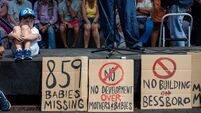
How could Cork City Council give permission for building apartments on the grounds of Bessborough , while it is believed by many to be a burial ground? Surely the least we can do is bring justice to the traumatised people and their missing loved ones who have experienced the horrors of Bessborough. How could An Coimisiún Pleanála give their consent to this planning?

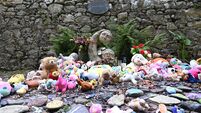
Please, please, end this unnecessary suffering. They are not asking for much. They want to honour their babies, their children and the women who died in the unholy grounds of Bessborough. The families want to give them the honour, the care, the remembrance they were not afforded in all those years when these monstrous places were run by nuns of the Catholic Church; the gardaí, who searched for any unfortunate who tried to escape, and the government who paid the nuns and issued passports for children who were, in some instances, torn from their mothers’ breasts.

Mothers were left bereft without their babies and without any recourse to the laws of the land, or even to know where their babies were taken. When all the institutions of the State were involved in ensuring these women did not have any human rights, who would one complain to? In these circumstances, secret societies were set up around the perimeter of these places and silently women who managed to escape were taken into the hearts of these angels of mercy and spirited away with clothes, shoes and some money to find a better place where they could taste freedom. But the trauma remains and for many will remain until they die.

It’s time to stop the development at Bessborough, at least until a full and complete scrutiny of the grounds is carried out. This is the least these people deserve. 

Bessborough women have suffered enough. This suffering, should now stop. They have suffered for far too long and, I believe, the Government, the Church, and the people in authority, need to act now.

Anne Healy, Midleton, Cork

Brotherly connections

Further to the letter — ‘Happy memories of Brothers’ (Irish Examiner, August 15) — may I add my positive experience of the Christian Brothers when I was in India in the early 1970s.

Before going to India a work colleague told me he had two brothers who were Christian Brothers working there and he gave me their names and addresses. He told me if I got the opportunity to visit them that I would be most welcome.

When travelling around India I took the opportunity to visit the Irish Christian Brothers on a number of occasions. For instance, I visited the Christian Brother’s orphanage in Calcutta and I saw first hand their good work.

After my stay with the Christian Brothers I went to the airport accompanied by one of the brothers to take a flight to Bombay. I needed a short sleep and I asked the brother accompanying me if he would kindly wake me when it was time to board. However, the brother too fell asleep. The result was we missed our flight. We went to the ticket desk to see if we could arrange another flight but we were told there were none available. I asked the brother to wait. I went to see if the airport manager might be able to assist. When I knocked on the manager’s door a voice invited me to enter. When I had entered I saw a tall man seated. I asked him if was he the manager. He told me he was a passenger waiting for his flight. He invited me to take a seat and he introduced himself. I explained how I had missed my flight.

When the airport manager arrived my new-found friend spoke up and requested the manager to try to accommodate me which he did. I asked the manager if he could also accommodate the brother accompanying me. This he also did. I thanked them both and I returned to the waiting brother to give him the good news. When I told him our kindly benefactor’s name he replied that that man was the head of the Indian army.

Micheál O’Cathail. Address details with the editor

x

More in this section

Revoiced

Newsletter

Had a busy week? Sign up for some of the best reads from the week gone by. Selected just for you.

Cookie Policy Privacy Policy Brand Safety FAQ Help Contact Us Terms and Conditions

© Examiner Echo Group Limited