Schools blockaded as tens of thousands of protesters take to streets in France
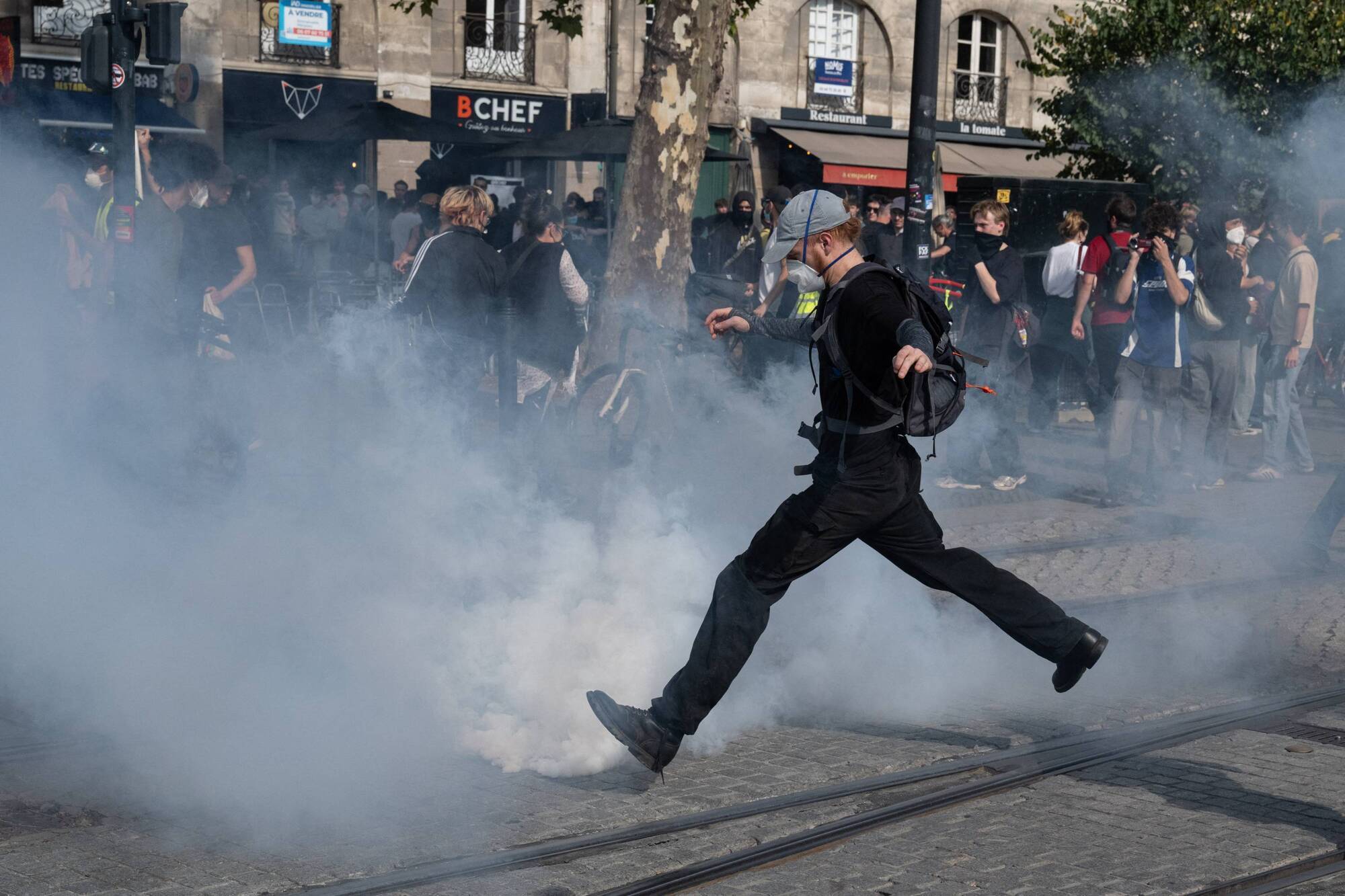
A protestor kicks a tear gas canister away during a demonstration part of a nationwide day of actions called by high-school students, joined by unions and teachers, who for days have been demanding better learning conditions in protests punctuated by violent confrontations in Nantes, western France, on October 6, 2026. Picture: Sebastien Salom-Gomis / AFP via Getty Images
Nearly 90,000 students, staff and parents have taken to the streets in cities across France as protesters blockaded hundreds of high schools in a nationwide day of action against long hours, missing teachers and crumbling classrooms.
The French interior ministry said 86,000 people took part in marches in cities including Marseille, Nantes and Lyon on Tuesday morning, with up to 40,000 more expected to join the largest demonstration in Paris, later in the day.
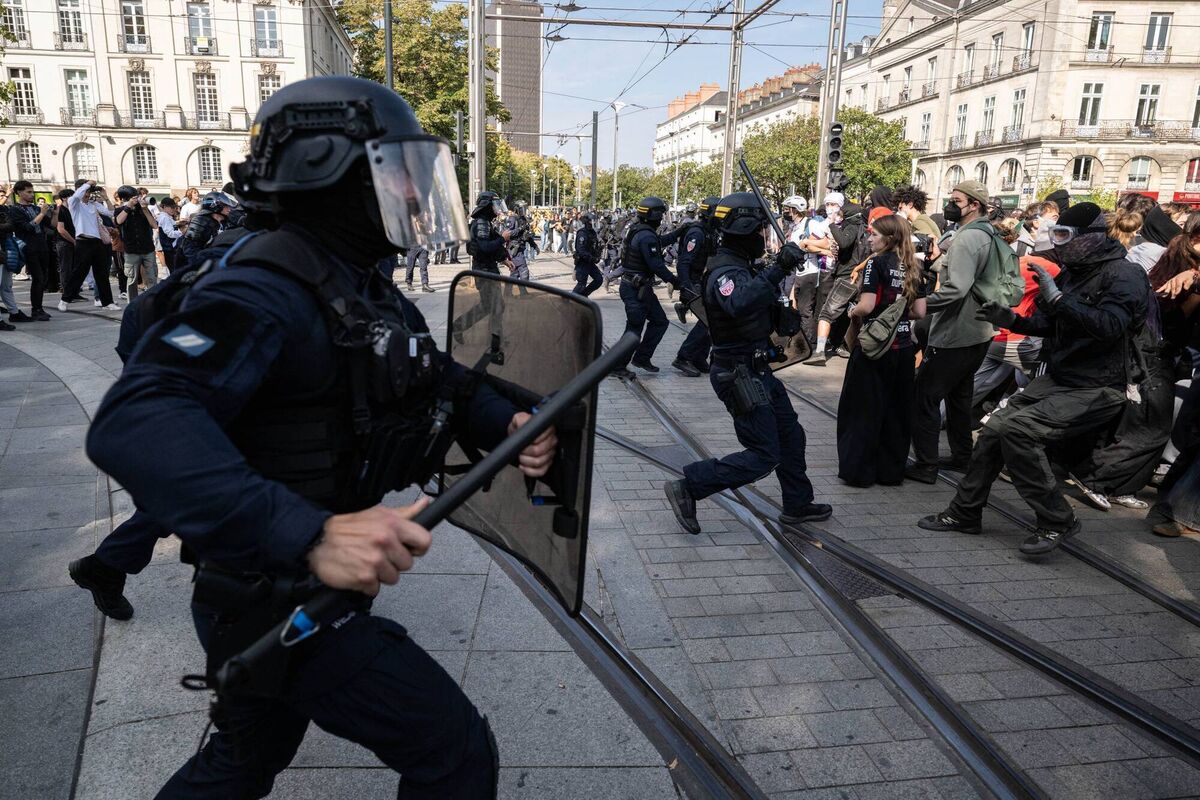
The demonstrations come after a fortnight of protests that began in the capital’s northern suburbs before snowballing across the country. They have been marred by frequent and often violent clashes with riot police that have left hundreds injured, some severely.
While many protests have been peaceful, some demonstrators have set dustbins on fire, destroyed bus shelters and thrown projectiles at police, who have responded with batons, tear gas and riot-control rounds. Twenty-four schools have been burned or ransacked since the start of the protests, according to the education ministry.
At least 715 police officers and 215 teenagers have been wounded, according to government figures, while 6,100 people have been arrested, almost all minors. More than 1,800 are being prosecuted, 1,483 of them under 18, the justice ministry said.
The national union of lycée students said 1,800 of the country’s 3,700 high schools were blockaded or had been closed for the day on Tuesday, although some local education authorities attempted to move classes online.
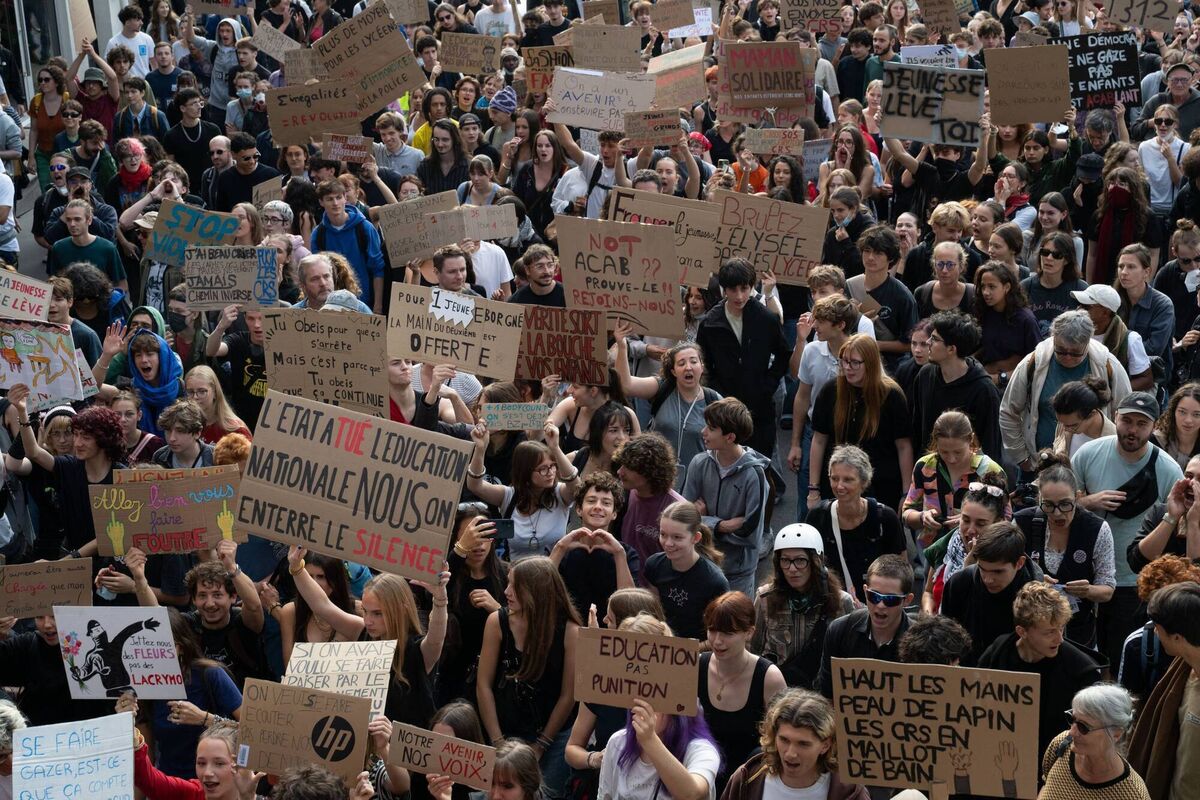
Students on the marches held aloft smoke flares and placards with slogans including “Under our textbooks, anger” – a reference to a celebrated slogan from the May 1968 student riots, “Under the paving stones, the beach” – and “Schools with no money = country with no future”.
Océanne, 18, was among the marchers in Marseille. “We just want to save our education and be educated,” she said, adding that she had suffered from absent teachers who were replaced either by “pointless substitutes” or not at all.
Many teachers were also demonstrating. In the western city of Rennes, Romain Dubourg said he and “about 30 colleagues” had “talked about the police brutality that we’ve witnessed, and decided to be there for our students if they need us”.
Trade unionists were also on the marches, with the head of the CGT union, Sophie Binet, urging members to “protect high school students”.
The Green Party leader, Marine Tondelier, urged local officials and parents to wear white and “go and protect our children during demonstrations”.
Trade unions and rights groups have accused the police of unnecessary force against the young protesters, with Amnesty International saying French authorities should “put an end to the disproportionate police repression seen in recent days”.
Anne Savinel-Barras, the president of Amnesty France, said: “The images and testimonies widely circulated over the past week raise alarming concerns about the dangerous use of tear gas, batons and policing techniques by the police.” The interior minister, Laurent Nuñez, said police had launched 10 internal investigations into allegations of brutality since the protests started.
On Monday, a 15-year-old’s hand was blown off as protesters battled riot police in northern France.
A 16-year-old lost the use of his right eye after he was seriously injured in the head on Wednesday during the blockade of a high school in Tours. The local prosecutor, Catherine Sorita-Minard, said the wounds were “compatible with the impact of a defensive bullet of the blast ball type”.
In another incident, a 14-year-old lost most of his teeth on Monday when a police officer appeared to fire a grenade at him at close range during a protest north-west of Paris. “His jaw is sealed shut, he can no longer speak, and he eats through a straw,” his mother told reporters.
The prime minister, Sébastien Lecornu, has ordered his ministers to tackle the students’ core demands, which include ensuring absent teachers are replaced, reviewing the length of the 8am to 6pm school day, and repairing ageing buildings.
But the protests, seven months before crucial presidential elections to choose a successor to Emmanuel Macron, have piled pressure on a government trying to reduce a ballooning budget deficit amid mounting investor concern over France’s mountainous debt and weak economic growth.
The government has accused the radical-left La France Insoumise party of encouraging and even orchestrating the movement after numerous LFI MPs attended school blockades. The party’s veteran leader and presidential candidate, Jean-Luc Mélenchon, has strongly supported the protests, while urging non-violence.


CONNECT WITH US TODAY



Be the first to know the latest news and updates