Letters to the Editor: Data centres should bear the full cost of network investment
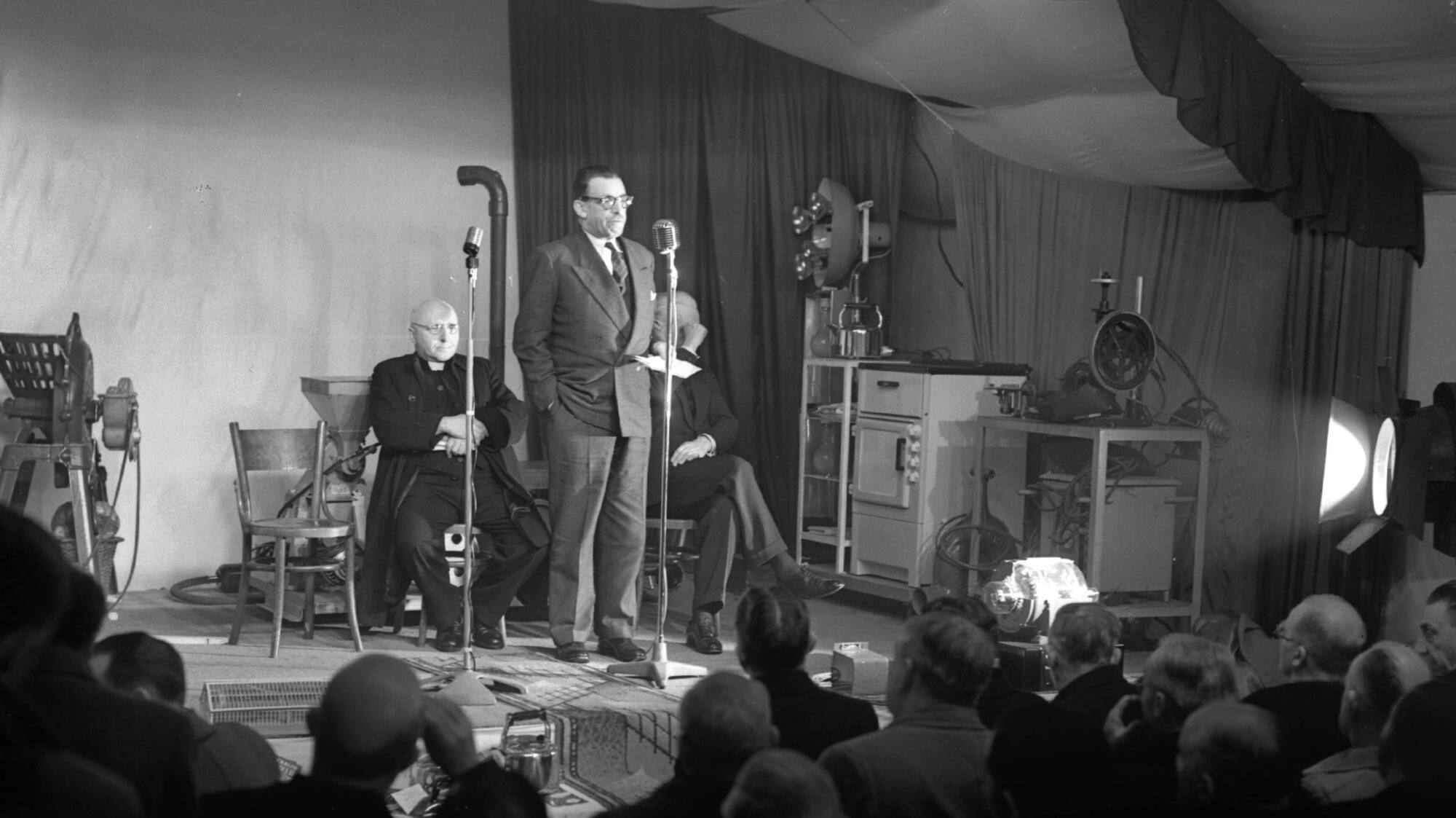
Then tánaiste Seán Lemass at the official switching on of electricity at Ballinamult Creamery in Co Waterford on March 1, 1954. The creamery was the 100,000th account connected during the Rural Electrification Scheme. Picture: Irish Examiner Archive
ESB’s Rural Electrification Scheme was launched in 1946 with the aim of bringing electricity to every town and village in Ireland.
The scheme was subsidised by the government in response to widespread rural poverty that meant many households were unable to afford the connection fee required to access the grid.
The subsidised scheme ensured lower connection costs for these households, and successfully brought electricity to more than 400,000 homes. It improved education, healthcare, and employment, and through radio airwaves, it drove a revival of our language, music, and games.
The policy was socially progressive.
By subsidising connections, it ensured that rural households, farms, and communities gained access to electricity regardless of whether they could afford the full cost themselves.
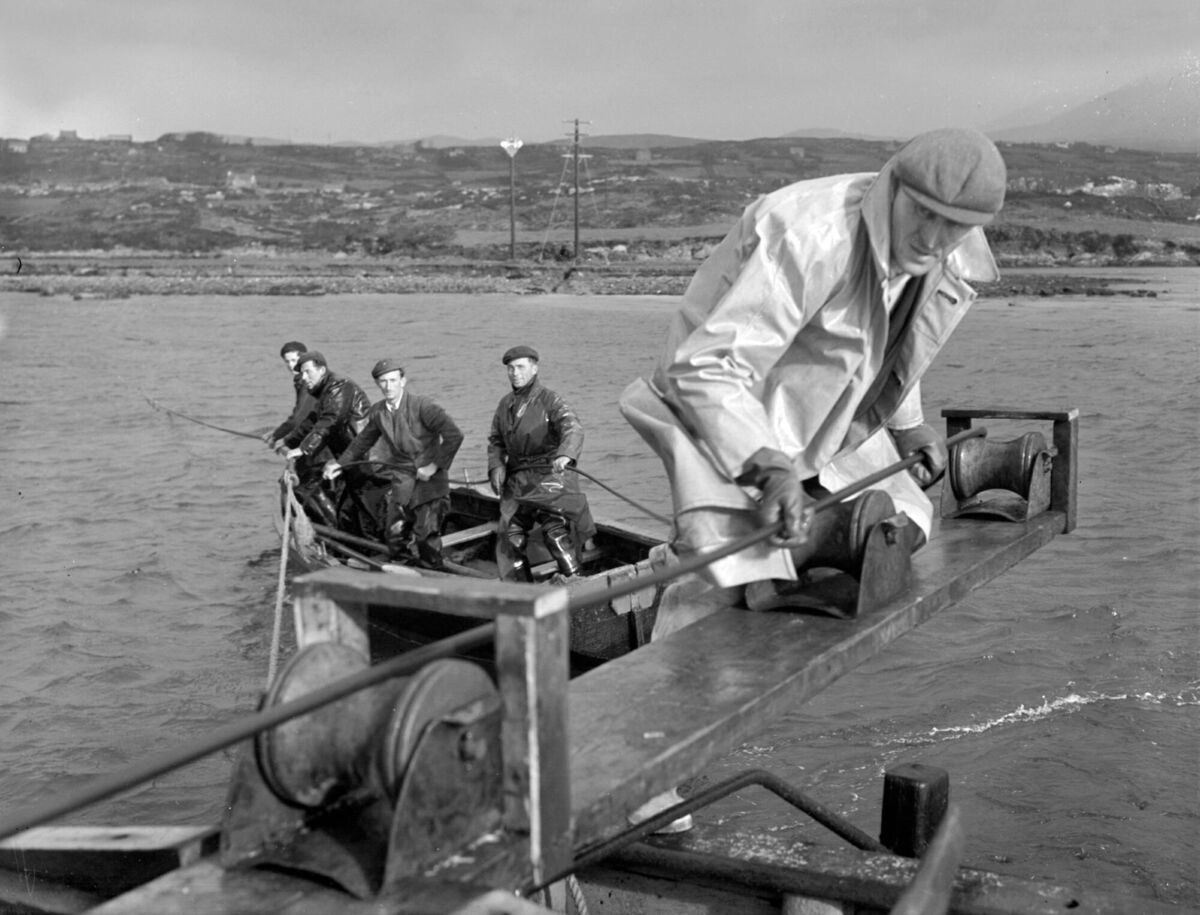
The rationale was that rural electrification delivered significant nationwide public benefits such as higher standards of living, agricultural productivity, more regional jobs, and greater social inclusion.
This justified spreading the costs of connecting these rural areas across all grid users through “use-of-system charges”, while also ensuring a return for ESB on its investment.
The policy was introduced at a time when electricity demand was driven primarily by residential customers, small businesses, farms, and public services.
That landscape has since changed.
Households are no longer driving electricity demand growth and instead represent a declining share of Ireland’s overall demand.
Yet connection policy remains largely unchanged and is being increasingly exploited by data centres looking to connect to the Irish system.
EirGrid forecasts that electricity demand from data centres will continue to increase significantly over the next decade, rising from approximately 9.4TWh in 2025 to 14.6TWh by 2034, representing almost half of Ireland’s current electricity demand.
Under the existing connection policy, the cost of connecting these data centres to the grid will continue to fall on Irish households and businesses.
It is no surprise that annual household electricity bills in Ireland are nearly 40% above the EU average when households are effectively subsidising the cost of connecting data centres to the grid.
The Least Cost Chargeable (LCC) is the least-cost way of connecting a customer to the transmission system. EirGrid’s website explains that “the demand customer must pay 50% of the LCC” and that “any deep reinforcements to facilitate the connection are typically not charged to the customer”.
These costs can include transmission lines, substations, switchgear, transformers, and other system upgrades needed to accommodate large-scale electricity demand. For data centres, this means that a significant share of the infrastructure costs required to connect them to the grid is being levied on all electricity consumers rather than being borne by the developer alone.
The reason for subsidising rural electrification was simple; costs should be shared where benefits are shared.
Data centres present a fundamentally different case. While their private shareholders reap enormous profits, their presence on the grid is placing upward pressure on charges faced by everybody else.
If Ireland is to have a fair and affordable electricity system, connection policy must ensure that data centres bear the full cost of the network investment required to host them.
The news that two members of An Garda Síochána were recently hospitalised after suspected exposure to leaking fumes from a consignment of confiscated vapes is alarming indeed. It seems that there was no appropriate safety management plan in place to prevent such occurrences.
Under health and safety legislation, all employers in Ireland are required to provide safe work practices and safe workplaces for their employees and visitors, with the necessary training given to staff, provision of proper personal protective equipment, and resources in place for the proper control measures to be taken for the safe handling and storage of dangerous substances, if and when they are required.
In this instance, the employer is the Department of Justice, who hold the purse strings. If the Garda representative bodies were to contact the department to demand an immediate satisfactory outcome to this unfortunate and unsafe practice, it might work. Especially so if they were informed that, failing a satisfactory resolution for all the workers who could be at risk, a complaint would be lodged with the Health and Safety Authority, the organisation charged with enforcement of workplace safety in Ireland.
It might be no harm if the department were reminded that breaches of health and safety legislation are criminal offences.
Unfortunately, it seems that some employers never seem to learn from the mistakes of the past.
The Environmental Protection Agency (EPA) has renewed the licence of North Cork Creameries, allowing the milk processor to resume operations in Kanturk. It had been mothballed after repeated and myriad pollution breaches.
This decision has been made before all necessary changes and protections are in place at the plant. That suggests an optimism that ignores the company’s long, shameful record of polluting the Allow river, a tributary of the Blackwater. Neither can that optimism be based on the fact that despite the belated efforts of five State agencies, including the EPA, the source and cause of last year’s catastrophic fish kill in the Blackwater remains a mystery.
It would be easier to accept this capitulation if North Cork Creameries were obliged to lodge a bond of €1m with the EPA which they would forfeit should they be responsible for another pollution incident. In those circumstances, the company should have to lodge a second bond, one twice the size of the first, before it could resume even basic operations.
We must do something on this scale, this drastic, as all other efforts to save our rivers and lakes and the life they support are failing dismally.
It is arguable that five of the six best hurling teams in the country have been consistently from Munster, for many years now, two of which are out of the All-Ireland championship by the end of May each year. That and the relatively inferior standard of Leinster hurling, demonstrated again this year, cries for attention.
Interestingly, although they may not be prepared to admit it, the Gaelic football ‘community’ did compromise — at least somewhat — the traditional provincial championships this year, but gave us an outstanding All-Ireland series. Hurling food for thought, I suggest.