Letters to the Editor: We need to act to keep dying retail sector alive
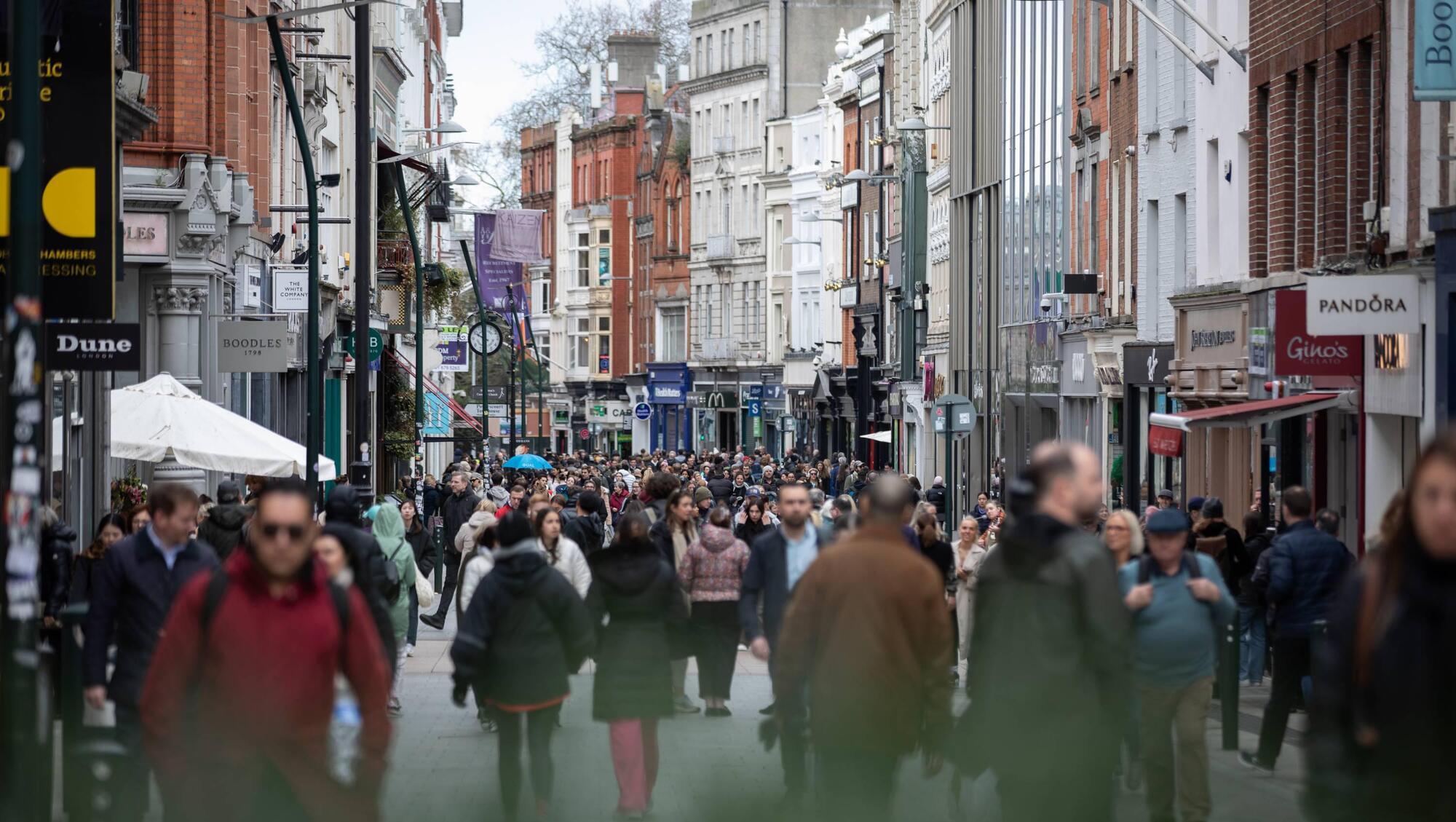
Shoppers on Grafton Street in Dublin. 'Every vacant shopfront on a main street represents more than a failed business. It represents lost employment, lost footfall, lost local identity, lost community life, and fewer opportunities for the next generation.' File picture: Bloomberg
As our main streets are being decimated with shop closures, a whole demographic of retail is dying before our eyes. Bakers, fish mongers, tailors, newsagents, in fact the term shopkeeper is becoming an unknown job description to the current generation.
Every vacant shopfront on a main street represents more than a failed business. It represents lost employment, lost footfall, lost local identity, lost community life, and fewer opportunities for the next generation to work, trade and build livelihoods in their own towns.
Retail as we know it is changing dramatically. Bricks and mortar retail is shrinking and that is likely continue for sometime but we can make sure that a sustainable retail trading environment survives.
For too long, national policy has treated town-centre retail as if it can survive on sentiment alone. It cannot. Independent retailers are being asked to carry rising wages, insurance, utilities, rents, compliance costs and commercial rates, while competing with online platforms, out-of-town retail parks and planning decisions that drain life from the traditional main street.
At some time in the near future, minister for foreign affairs and for defence, Helen McEntee, will seek Dáil approval for the Defence Amendment Bill 2006. This proposes to amend the clumsy and ill-conceived ‘triple lock’, preventing Ireland, as an independent national entity, from deploying more than 12 Defence Forces personnel abroad without a United Nations Security Council resolution. Given the composition and veto powers of the permanent members, no such resolution is probable.
Here in Ireland, there will be many objections to this proposal, coming from isolationist traditional parties that cannot see that “neutrality” does not equate to blind passivity.
The interests of the State should prevail. We are a modern, educated, and responsible liberal democracy and should continue as such, notwithstanding outdated cultural memories that can be be consigned to the past!
Dismal primary education figures — recently supplied to the Irish National Teachers’ Organisation (INTO) by the Department of Education and Youth — show the impact of teacher shortages:
Exactly 419,823 Irish children (80%) are in classes above the EU average.
A total of 996 long-term teaching posts remained vacant in primary and special schools this year. A staggering 7,864 unqualified people were employed as substitute teachers.
As enrolment at primary level fell by 10,438 in the past three years, Government had ample opportunities to retain teaching posts and reduce class sizes at no extra exchequer cost. Instead, successive education ministers facilitated a cull of mainstream class posts.
In the past three years, primary schools lost 886 mainstream class teaching posts. It’s expected a further 498 posts will be lost this summer.
Isn’t it interesting that when some flares were thrown onto the pitch in a League of Ireland match in Dundalk earlier in the season, minister for sport Patrick O’Donovan was quick to wade in with both feet. He spewed a raft of threats and admonitions that if the FAI and the League didn’t bring in a range of draconian security measures, the Government would intervene and withdraw funding.
Yet on the issue of the Ireland V Israel football matches, Mr O’Donovan wants no part it. Now football in this country is for the FAI to deal with and there can be no political interference.
Mr O’Donovan should be required to explain his double standards to both the Dáil and the Irish people.