Letters to the Editor: No future for adults with intellectual disability
One reader writes in to say that without any policy in place, the Government’s default position is to let us live our lives, sometimes without respite, looking after our adult children with an intellectual disability until we drop
Letters to the Editor: No future for adults with intellectual disability

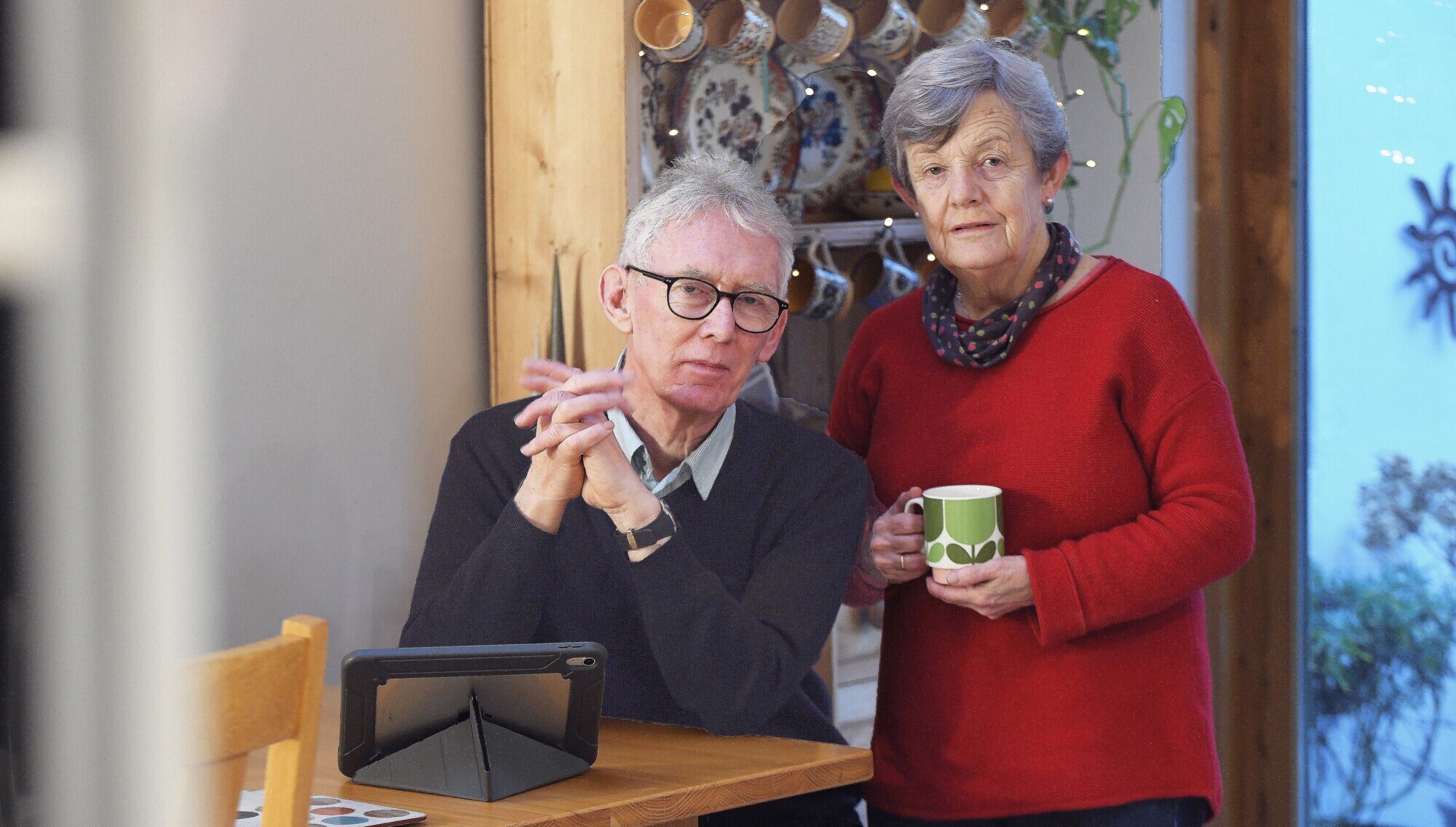
Tony Murray and his wife Susan Corrigan set up Before We Die, an organisation aimed at changing the system so a plan is in place for care to be provided for people with intellectual disabilities whose parents are ageing and may soon not be in a position to continue to care for them. Picture: Moya Nolan

I attended a Before We Die public meeting in Cork, led by Tony Murray, last week. Tony is leading a campaign to secure housing and care for adults with an intellectual disability in Ireland. He is the father of an adult with intellectual disability.

I am the mother of a 28-year-old man with intellectual disability. I learned that we the carers, among the hundreds who attended the meeting, are forgotten citizens and our adult children are also forgotten citizens. I learned there is no plan for our future or their future.

We are being left by default caring into our 70s, 80s, and 90s. There is also no plan to have a plan and no political will to look after us.

The number of ageing parents still caring is stark. On top of all this we are now required to put our adult children’s names on the housing list for some reason because otherwise ‘they don’t exist’, while all the while knowing this will lead to nothing.

I also learned that without any policy in place, the Government’s default position is to let us live our lives, sometimes without respite, looking after our adult children with an intellectual disability until we drop.

Then when we die, our adult children will be put out to tender to providers who make profit from their care. Our adult children can then be shipped off to other parts of the country away from everyone and everything they ever knew. This is being done under the so called guise of protection from abuse in congregated settings.

Our vulnerable adults sometimes end up in very isolated settings where they become more
vulnerable to abuse than ever before, and all the while the State will be losing millions to these profit making organisations.

I have to say as a 64-year-old carer, now caring for nearly 30 years, the full reality is clear. There is no way out of this, we are on our own. Shame on the politicians, shame on the Government. This is more than neglect, it’s barbaric. Congratulations to Tony Murray on his campaign.

Brigid O’Mahony

Inniscarra, Co Cork

Protestants fled new Irish Free State

Newly-available data from the 1926 census shows that the Protestant population in the 26 counties fell by almost 33% since the previous census in 1911.

Why did so many leave? Pearse had promised to “cherish all the children of the nation equally”. But many Protestants did not believe they would be granted political, social, economic, or religious equality in the new State.

In 1920, the Church of Ireland’s Archdeacon of Dublin wrote “large numbers of our members are leaving the country and settling in England due to the terrible conditions that prevail here”.

In April 1922, the Anti-Treaty IRA murdered 13 innocent Protestant men and boys, and attempted to kill 20 more, in West Cork. This served as a chilling “signal crime”. Thousands fled, and those who stayed kept their heads down.

Professor Brian Walker of Queen’s University has recorded that members of the Free State
government, and Catholic clergy and laity, denounced such attacks on the Protestant community. However, Protestant Bishop Miller of Cashel said soon afterwards: “Many of our people were driven from their homes, many others left through fear of violence.”

By 1926, Protestants were certainly not an oppressive minority. Local government was in Catholic hands. The Wyndham Land Act had facilitated the transfer of approximately 9m acres of land to tenant farmers before 1914. The Church of Ireland was no longer an established church.

But the exodus of Protestants continued down the decades: The 2022 census recorded a mere 2% of the State’s population is Protestant. The Irish government failed to include the Bandon Valley Massacre in its Decade of Centenaries commemorations.

Robin Bury

Toronto, Ontario, Canada

Protective policy

Reading the report — ‘Dáil row sees McDonald asked to retract comment during clash over rents’ (Irish Examiner, online, May 21) — it occurred to me that those claiming the Government’s housing policy is failing simply haven’t grasped that what we are witnessing is in fact what those in Government are aiming to achieve.

Government policy is driven by the clear objective of not doing anything that might lower the value of property. Put simply, protecting the interests of the propertied is the priority regardless of the misery this causes to a huge swathe of the population.

The Government has no interest in serving the common good. The fact is, government policy, viewed in proper context, is a stomping success.

Jim O’Sullivan

Rathedmond, Sligo

Teaching empathy to schoolchildren

In 2022, actor Cillian Murphy, while he was promoting a book which he edited, Ionbhá: The Empathy Book for Ireland, spoke on the Brendan O’Connor show about how it would be great if points were awarded for empathy in the Leaving Cert.

But nobody from the public wrote back in to this interesting Brendan O’Connor show to highlight how the Christian churches in Ireland are supposed to be very good at teaching schoolchildren empathy and caring for their neighbours.

When all the talk is said and done could it really still be the case that today many Irish people are sadly (deep down) “doubting Thomases” when it comes to their lack of faith in Irish religious education to (by itself) be able to instil in the hearts of their children real empathy for others who find themselves losing out in life?

Sean O’Brien

Kilrush, Co Clare

Challenges facing older people

It’s been reported that a lot of Ireland’s elderly people — and the people who rely on the old age pension — are struggling to essentially afford to do anything outside of the home once their bills are paid.

This means that these people are stuck at home, and may be feeling quite lonely.

They can’t do the same activities that they used to do, because of the rate of inflation.

A lot of elderly people who are on a limited budget, are now finding that it’s just out of reach for them to go out and enjoy their lives.

As a result of this, I think there’s a concern here that because of these challenges, we are going to see a knock-on effect in relation to both physical and mental health in our elderly population.

I hope that the Government might be very sensitive to this
cohort of society.

John O’Brien

Clonmel, Co Tipperary

x

More in this section

Revoiced

Newsletter

Had a busy week? Sign up for some of the best reads from the week gone by. Selected just for you.

Cookie Policy Privacy Policy Brand Safety FAQ Help Contact Us Terms and Conditions

© Examiner Echo Group Limited