Letters to the Editor: Ireland should invest more in rail transport
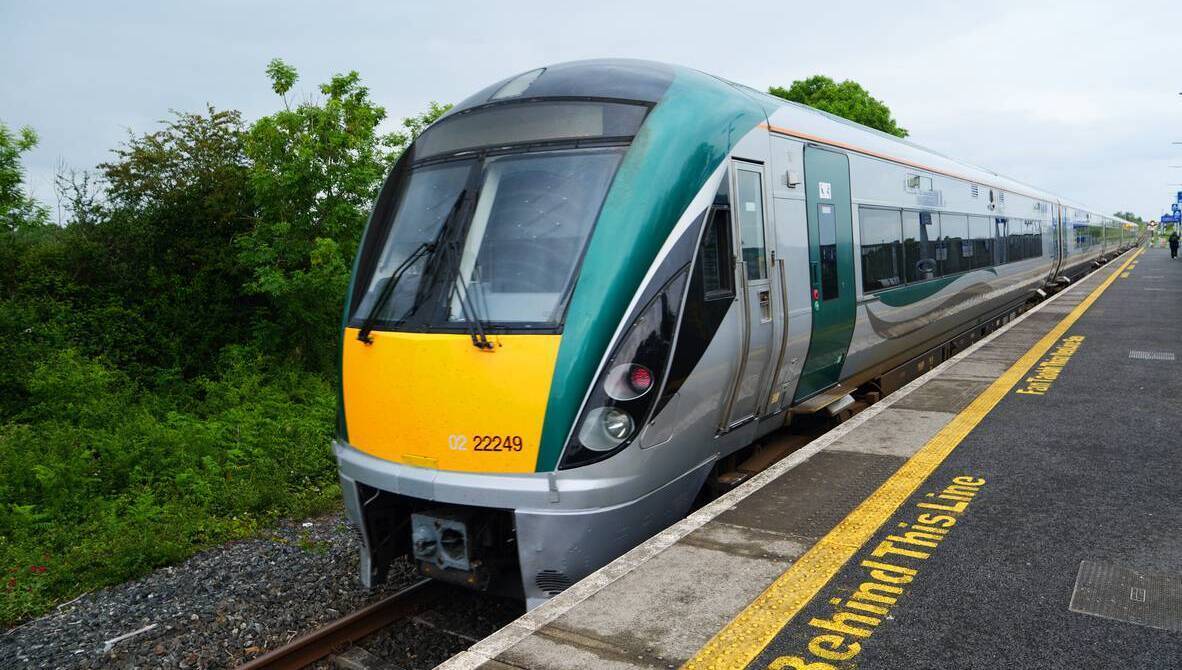
'We must look at rail as vital transport infrastructure, because the country is completely saturated with cars'
'In colonial times, an extensive rail system existed throughout the country while only now a skeleton remains of it.' File picture

'In colonial times, an extensive rail system existed throughout the country while only now a skeleton remains of it.' File picture

No train service exists between Cork and Waterford despite 100-plus years of Irish independence. Other shining examples of rail infrastructure failure also exist.

Looking at earlier rail maps, one can see an extensive rail system in this country. From Mallow in Cork, there was a system which went to Dungarvan to Waterford to Rosslare. 

Instead today, hundreds of thousands of cars, vans, and trucks spend hours travelling to and from these areas when rail would have them there in no time. Donegal, one of the biggest and most remote counties in the country, is completely cut off from rail.

In colonial times, an extensive rail system existed throughout the country while only now a skeleton remains of it. You won’t see any modern country in Europe which fails to have connecting rail services between major cities.

Our country is flooded with cars and choking with congestion. Other countries continue to invest in rail services, while this country is content to build roads to beat the band and put cars on them. Rail should be seen as a way of getting many cars off the road and drastically reducing travel times. The train could solve a lot of our congestion problems, health problems, and reduce fatalities and injuries.

We must look at rail as vital transport infrastructure, because the country is completely saturated with cars and nobody can get anywhere without spending half the day in tailbacks with expensive delays. The idea that two major cities, Cork and Waterford, are not connected by rail makes one think about the success or failure of Irish independence.

Maurice Fitzgerald, Shanbally, Co Cork

Standards in public office

All candidates running for an Oireachtas seat in Ireland should be bound to disclose property they own at home and abroad, and also a list of organisations they are members of, which could amount to “conflict of interest”.

At present, candidates running for an Oireachtas seat (Dáil or Seanad Éireann) are not required to disclose property they own abroad while running as a candidate.

However, if a candidate is successfully elected, they must then file an annual statement disclosing any land or property they own, whether it is located in Ireland or abroad, under the Ethics in Public Office Act. But surely there is something wrong here, and that should be corrected.

The electorate should have the right to this information before an election, and other information that could be a conflict of interest for candidates. Any candidate winning an election under inaccurate information should forfeit their Dáil or council seat. This is only fair and reasonable.

The Standards in Public Office Commission should have a duty to voters before an election, when it would count for something, not just when the election is over.

A member of the public making a report on inaccuracies when a candidate has taken up their seat has to fill in forms where their name can be disclosed to the newly elected person. This system favours non-disclosures by Joe or Judy Public who are not public figures, with all its protections awarded to a Dáil or local authority member.

Nuala Nolan, Bowling Green, Galway

Youth crime needs reform

RTÉ’s Prime Time recently exposed a grim reality: Dublin gangs are recruiting children as young as seven to move drugs across the capital. Why children? Because they’re beyond the law’s reach.

The footage said it all: Teenagers openly dealing drugs on O’Connell Bridge, disappearing the instant a lookout spotted gardaí approaching. These aren’t kids acting out; they’re functioning as the bottom rung of a logistics chain.

The State’s answer? More boots on the ground and constant patrol rotation. On a government spreadsheet, the numbers look reassuring. On the street, it’s expensive theatre. The crime doesn’t disappear — it simply relocates.

Policing is mopping up after a wider system collapse. State intervention is piecemeal and uncoordinated: Community centres, youth diversion schemes, and addiction services all operating in separate silos. Meanwhile, the gangs recruiting these children operate like a machine.

Glasgow was once western Europe’s knife-crime capital. It isn’t anymore — not because of more patrols, but because agencies stopped working in isolation. Police, schools, and social services began sharing one file per child, so a vulnerable kid was flagged before a gang ever reached him — not after.

In Ireland, a vulnerable child can drift through multiple agencies without anyone holding the full picture. The criminal networks waiting for that child have no such weakness. They are organised, patient, and long-term. If the State does not act as one, the gangs will keep winning.

Alan T Kelly, Castlewarden, Co Kildare

Ladies’ toilets in Croke Park

On Sunday last, I went to Croke Park to support my beloved Cork hurlers. While we did not enjoy any success and the performance was poor, nevertheless, I enjoyed the occasion as I always do.

Croke Park is a wonderful stadium, and everyone can be proud of it.

However, the fact that women and girls must join a long queue to use the toilet facilities is embarrassing.

The number of women and girls attending GAA games has increased substantially and this is a good thing.

The problem that arises is because of the success of the GAA and it must now adapt to the new circumstances.

The GAA has successfully adapted to all kinds of challenges over its lifetime and this one is not that difficult to resolve, but action is required immediately.

Gerard Lyons, Clarina, Co Limerick

Cork minors football success

I wish to convey a big congratulations to the Cork minor football squad under bainisteoir Keith Ricken and his team in winning the All-Ireland Minor Football Championship, captained by Joe Miskella, defeating a strong Tyrone team in Newbridge last Sunday.

It was heartening to see so many Cork supporters show up and make their presence felt.

It was great to mingle with and experience the joy of Cork supporters and some family members of the squad on the pitch, something that will stay with me.

After the disappointment for the senior hurlers and senior ladies footballers on Saturday, all I will say is drive on and work harder.

To conclude, I wish the senior camogie team the best in the All-Ireland Camogie Championship semi-final in two weeks time.

I’m sure the Cork support will turn out in force.

Eoin O Scanláin, Lucan, Co Dublin (formerly Mallow)

Disturbance of fireworks

Recent celebratory fireworks in the Phoenix Park, Dublin, reminded me of the coming season when bangers and rockets scream and flash.

What a shame our beautiful birds can’t rely on us to preserve their peace.

Eve Parnell, Harcourt St, Dublin 2

Serbian venue for Rangers?

Perhaps Ringmahon Rangers should have been facilitated with a Serbian venue for their FAI Cup fixture?

Seems like the new location for soccer games nobody wants played.

Billy Hannigan, Limekiln, Dublin 12

National broadcaster funding

One wonders what will happen to RTÉ’s finances once this ring-fenced multi-annual deal that was put in place by then media minister Catherine Martin in the summer of 2024 runs out.

Under that agreement, RTÉ is guaranteed €725m between 2025 and 2027, therefore they are given a set amount of funding every year.

So for this year, for example, it’s €225m. A certain amount of that comes from the licence fee, with the Government topping it up.

So the top up this year is in the region of just under €55m.

I note that, at the recent Public Accounts Committee meeting, some members of the panel asked the director general of RTÉ, Kevin Bakhurst, what happens when this deal runs out in 2027.

Mr Bakhurst replied that he would strongly call for the Government to put the arrangement back in place.

However, Patrick O’Donovan, the media minister, was at pains to say in January that under no circumstances was such an arrangement going to happen.

I do think there are now a lot of unanswered questions about what the future financing of the national broadcaster is going to look like.

John O’Brien, Clonmel, Co Tipperary

More in this section

Revoiced

Newsletter

Had a busy week? Sign up for some of the best reads from the week gone by. Selected just for you.

Cookie Policy Privacy Policy Brand Safety FAQ Help Contact Us Terms and Conditions

© Examiner Echo Group Limited