A tiny Irish snail, threatened with extinction, is causing headaches for Donald Trump
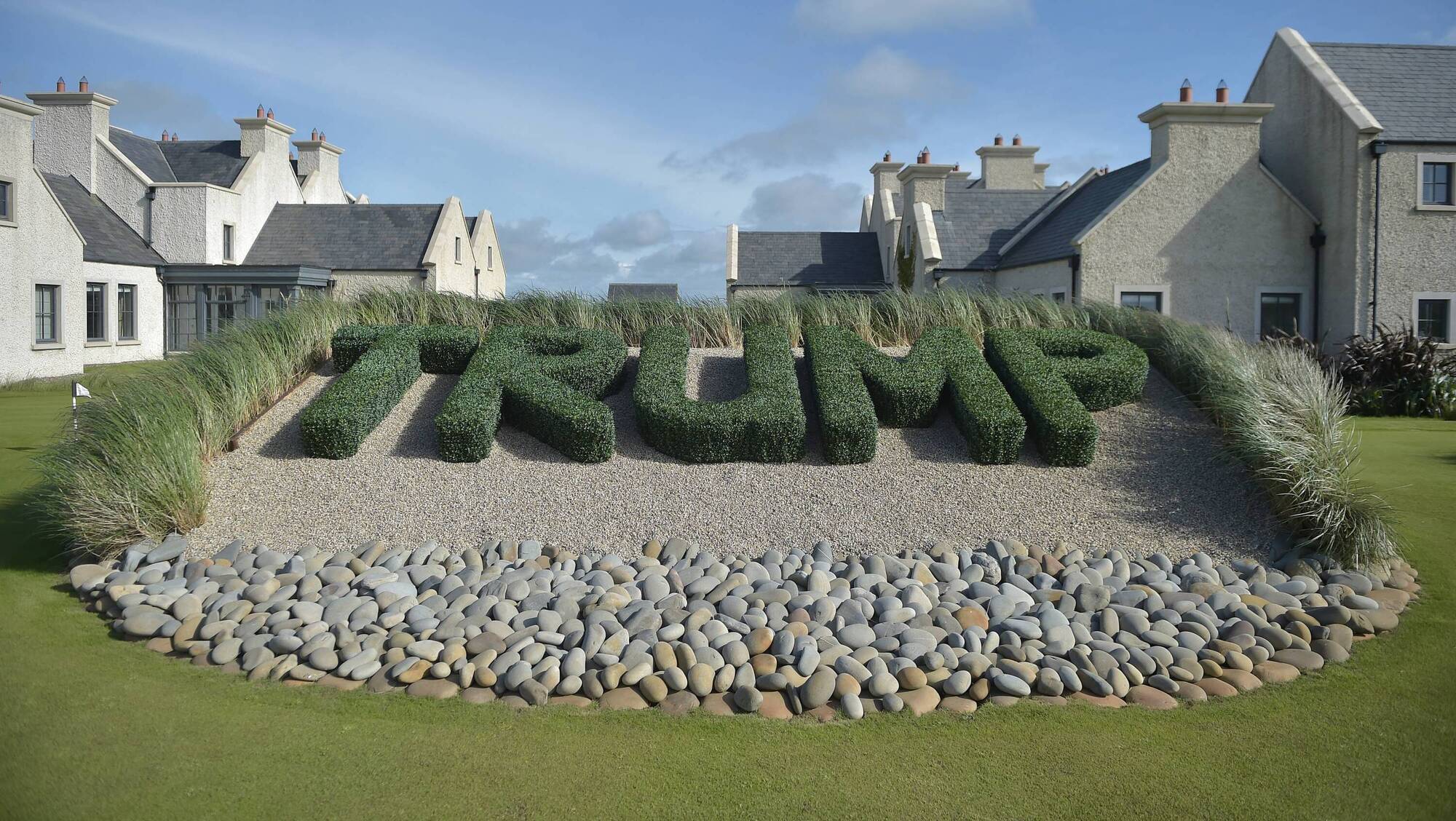
Doonbeg: Friends of the Irish Environment wants Donald Trump, or Clare County Council, to publish any agreement reached on how the snail population at the Clare resort will be protected. Picture: Charles McQuillan/Getty Images
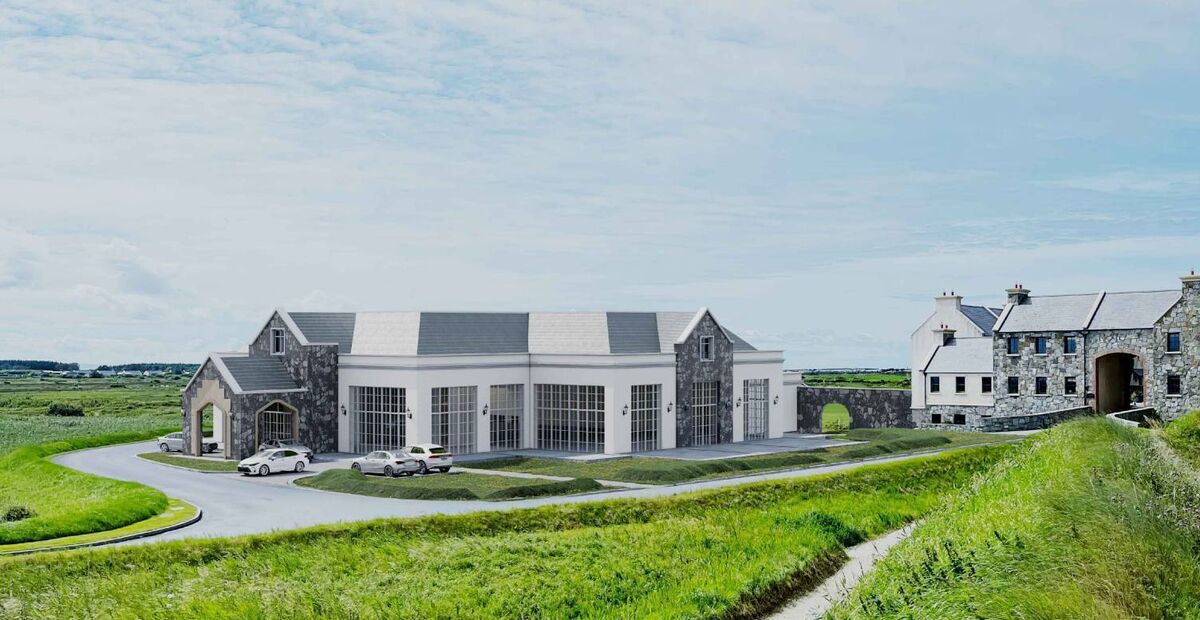
As Donald Trump seeks to negotiate an end to the war with Iran, he is also facing a far smaller battle closer to home, over a protected snail on Ireland’s west coast. And it could prove to be equally protracted.
Friends of the Irish Environment has warned it will take its concerns over the US president’s plans to build a ballroom at his golf resort in Doonbeg to the High Court if necessary.
The group wants Mr Trump, or Clare County Council, to publish any agreement reached on how the snail population at the Clare resort will be protected.
This forms one of the conditions attached to the planning permission granted for the project in February this year.
During Taoiseach Micheál Martin’s St Patrick’s Day visit to the White House this year, Mr Trump was asked about the ballroom being delayed by an objection related to the protection of rare snails on the site.
He said he was unaware of the issue, noting the course had been built and operated successfully, and appeared dismissive of the objection, suggesting it did not rank among his major concerns. The Taoiseach was similarly unimpressed, asking the journalist who raised it: “What kind of question is that?”
While many might be forgiven for stifling a yawn at the prospect of a planning application being delayed by a snail, scientists and ecologists say its fate warrants close attention.
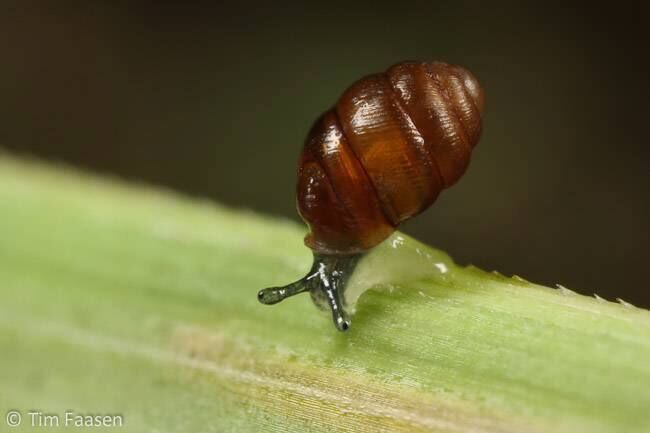
They argue this is because the vertigo angustior snail species — whose origins date back more than 11,700 years to the last Ice Age — is one of Ireland’s most important natural early‑warning indicators of ecological health.
Added to that, ecologists believe the decline of the vertigo angustior population in Ireland reflects the wholesale decline of crucial habitats.
Worryingly, many of these very habitats have an impact on the extent to which our towns and villages suffer from extreme flooding events.
Evelyn Moorkens, a world expert on the species of snails that exist at sand dunes adjoining the US president’s golf resort at Doonbeg, said: “It's very hard to explain to people why snails are so important.
“People are blaming climate change, but in actual fact, we are removing a lot of the naturally occurring resilience in Ireland for absorbing water.
“Over- or unsuitable development, especially building of housing estates on flood plains along with the increased intensification of farming play a huge part in this.”
Ms Moorkens is equally critical about flood-relief plans, a number of which are slowly coming to fruition across Munster, with many more planned, including one in Midleton.
The East Cork town’s streets ended up almost entirely submerged in water after Storm Babet in October 2023.
Ms Moorkens said the dominant response to flooding had effectively been to build higher barriers and move water out of catchments as quickly as possible.
However, she argued this approach was misguided, particularly as Ireland experiences more extreme weather patterns. While increased rainfall and longer drought periods are now evident, she said climate change alone did not explain the scale of the problem.
“It’s also because we have done so much intensification — built more houses, planted more trees, and we've done flood‑relief schemes,” she said.

Instead, Ms Moorkens said greater emphasis should be placed on building resilience into natural landscapes. She pointed to a growing international focus on nature‑based solutions as an alternative to traditional flood defences.
“The emphasis now in a lot of other countries, including the US and much of Europe, is on nature‑based solutions,” she said.
“This is to try and keep a very high water table, keep a lot of wet ground in the higher areas of catchments, so create wetlands, or preserve wetlands where they are naturally there.
“This is so that when there's high rainfall, the rain is absorbed by the land, and then in drought periods, the water gets pushed back into the rivers and into the lakes, where we abstract from them.
“If we manage our wetlands properly, we shouldn't have to have hose pipe bans, and we shouldn't have to have flooding to the extent that we are getting it now."
Ms Moorkens added: “I think there is a knee-jerk reaction to have flood-relief engineered schemes that are actually reducing our resilience even further.
“They are dealing with the wetter end of the year, and then we're having real problems at the dryer end of the year and where we can end up in situations where we don’t have enough clean, fresh drinking water.”
The focus has centred on three tiny whorl snail species — vertigo geyeri, vertigo moulinsiana, and vertigo angustior — all protected under the EU Habitats Directive.
On a very basic level, their presence is usually an indication of a high-quality habitat. If they go, the habitat eventually goes and to people like Ms Moorkens, it is as simple as that.
She said: “It is an example of a species that survives in perfect hydrological conditions, that are not too wet and not too dry.
“They thrive in habitats that absorb water when it's wet and release water when it's dry.
“They live on mosses and at the base of plants. If the snail is there, the moss is there, and if the moss is there, the correct series of wild flowers are there that keeps the soil aerated, allowing for absorbance of water.
“Then there are all the other invertebrates — and, crucially, pollinators — like butterflies, beetles, bees, and flies and the correct balance in nature.
“But given the snail is one of the first species to go in habitats like wetlands or fenlands, once they go, you lose the moss, when you lose the moss, you lose the wildflowers.
“Once you lose the wildflowers, you lose the bees, and then you lose the absorbance of the water and the ability to protect supplies of fresh and soil filtered drinking water in the summer and to protect the flooding in winter.
“The snail is the proverbial canary in the coal mine because once they go from these types of habitats, then that serves as an early warning for everything else that follows.”
Ms Moorkens acknowledges the view that protecting snails is sometimes portrayed as anti‑progress, but questions whether such “progress” is worthwhile if it comes at the cost of habitats that are not only vital sources of freshwater, but also natural defences against flooding.
“It's very hard for someone to say, ‘Oh, there's a snail in the way of the motorway’ and then to connect that with their own lives and their own comfort,” she says.
“Maybe that's the scientists’ fault for not being able to explain it all in layman’s terms.
“We badly need joined-up thinking about the environment, and the preservation of various habitats.
“People should remember that natural flood defences have been around for many millions of years, and they have worked.
“People can’t necessarily see the snails we are talking about here, because they are actually only a few millimeters long.
“The next time people see a river flooding through their town or housing estate, they should spare a thought about what was going on in the surrounding environment before that happened. The indicators are there, and we ignore them at our peril.”
Ecologist Derek McLoughlin also underlined the importance of the species.
He is project manager of Wild Atlantic Nature LIFE, a nine‑year, EU‑funded project co-ordinated by the National Parks and Wildlife Service.
The initiative focuses on the conservation of Ireland’s blanket bog Special Areas of Conservation, designated as priority habitats under the EU Habitats Directive, across at least 35 sites.
“You don't need to know and see and even love this little snail,” he said.
“Indeed, because it is so small, it's actually extremely difficult to sell this as a beautiful species.
“But in fact, it's actually about where they live and what they represent.
Mr McLoughlin said the presence of the species was a defining feature of healthy ecosystems, noting their importance not only for carbon regulation but also for water retention, management. and filtration.
“If we were to lose a couple of pages of the Book of Kells, or even the Book of Kells itself, it's just a book and it's not all that old, whereas these snails have evolved since the Ice Age."
He said land must provide food and be supported by healthy soils, but warned soil erosion caused by flash flooding undermines both agriculture and water quality.
“The snails are a very particularly sensitive group of species in wetlands that are very much a core tool in terms of flood management and mitigation,” said Mr McLoughlin.
Asked why anybody in an urban environment should care about the prospects of the threatened snails, Mr McLoughlin said: “If you want fresh water and would quite like not to have your house flooded, you should care. It’s really as simple as that.
“A large proportion of our water in Ireland comes from peat catchments. That’s everything that your water needs to meet a minimum drinking water standard.
“You expect that on the turn of a tap, but that all depends on the raw water that comes into the water supply to begin with.
“The better the quality of the habitats, the less treatment that's required, and the less chemicals that have to be used."
Mr McLoughlin explained climate change was increasing the risk of flash flooding, with shorter and more intense bursts of rainfall causing water to run off hillsides more rapidly and hit low‑lying areas sooner, particularly urban settlements.
“If you are looking for an analogy, you should look at your combustion-engine car and ask how it would operate if it didn’t have a functioning alternator or a fan belt.
“It’s a bit like the snail and the environment — if you remove one aspect, it’s not going to work.
“Losing one aspect of either system can create a cascade that ends up interrupting the whole system.”
CONNECT WITH US TODAY



Be the first to know the latest news and updates