Letters to the Editor: Slaughter of the innocents is the new normal
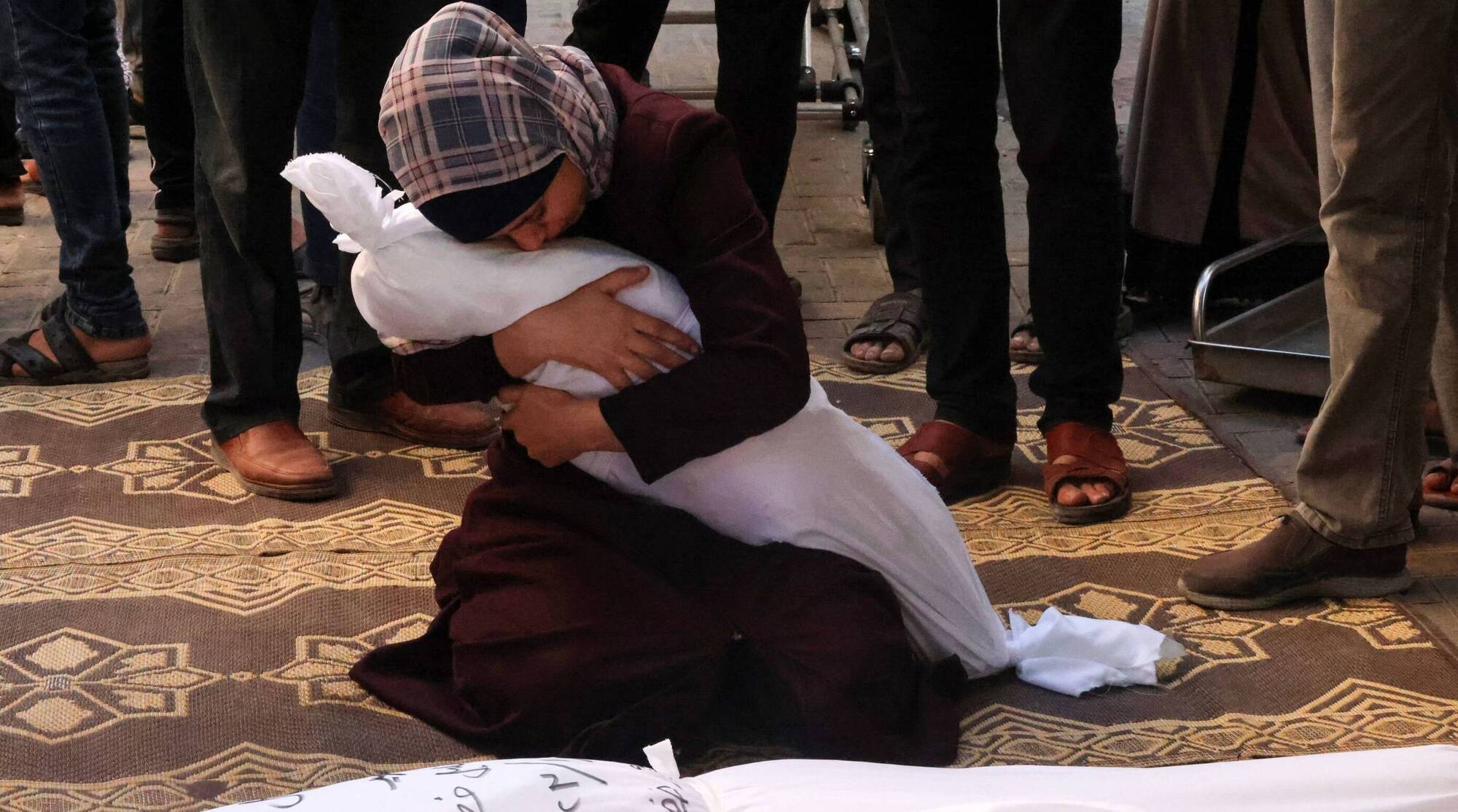
Samia al-Atrash holding the remains of one of her sister's children from the Khoder family, killed in an Israeli bombardment in Rafah in Gaza on October 21, 2023. Picture: Said Khatib/AFP/Getty
The end of the Cold War should have brought peace and prosperity to most of humanity. Instead, it has brought real bloody hot wars that have cost the lives of millions of civilians especially children.
This slaughter of the innocents has become normalised, and therefore almost justified, in many western media reports.
The price of oil and gas is given far more media coverage, despite the damage that burning these fossil fuels is doing to our environment.
The Washington Post in the US and The Guardian in the UK did give exposure in 2025 by publishing the names of 18,457 children killed in Gaza between October 2023 and July 2025.
If indirect war deaths are included, the full number of children who died due to war related reasons in Gaza is likely to be as high as 40,000 and this genocide is ongoing. In the recent conflicts in the Middle East, up to 1,500 children have been killed.
At least 200 were killed in Iran including more than 150 in the Minab school double-tap bombing perpetrated by the US military on February 28. At least 120 children were killed by Israeli bombing in Lebanon, four in Israel, and one in Kuwait.
In Africa, many thousands of children have died due to conflicts in Sudan, South Sudan, the Democratic Republic of Congo, and elsewhere.
It is vital to remember and commemorate all these children killed, not just as statistics or collateral damage, but as the beautiful individuals that they were for their all-too-short lives.
The United Nations has been prevented from maintaining international peace and far too many UN and EU member states including Ireland have been complicit in these children’s deaths, as well as failing in their duties to take all necessary measures to prevent such crimes.
One child’s death is a tragedy. The killing of millions of children is a crime against humanity.
Ireland has between 33,000 and 34,000 non-governmental organisations (NGOs), most funded by the Government in one way or another.
Along with this, we have a housing crisis despite the billions of euro poured into social housing through 438 registered Approved Housing Bodies and an expensive housing assistance payment scheme.
Billions are also spent on homelessness and international protection accommodation services centres. We are getting nowhere fast.
The logical decision is to declare an ‘emergency situation’ and go back to building large social housing estates. There is a well-held opinion by some politicians that large social housing estates have been a source of anti-social behaviour, along with encouraging social division.
But one only has to look around and see how many of those raised in large social housing estates have risen to the top echelons of our society in politics, the arts, and communications, such as President Catherine Connolly, author Roddy Doyle, singer Luke Kelly, and journalist Joe Duffy.
In sports, we have Katie Taylor and from the field of soccer, people such as Roy Keane and now Troy Parrott. All are so proud of the areas where they were raised, and rightly so.
So while we still throw billions at the housing crisis, we neglect to see the obvious solution: Build more social housing.
There is no substitute for a permanent, stable home for building a strong, stable society.
In these uncertain and straitened times, I am sure I’m not the only reader to have noticed a growing number of grocery shoppers digging to the back of supermarket fridges and shelves containing perishable foodstuffs in order to seek out the longest sell-by-date.
As well as being an insult to both food producers and merchandising staff practising effective stock rotation, this practice gives rise to a wanton waste of food in a period of history witnessing an increase in the world’s population facing hunger and starvation.
One can only hope that supermarket shoppers come to the collective recognition that this unconscionable example of “hoarding” not only throws shame on the relatively prosperous society to which we belong but also upon the world we share with those less fortunate.
Read More
There are moments in life that divide everything into before and after. For me, that moment came exactly six years ago this weekend, on a cold March day, as I walked behind the coffin of my 14-year-old niece, Aoife.
She had gone out for a walk on a bright evening to photograph the sunset with her friend, an ordinary, beautiful moment. The kind that happens every day across this country. Aoife never came home.
In a single instant, everything changed. A young life, full of kindness, hope, compassion and quiet joy, was gone. A family broken. A future disappeared. And a grief began that does not end. “Boast not thyself of tomorrow; for thou knowest not what a day may bring forth.” (Proverbs 27:1.)
Six years later to this exact day, that grief is still there. It arrives without warning, in memories, in photographs, in the silence of moments that should be filled with her voice. There is no moving on, only learning to live with what should never have happened. And yet, what is most unbearable is that Aoife’s story is not rare.
Across Ireland, families are still losing loved ones on our roads with a regularity that should horrify us. Each death is reported. Each one acknowledged. And then, too often, we move on. But for the families, there is no moving on. There is only the empty chair. The unanswered message. The life that should still be here.
If this many people were dying in any other way, we would call it a national emergency. There would be urgency. Action. Accountability. So why do we accept it on our roads? Too often, these are called “accidents”.
But many are not accidents at all. They are the result of choices, a moment’s distraction, a glance at a phone, speeding, impatience, driving under the influence. In Aoife’s case, the driver who struck her had been texting.
One moment. One choice. One life gone forever. “Choose life, so that you and your children may live.” (Deuteronomy 30:19.)
We must stop pretending this is unavoidable. It is not. We must confront a hard truth, dangerous and reckless driving has become normalised. We excuse it. We minimise it. We believe nothing will happen, until it does. But every time we get behind the wheel, we hold the power to change a life forever. Or to end it.
Somewhere in this country today, a child is walking home. Along a busy street. A quiet road. A place their family believes is safe. Someone’s child. Someone deeply loved. Someone like Aoife. And whether they arrive home safely may come down to a single decision made by a driver in a moment. “Whatever you do, do it with all your heart.” (Colossians 3:23.) Driving demands our full attention. Not most of it. Not when it suits us. All of it.
So before anyone starts their car today or at any time, I am asking them to stop and think. Slow down. Put the phone away. Never drive under the influence. Because the message you are reading, the few seconds you take your eyes off the road, the speed you think is harmless, that could be the moment everything changes for another family. For another child. For another Aoife.
Six years ago, we walked behind a coffin that should never have existed. No family should ever have to do that. And yet, unless something changes, more will. The grief remains. The love remains. And so too does the hope, that telling Aoife’s story might make someone stop, think, and choose differently.
May we never become numb to these losses. May we feel them, truly feel them, and let that feeling change how we act. Because getting somewhere a little faster is never worth losing a life.
From a security and defence point of view, Ireland’s presidency of the EU, beginning in less than four months time, will present particular challenges for the state.
Defence minister Helen McEntee has been active in recognising the threat to the smooth running of our leadership of the European Union. One measure has been the revision of the 2015 memorandum of understanding with the UK on maritime and airspace security. This, unfortunately, is not enough.
The British navy has six Type 45 destroyers, three undergoing long-term maintenance, one is en route to Cyprus, leaving only two deemed ready for operations. Only four out of seven Type 23 frigates are available for deployment.
Other European neighbours are better prepared for operations and could be persuaded to augment Ireland’s level of readiness:
- France has 16 frigates to deploy;
- The Spanish navy has 10 frigates ready for operations;
- The Netherlands navy has six active frigates.
Depending on their differing equipment and weapons configurations, these vessels can at a minimum assist with drone identification or interception.
Given co-operation and co-ordination between our own, well-respected, naval service and air corps and their European and UK counterparts, the threats can be deflected. Time is very short, but effective measures can be put in place.
US president Donald Trump revels in not being like other American presidents.
He is the outsider, the underdog, a rule-breaker who blames the experts for what he calls the mess America and the world finds itself in.
This is a president who went to war with Iran, who then immediately floated the idea of lifting sanctions on its oil in order to prevent economic collapse in the US.
This to my mind must be the definition of strategic failure.
So far Trump’s presidency has been an as an absolute failure.
One hopes that the US midterm elections in November will catch up with Trump, ergo making a lame duck president.
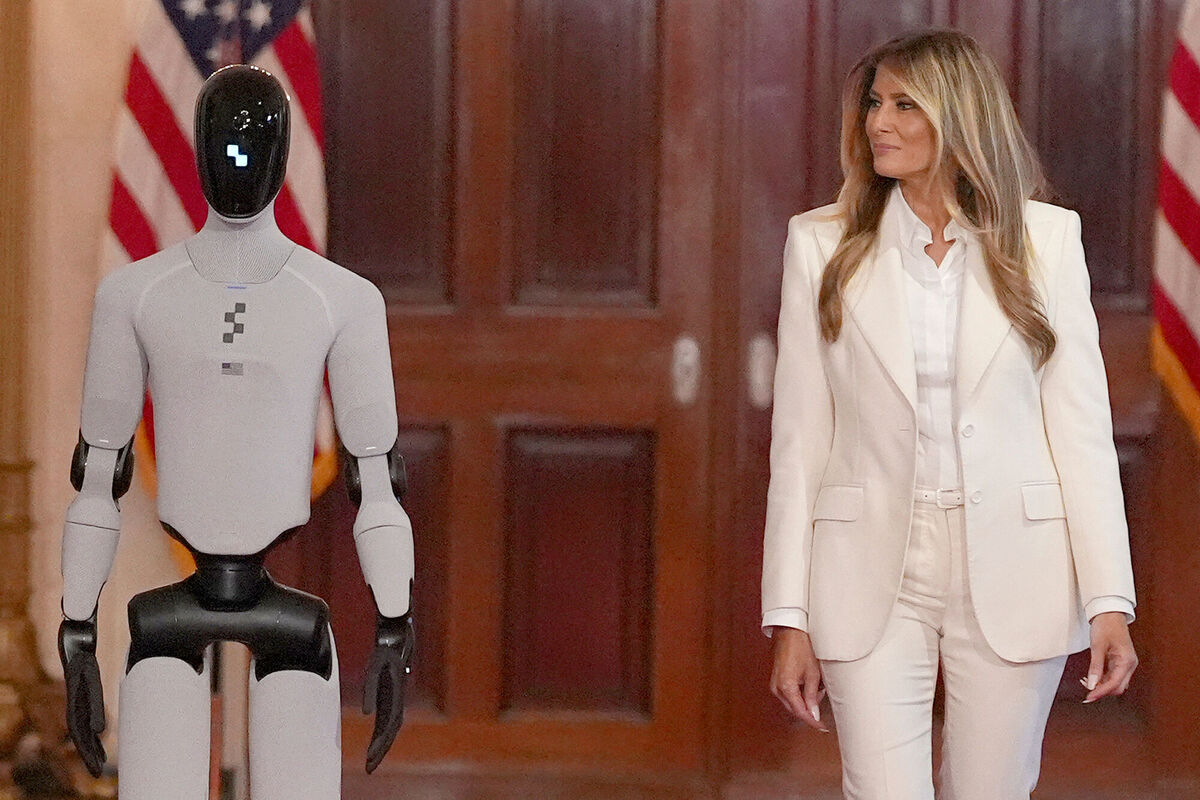
When I saw Melania Trump walking through the White House accompanied by a robot I thought maybe the robots, powered by AI, had taken over while president Trump was distracted by his ‘war’ in Iran that in itself was a distraction from the Epstein files.
It could be an improvement as the robot was well presented, didn’t say anything offensive, and doesn’t seem to have any nasty ex-friends.
There will however never be a robot version of Donald Trump, as duplicating that hair is beyond the capability of modern science.