Letters to the Editor: No surprise that Farranfore to Killarney road is not top priority

Taoiseach Simon Harris opening the Listowel Bypass on Monday with Education Minister Norma Foley, Kerry County Council Cathaoirleach Breandán Fitzgerald, Kerry TD Brendan Griffin, and Senator Ned O'Sullivan. Picture: Valerie O'Sullivan
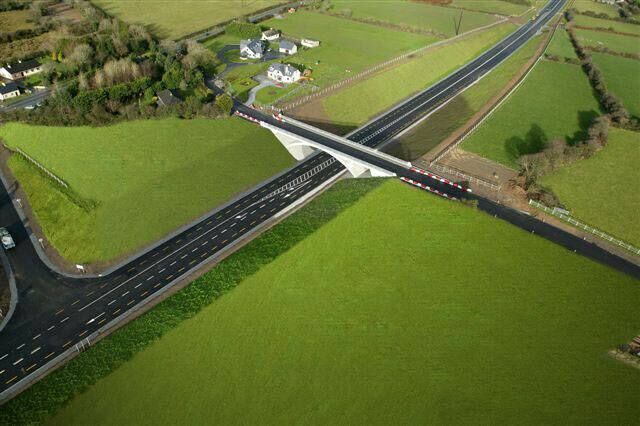
With the opening of a new road around Listowel following on from the major bypass of Macroom last year and the Adare bypass about to get under way in Limerick, Killarney-based politicians are up in arms that a bypass of their busy town seems further away than ever.
The Independent Healy-Raes are particularly incensed and “confused” at Taoiseach Simon Harris’s comments at the official opening of the €62m Listowel bypass on August 19 when no specific mention was made of the long-awaited N22 Farranfore to Killarney project, projected to cost at least €450m.
With respect, are these not the same politicians that have been a persistent thorn in the side of transport minister and former leader of the Green Party, Eamon Ryan?
As they say, you get what you pay for, or should that be vote for? Being on the outside looking in will only get you so far when big infrastructural projects are being considered at Cabinet.
The proposed massive €2bn motorway between Cork and Limerick will likely get precedence before Killarney gets a go-around.
Even in a world careering towards darkness the news that 79 people were, apparently, executed in Iran in July alone must give pause for thought. That on one day in August, 29 people were executed deepens that opprobrium.
That those executions were largely carried out in the name of religious zealotry makes the barbarism seem medieval. It also shows how very difficult assimilation of migrants from a very different culture might be in today’s Europe. Challenging times ahead.
I wish to express my deep concern and dismay over the decision to grant permission for a waste incinerator plant to begin operations in our beloved city of Limerick.
Our city now faces an insidious threat to its environment and the health of its residents. The implications of this incinerator are far-reaching and alarming; we can expect increased air pollution, potentially harmful to both our citizens and the surrounding ecosystem.
What’s most frustrating is the apparent disregard for public opinion in this matter. Many of us have voiced our concerns, yet it seems our local council and governing bodies have turned a deaf ear to our pleas. They appear to have been swayed by industrial rhetoric and short-term economic promises, overlooking the long-term consequences to our environment and public health.
We, the people of Limerick, have faced many challenges throughout our history — from Cromwell’s siege to the Great Famine. We have always shown resilience and a fighting spirit. Now, we must channel that same determination to protect our city from this modern threat. I call upon my fellow citizens to make their voices heard. We must demand transparency about the environmental impact of this incinerator and push for stricter regulations. Let us rally together, march in protest if necessary, and show we will not stand idly by as our home is polluted.
Our elected officials should remember their duty to the people and the land they serve. The health and wellbeing of Limerick’s residents should be their paramount concern, not industrial interests.
The recent regulations signed into law following the enactment of the Courts, Civil Law, Criminal Law and Superannuation Act this year will see members of the Defence Forces, Prison Service, and Fire Services able to retire at the age of 62 rather than 60.
Like An Garda Síochána, whose members can seek extensions to their service, the Government in its attempt to maintain numbers in all departments, especially our frontline services, have pulled the oldest trick in the books.
Because of the retirement of those mentioned at the age of 60, and unable to adequately resource and recruit enough people into those services to shore up the large gaps that have been created, they increased the age of retirement.
While age brings maturity and experience, the fact is those on the frontline need to entice and encourage more younger people into those services. Otherwise, we could end up with a large troupe of elderly folk in situ unable to carry out the most difficult tasks expected of them.
The problem of recruitment and retention cannot be swept under the carpet by this, or any other, government and we need to make these services which are of vital importance to this nation more inviting. The problem with pensions for new recruits or applicants is the starting point. If you pay pittance, you get pittance.
The potential collapse of the Atlantic Meridional Overturning Circulation current is a serious concern for those of us in Ireland and the UK, particularly with the potential contrast to other dangerously warming regions globally.
This could result not only in increased inland flooding in flatter or coastal regions brought on by rising sea levels and more frequent storms, but also by the likely floods of climate refugees seeking relief from heat extremes elsewhere.
Alas, due to the stripping of trees and ancient forests for the fitting of ships during the colonial period and for modern housing and infrastructure projects, there is little left of these natural defences to protect us from such flooding.
There will be an even greater burden on the State and energy resources as more and more people seek refuge in these cooler climes, and the cost of heating homes accelerates. It is not a hopeful picture, particularly when our present governments continue to deny or prepare for climate impacts.
While Taoiseach Simon Harris rightly acknowledges the global migration crisis and the need for a coordinated EU response, it is essential to consider the broader context of Ireland’s foreign policy and its domestic repercussions.
Ireland’s decision to recognise the state of Palestine, although morally commendable, highlights the interconnectedness of international actions and domestic consequences. This recognition, while aligning with our values, seems to have contributed to an increase in asylum seekers from the Middle East. This is not to suggest that we should shy away from making principled stands on the global stage, but rather that we should be fully aware of the potential domestic outcomes of such decisions.
Furthermore, the issue of migration is exacerbated by our chronic underinvestment in key public sectors. The shortage of housing, healthcare, education, and childcare resources has turned what could be a manageable situation into a crisis. This is a failure of successive governments. The lack of adequate planning and resources to accommodate new arrivals, whether they be migrants or homebound citizens, has made the situation more dire.
It is clear that if we wish to address the challenges posed by increased migration, we need a twofold approach. First, our foreign policy decisions must be made with a full understanding of their potential domestic impacts. Second, we need to prioritise investment in public services to ensure that our society can cohesively absorb new members, rather than strain under the pressure.
Ireland must continue to uphold its humanitarian values while also ensuring that we are prepared for the realities that follow. The key to this balance lies in prudent policy-making and a commitment to strengthening our national infrastructure.
Many advocates are getting excited about our new Mental Health Bill, that will allow more scrutiny of our mental health services, so as to promote ‘human rights’.
But many mental health professionals and families I work with as a social worker, are concerned that the proposal to raise the criteria for involuntary admission and treatment will mean patients will only be admitted at the 11th hour when there is an ‘imminent threat to the health of the person’ and for the ‘protection of life’.
The sad case of the murder by mentally ill Valdo Calocane in Nottingham in 2023 is surely food for thought?