If you’ve ever paid extra for “never frozen” salmon in an Irish supermarket, a recent EU court ruling suggests you may not be getting what you think. The decision isn’t about a food scare or a safety breach. It’s about something more everyday — whether labels that are legally correct are actually telling consumers the truth.
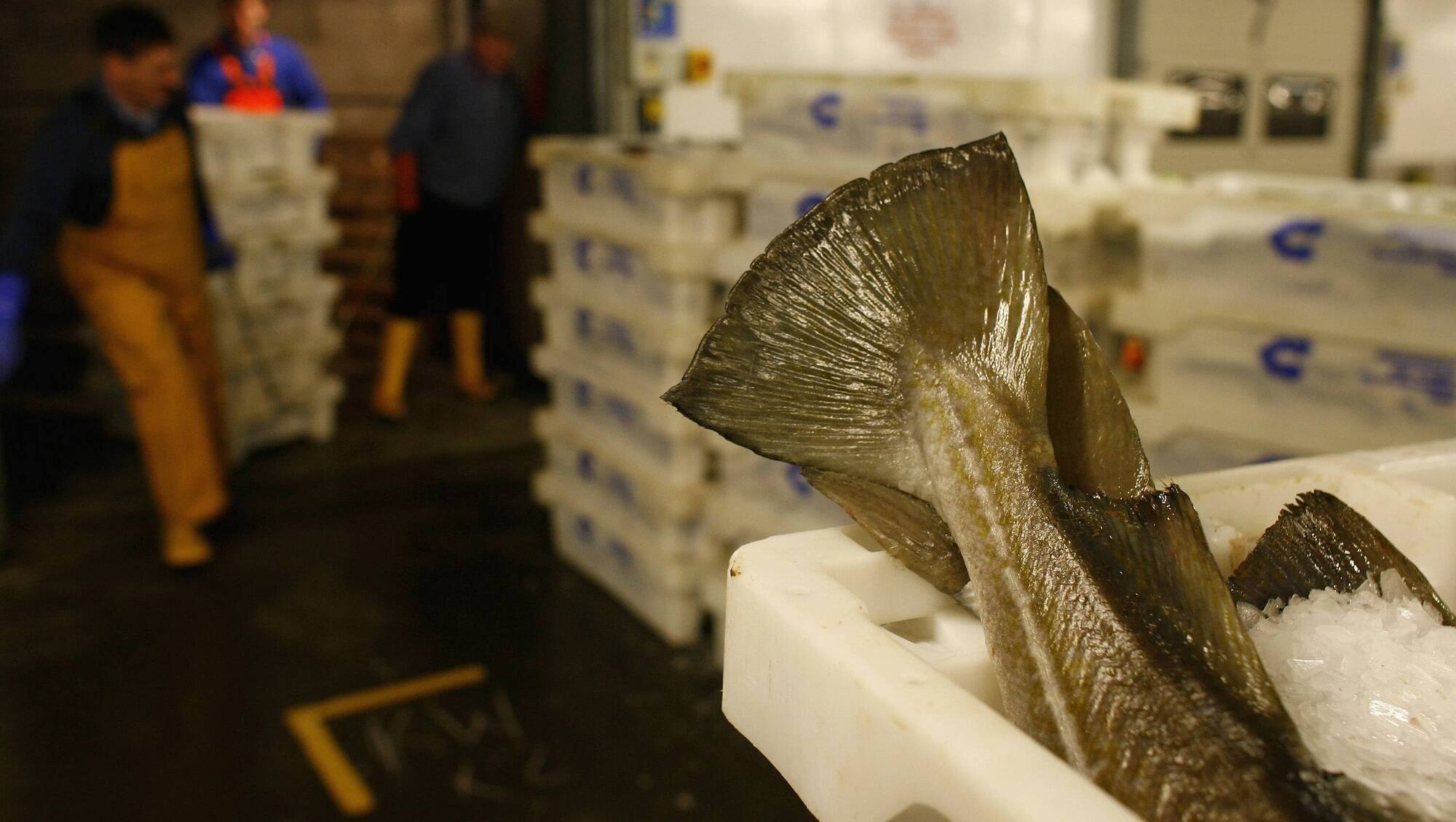
At issue is a common industry practice known as “stiffening”. To make salmon easier to slice, producers cool it to sub-zero temperatures without technically freezing it. Under EU rules, fish treated this way can still be sold as “never frozen”.
Legally, that may be accurate. From a shopper’s point of view, it’s far less clear. Most of us would reasonably assume “never frozen” means exactly that — not fish held just short of freezing for days at a time.
The European Commission tried to address this by introducing a rule limiting how long fish could stay at these stiffening temperatures. The aim was sensible: Stop producers stretching the meaning of “fresh” and protect consumer trust. But the EU’s General Court struck the rule down because the commission failed to consult its own scientific adviser, the European Food Safety Authority, as required.
So the regulation was annulled and we’re back where we started. On the surface, this looks like classic Brussels bureaucracy: A well-meaning rule undone by a procedural slip. But for Irish shoppers, the consequences are real.
Fish stored for extended periods at near-freezing temperatures can once again be marketed as “never frozen”, even if that label doesn’t reflect how most people understand it.
This points to a deeper problem. The issue here was never really food safety. It was perception. It was about whether shoppers are being given a clear and honest picture of what they’re buying.
EU consumer law already says food labels must not mislead by creating a false overall impression. Had the commission focused on clearer labelling — rather than trying to regulate processing time — it might have avoided defeat in court and delivered something far more useful to consumers.
Ireland’s own approach shows how this can work. The Food Safety Authority of Ireland regularly assesses food claims based on how ordinary people are likely to interpret them, not just whether they meet narrow technical definitions. Claims about freshness or freezing are judged with common sense.
That matters for retailers, too. Irish supermarkets depend on consumer trust. Clear labels reduce complaints, protect reputations, and avoid awkward situations where staff are left defending products that technically comply with regulations but leave customers feeling misled.
The court’s ruling isn’t hostility to regulation. It’s a reminder that good regulation starts with choosing the right tools.
Clear information does more for Irish shoppers than complex process rules that collapse under legal scrutiny. If we’re going to trust what we see on supermarket shelves, regulators — in Brussels and at home — need to make sure food labels mean what people reasonably think they mean.
Heather Richie, Leenane, Co Galway
Counting the dead
There have been several credible reports that the number of deaths due to the genocide in Gaza is far higher than the casualty reports by the Israeli government and by the Hamas-run Gaza administration.
A report in The Lancet medical journal on July 20, 2024, “Counting the dead in Gaza: Difficult but essential” stated that “it is not implausible to estimate that up to 186, 000 or even more deaths could be attributable to the current conflict in Gaza”.
A more recent report, in the Australian Arena Magazine on July 11, 2025, “Skewering History: The Odious Politics of Counting Gaza’s Dead”, suggests that “the total Gazan death toll would accordingly be 136,000 violent deaths plus 544,000 from imposed deprivation, leading to a staggering total of 680,000 deaths up to April 25, 2025”.
Ralph Nader is a US campaigner for consumer protection, environmental issues, and human rights. In an open letter to journalists dated August 20, 2025, on the vast undercount of deaths in Gaza he estimates that about 500,000 deaths have been caused by the genocide. Nader writes: “If you take the current Hamas figure of just over 62,000, you are telling the public that 97% of Gazans are still alive. This is lethally absurd. A more conservative figure is that 500,000 Palestinians have been killed.”
The deaths caused by the genocide continue daily and will go on for years after the shooting and bombing stops. All these estimates will be disputed by those who are perpetrating or being complicit in the genocide. Some of these estimates may be too high, but the final death toll for the Palestinian genocide may be significantly higher. A huge proportion of those deaths are children.
It begs the question, are any of us doing enough to stop this genocide?
Edward Horgan, Castletroy, Limerick


Cancel anytime
Enquiry needed
The not guilty verdict in the Limerick traffic ticket case, was to many — and I’m sure many serving and retired members of the Garda Síochána — a well-deserved outcome in a case that should never have seen the light of day.
Questions need to be asked, not only of the DPP, but of senior Garda officers, both serving and retired, who oversaw this investigation: Why did it get this far, and who ultimately pursued it with such vigour?
For many decades, gardaí who issued on-the-spot fines were approached by concerned citizens, politicians, and councillors, to look favourably upon them and allow for the cancellation of tickets.
This wasn’t something new, and those in senior management positions, even those in Garda HQ would have themselves been approached to cancel tickets and some would have cancelled or quashed them.
Thanks to the hard work of the Garda Representative Association, and the legal defence they provided, these charges were not proven beyond a reasonable doubt.
The jury, ordinary citizens of this State, must also be commended for their fair and impartial verdict.
To superintendent O’Neill and his four accused, while this was a very trying, humiliating, and exhausting experience for you, you can now hold your heads high and know that you did nothing wrong in the eyes of the law, but also in the eyes of the citizens of this State.
An enquiry into the failure by senior management in Garda HQ, and those who oversaw the investigation, is what is required.
Otherwise, ordinary Garda members who followed this case will wonder, given all of the changes imposed on them this last decade, is the job, once a career, worth it?
Christy Galligan (retired garda sergeant), Letterkenny, Co Donegal