Letters to the Editor: Ireland needs a dedicated defence minister
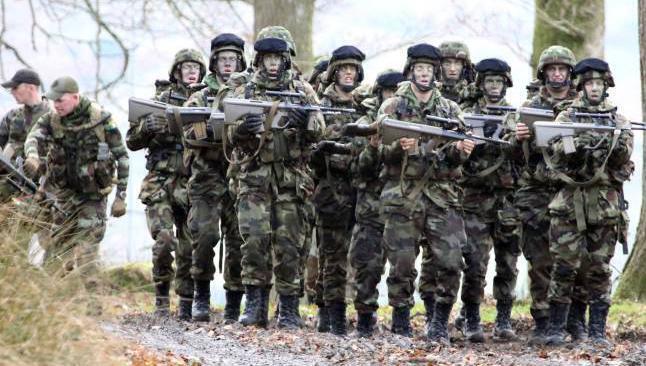
Reader James Quinn writes: 'As we witness unprecedented geopolitical shifts and the resurgence of traditional security challenges, Ireland cannot afford to remain complacent.' Stock picture
The absence of a dedicated minister for defence in Ireland for more than a decade underscores a critical gap in our national security framework (‘Cormac O'Keeffe: Ireland is 13 years without a dedicated minister for defence’, Irish Examiner, April 12). In a rapidly evolving global landscape where security threats transcend borders, it’s imperative that Ireland reassesses its priorities. The recent remarks by outgoing taoiseach Leo Varadkar highlight the urgency of the situation, particularly in light of escalating tensions in Europe and the shifting dynamics of international alliances.
As we witness unprecedented geopolitical shifts and the resurgence of traditional security challenges, Ireland cannot afford to remain complacent. The Defence Forces’ ambitious reform agenda and plans for expansion demand focused leadership and strategic oversight. Without a dedicated minister at the helm, we risk undermining our ability to effectively respond to emerging threats and safeguard our national interests.
Moreover, Ireland’s unique position within the EU underscores the need for robust defence capabilities and active engagement in collective security initiatives. As our European counterparts prioritise defence spending and strengthen their military capacities, Ireland must not lag behind. A dedicated defence minister would not only streamline decision-making processes but also signal our commitment to upholding regional stability and contributing to international security efforts.
In light of these pressing challenges and opportunities, it’s imperative that Ireland re-evaluates its approach to defence governance. Investing in a dedicated defence minister is not just a matter of national security; it’s a strategic imperative to ensure our preparedness in an increasingly uncertain world. By prioritising the appointment of a defence minister, Ireland can reaffirm its commitment to safeguarding its citizens, protecting its sovereignty, and playing a more proactive role on the global stage.
In relation to the absence of a dedicated minister for defence I would submit this is somewhat of a side issue. The Government has to acknowledge that investment levels of 0.2% of GDP in defence are inadequate to fund the defence capability to ensure, as the Defence Forces’ charter states‚ the ability to deter acts of external aggression.
The thoughts of the outgoing taoiseach are valid in that the landscape has massively shifted and now defence must be Ireland’s and Ireland’s alone responsibility. There is still an unrealistic reliance on the UK to act in support of Ireland, however the uncertain political and socio economic conditions make that potential uncertain at best.
Ireland enjoys a booming economy and now is the time to dust off the dozens of white papers on defence that litter the floors of the offices of the Irish civil servants who commissioned them over the years and start to build a proper framework so Ireland can indeed progress its economic ambitions safe in the knowledge at least a first responder capability for defence exists.
The editorial — ‘Flight not fight’ (Irish Examiner, April 16) — highlights yet again the continuing, unaddressed problems within the Defence Forces.
Pay, allowances, and pensions not fit for purpose leading to the crisis of retention, and still largely unaddressed despite many warnings over many years. The evidence is clear for all to see with a just one ship operational in the Naval Service, and every unit of the Defence Forces under strength.
The defence budget, despite some minimal improvement, is still not adequate to provide for the defence of the State, and the proposed increase in the budget is rising too slowly to effect the required change.
At a time of heightened concerns regarding defence and security all across Europe, you would expect the Government to expedite efforts to remedy our defence deficiencies. Micheál Martin, Tánaiste and defence minister, needs to increase the pace of improvement and increase the budgetary allocation for defence.
Why are we in Ireland continuing to harbour both the Russian and Israeli ambassadors?
These ambassadors represent regimes needlessly murdering and maiming untold numbers of innocent men, women, and children; indiscriminately raining down bombs and bullets, and slaughtering unfortunate innocents in an inhumane and barbaric manner.
By any measure they represent countries hell-bent on genocide which we understand only too well from our own history. Our own common criminals would be in jail for a lot less carnage and destruction.
The ambassadors represent callous and murderous warmongers against a multitude of UN human rights resolutions and are now rightly considered permanent pariahs by the international community.
The Government’s pathetic attitude is that we should keep diplomatic channels open, but both these regimes have proven time and again that they disavow and reject all approaches in this regard.
The Government should unceremoniously eject both individuals and their retinue and leave whatever ‘diplomacy’ to those countries who support one or the other of these murderous regimes like the US, Germany, France, China, India, and Hungary.
Ireland is struggling to reduce its greenhouse gas emissions even while making great strides in harnessing wind and solar power. It may be a world leader in tapping its renewable wind resources, with about one quarter of our electricity now wind-generated, but it lies next to bottom of the EU table when it comes to carbon emissions.
There is certainly a case for looking at carbon-free nuclear power here, especially with the development of several small modular reactors (SMRs). Several of those coming on stream are likely to be the most important response to the increasing difficulty in guaranteeing a supply of clean and affordable energy.
What I find odd (being kind rather than critical here) is the apparent approximate similarity of numbers who are pro- and anti-nuclear energy on the grid, but a disproportionate silence on the pro-nuclear front.
Of course, before SMRs could be considered in Ireland, the law would have to change. The Electricity Regulation Acts (1999 and 2006) prohibit the use of nuclear for the generation of electricity.
Say this happens, and the most advanced of the SMRs were to be coming into play by the mid 2030s, who is to say nuclear couldn’t be playing a very important part in lowering Ireland’s emissions to presently unachievable levels by the mid-2030s.
I have only spent a few days in Dubai but my memory, and the advertising material, is all desert-based. Climate change is starting to hit everywhere. Maybe it’s time to accept the reality and do something about it.
Disheartened by the lack of value shown to pedestrians by some reckless drivers, I’m compelled to highlight that pedestrians’ lives matter.
The cost of driver carelessness is staggering, endangering innocent lives at zebra crossings.
It’s baffling how some drivers neglect pedestrian safety by speeding excessively and struggling to stop in time. Responsible driving must be a priority; one reckless decision can shatter families. Everyone, regardless of age or gender, is affected. Education, enforcement, and technological aids are crucial, but they demand a mindset shift. Drivers and pedestrians alike have the right to safety. Every human can be a pedestrian, crossing at clearly labelled crossings.
Let’s take a stand: demand better, and drive with caution, ensuring every journey ends safely. One should avoid self inflicting lasting torment through careless driving. Let’s champion a shift towards a mindset grounded in caution and consideration for pedestrians worldwide.

CLIMATE & SUSTAINABILITY HUB