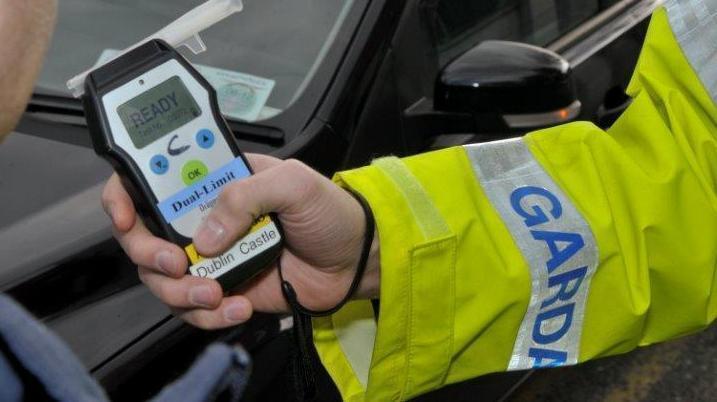
Letters to the Editor: More random breath testing will reduce fatalities
Paul Vallely
Ballycahill, Co Tipperary
Tadhg OâDonovan
Fermoy
Larry Dunne
Rosslare Harbour, Co Wexford
Eugene Gath
Pallaskenry, Co Limerick
Try from âŹ1.50 / week
SUBSCRIBEIn 1982, I was involved in the commencement and subsequent enforcement of Random Breath Testing (RBT) in NSW, Australia. At that time, a positive blood alcohol concentration (BAC) was an influencing factor in about 30% of road fatalities. In 2021, positive BAC accounted for 17% of road fatalities â the RBT programme appeared to have almost halved the rate of drink-driving fatalities according to government data.
Looking at the situation in Ireland, I refer to the RSA report dated May 2023 titled âContributing Factors and Driver Fatalities: Examining key Dangerous Behavioursâ. It reports that of 37% of driver fatalities, where the deceased was subject to a toxicology test, a positive BAC was recorded. Interestingly, the report shows that in 26% of driver fatalities (where speed was identified at the time of the event), excessive speed was an influencing factor. In other words, drink-driving arguably accounted for almost a third more fatalities than speeding.Â
It is notable then that much road safety debate seems to centre on reducing speeding rather than reducing drink-driving. I might add that in my own experience with law enforcement, a considerable number of speeding events are influenced by alcohol in the first place.
This begs the question of what is being done to reduce the number of drink-driving fatalities in Ireland. I am unable to determine how many RBT checks are conducted in Ireland, although anecdotal evidence suggests only testing of about 5% of the number of licenced drivers are conducted per annum. In NSW for 2022, this figure was about 64% with four million RBTs conducted..
In the six years I have lived in Ireland, I have not seen any RBT units. I have been stopped a number of times for random insurance/registration checks which would be a perfect opportunity for RBT, but this was not the case. I am not aware of any road fatalities where insurance or registration were contributing factors.
I stress, this is not the fault of operational gardaĂ, but one of statutory powers and resources initiated at the government, then departmental, level.
Before readers condemn the idea of RBT, I suggest they wait till the end of the Christmas and New Year period to see how many people lost their lives due to drink-driving. Perhaps the fatalities will include a family member, a relative, a friend, or perhaps a school child they know. They might then wonder how many would still be alive if a realistic RBT programme was in operation.
Paul Vallely
Ballycahill, Co Tipperary
Religion should be a choice for adults to make
Nick Folley writes in his letter that children learn whatever kind of religious belief systems that parents believe in (whether it belongs to an organised religion or not) by simply living day to day with their parents â âTeaching religion to our childrenâ (Irish Examiner, December 20). This is true but parents shouldnât, I believe, oblige their young children to join any kind of organised religion in the same way that no child should ever be made (in a properly free country) to join a political party while they are young.
Just because adult parents acting with an adult religious cleric can have complete power to make an innocent child join an organised religion with all its rules, they still shouldnât actually do it. This is because they as unwitting parents could be unfairly placing unnecessary obstacles of an emotional kind in the way of their offspringâs ability to later on as an adult dispassionately choose his or her own religion.
Parents should teach their child spiritual values â those which value all human beings as being more important than money, property, and status. Today there exists too much of the kind of religion that is unable to teach its lay members these spiritual values. Thus too many people are only concerned with making money all the week and then treating going to a religious service as some kind of golden box-tick which they are obliged to mark up every Sunday just by their mere presence at it and never saying anything of personal worth during it.Â
If people could have the power to choose their own religion as mature adults then they surely would be no longer satisfied just to go to any religious service with nothing personal from the heart to contribute to it?
If the men of violence in Northern Ireland had been facilitated by their respective Churches to express their own feelings about the spiritual messages of the Gospelâs account of the Last Judgment and also the parable of the Good Samaritan they may well have thought twice before hurting anyone who belonged to a different religion. Also in more recent times a certain Galway politician might not have been able to take the wrong side of the Gospel of St Luke without someone pointing it out to him that he was sadly doing so when he brazenly declared âthere was no room in the innâ at Christmas for refugees when the hotel meant for them was deliberately burnt down?
Sean OâBrien
Kilrush, Co Clare
Legislate for the prohibition of disposable vapes
While I welcome the enactment of legislation to prohibit the sale of vapes to those under the age of 18, I am disappointed at the failure of our legislators to introduce legislation that would substantially reduce the availability of vapes.
As an environmental advocate, one piece of legislation that immediately comes to mind is the prohibition of all disposable vapes. While most publicity has been shared on the legitimate adversity associated with vaping, in contrast very little information is on public record as to the consequences of disposable vapes for the vast majority of society who do not participate in the above practice. I can confirm as one on regular litter patrol that disposable vapes end up as litter on our streets and are still toxic.
My question to your readers is how long will we have to wait for proactive legislation in relation to the prohibition of disposable vapes?
Tadhg OâDonovan
Fermoy
Advertising standards reach a puritanical level
Puritianism 2023: The Advertising Standards Authority of Ireland (ASAI) has banned a TV ad for fried chicken from further broadcast. The ad portrayed a bride to be and her bridesmaid stopping off at a KFC outlet en route to the wedding venue.
I was familiar with the ad. Simple enough; but clever and witty at the same time. The message to me was that mundane things can be part of a very big day in a life.
But the ASAI was having none of that.
It ruled that the family bucket of chicken purchased by the two women had broken the rules.
This gave an unhealthy eating message; sharing a family meal bucket between the two contravened the standards of the ASAI.
And I pondered. Ulysses was banned when first published. Riots occurred in the Abbey Theatre over the use of the term âshiftâ in a play.
The Catholic clergy railed against dancehalls and company keeping. John McGahern lost his teaching post because of a book he had written.
Thankfully, all of the above nonsense has been consigned to the bin of history.
Or so one would like to think.
Iâm not averse to humour and irony. But by any standard, this decision is daft.
Is this to be the new puritanism? Protecting 71-year-old me from the temptation to drive to the nearest KFC and gorge myself?
As WB Yeats said in another context: âYou have disgraced yourselves again.â
Larry Dunne
Rosslare Harbour, Co Wexford
LED headlights pose danger to oncoming drivers
The number of vehicles with LED headlights seems to be increasing rapidly, making night-time driving, especially in the countryside, at best unpleasant and at worst perilous. Even dipped LED headlights seem brighter than normal full beams.Â
Such lights on SUVs, vans, and lorries are even worse, often dazzling the oncoming driver to the extent of forcing them to a temporary halt. These lights are brighter, bluer and more focused along their central axis, thus creating a blinding glare when looking at them head-on.Â
I would ask the RSA to investigate the dangers presented by LED headlights and to consider placing restrictions on their intensity, luminosity, focus, and frequency range. It is difficult to attribute road deaths at night to drivers being blinded by such lights, but I have no doubt that they will add to them.
Eugene Gath
Pallaskenry, Co Limerick
Build better homes to save on heating costs
In 1973, when the Middle Eastern oil producers got together to control oil prices, a heating manager advised me that the solution to saving money on heating was to buy heavier jumpers and have fitted carpets in the house.
In reality, not much has changed. Most people cannot afford to retrofit their dwellings. Only modern, passive, professionally designed and built dwellings can meet the economic circumstances of today in relation to home heating.
This requires serious rewriting of the regulations for construction of housing, and, more important, actual application of the regulations. Additionally, banks, builders, insulation providers, and all those involved in design and construction, need to seriously rethink their roles.
Barry Mahon
Sherkin Island
Newsletter
Sign up to the best reads of the week from irishexaminer.com selected just for you.

Select your favourite newsletters and get the best of Irish Examiner delivered to your inbox
Thursday, January 1, 2026 - 3:00 PM
Thursday, January 1, 2026 - 11:00 AM
Thursday, January 1, 2026 - 3:00 PM
© Examiner Echo Group Limited