Letters to the Editor: Winter solstice should inspire us to let the light in at Christmas
One reader urges a positive response to the dark days that many people are enduring, while others consider issues including religion, defence, and Hungary's relationship with Russia
Letters to the Editor: Winter solstice should inspire us to let the light in at Christmas

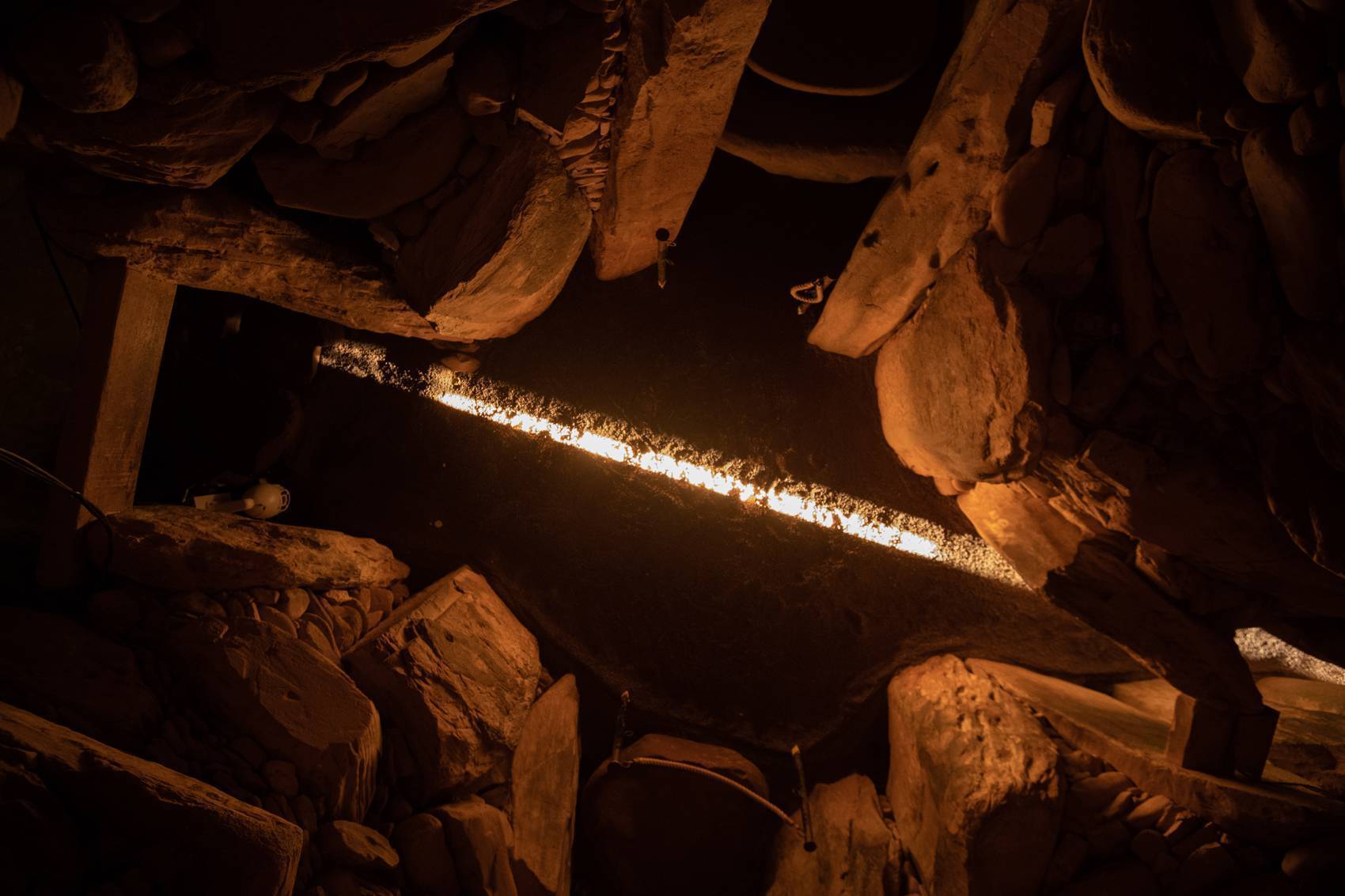
Clouds permitting, solstice sunrise will once again illuminate the interior of Newgrange on Thursday, and the grand stretch of ever-lengthening days starts on Friday. Picture: John Lalor/National Monuments Service

Winter solstice on Thursday, December 21, is the day of least daylight in the year, aka ‘the shortest day in the year’.

After winter solstice, daylight gradually increases until the summer solstice in June.

Although winter is the dormant season of darkness and cold, winter solstice marks the turning of the sun and the days getting longer.

Celebrations of returning light are common in history with festivals around the time of winter solstice. Fires were lit to symbolise the heat, light and life-giving properties of the returning sun.

Christians all over the world celebrate the birth of Christ on Christmas Day. We decorate our homes with lights to welcome the birth of the ‘true light of the world’.

Similar to the old 12-day pagan festivals, which celebrated the rebirth of the sun god, Sol Invictus, at winter solstice, christians celebrate the 12 days of Christmas to welcome the birth of Christ.

Many struggling families have little to celebrate this Christmas with the St Vincent De Paul (SVP) Society receiving more than 225,000 calls for help already this year, as more and more families experience poverty throughout Ireland.

Last year, the number seeking help was 230,000 and those figures continue to rise with requests coming in for much-needed food, fuel, clothing and toys. Over the past ten years, SVP has provided €332m worth of direct assistance to those who have sought its help.

Hopefully, the rebirth of light will brighten the way for people of all religions and none this festive season.

It will shine brighter if we share just a fraction of our resources with the war-torn, the needy, the isolated, the lonely, and the homeless this Christmas season.

Billy Ryle, Tralee, Co Kerry

LÉ Eithne is too valuable to scrap

Now that a decision has been made to scrap some older vessels of the Irish Navy, it is logical to query the scrapping of the naval flagship LÉ Eithne.

In my own naval service days, I was involved in the oversight and commissioning of three vessels for our naval use, the last was LÉ Eithne, from 1984 to 1986.

She was a unique ship equipped with much modern technology, both for single helicopter operations and helicopter refuelling, together with a suite of radars for primary and secondary tracking of aircraft. Additionally, in her operations room, she had sonar detection capability.

As the only ship with such capability and the ongoing requirement for air detection and sonar, it seems hasty to scrap a ship that was 36 years old when first tied up.

It might be prudent to refit the ship, bring all equipment to front line standard, and train naval personnel to operate helicopters.

To increase flight deck envelope for helicopter operation, the flight deck could be lengthened and a bow thruster installed to improve self manoeuvring.

Losing such a ship takes with it years of skills and training and a capability that will have to be recovered in the future.

John Jordan, ex-CO LÉ Eithne, Cloyne, Co Cork

Hungary bites EU hand that feeds

Twenty years ago, 83.8% of Hungarian voters (45.6% turnout) enthusiastically approved a referendum to join the EU. It subsequently joined on May 1, 2004 making it one of the newer members of a union that originated in the ‘post-war’ 1950s.

Last week Hungary’s 10m citizens, through prime minister, Viktor Orbán, vetoed the munificent wishes of the other 738m EU citizens by blocking a funding deal of €50 billion for a Russian-invaded, war-torn Ukraine.

On the same day, Vladimir Putin presented himself, for four hours on Russian state television, in his annual press conference and phone-in, in a defiant mood, buoyed by the perception that his 'long war strategy’ in Ukraine was paying off and that democracy, shackled by the necessities of transparency, accountability, human rights and public opinion, is no match for autocracy when it comes to the subjugation of another nation by brute military force.

This week must be a major wake-up call for the EU and the rules it has adopted in self governance.

If it continues to leave itself at the mercy of a consistently belligerent and disruptive member(s), it will, like the UN, also birthed in the aftermath of the Second World War, become an impotent player, lacking credibility, authority and influence in world politics.

Little wonder then that Putin cut a smug and goading posture, knowing he already had Orbán ‘in his pocket’ and that his minions were well advanced in contrivances to influence next year’s US presidential election in favour of Donald Trump.

Michael Gannon, Saint Thomas Sq, Kilkenny City

Teaching religion to our children

Sean O’Brien makes the same fundamental error made by everyone proposing “we shouldn’t teach our religion to our children”

(‘Religion-Based War’ — Irish Examiner letters, December 14).

Any parent holding a worldview, atheism included, passes it on to their children without even realising it by example and lifestyle.

A parent who never visibly prays, reads their Bible, goes to Mass, mosque or temple is already teaching their kids something about religion: that it is unimportant to them.

A parent who teaches their children ‘all religions are equally true’ doesn’t actually believe any of them, because — as Mr O’Brien rightly notes — there are many points of disagreement between religions so this statement cannot be true.

In the real world, all parents strive to pass on to their children the values and beliefs they hold to be true and important.

We wouldn’t deviate from this line of thinking for anything else we considered important — for example, teaching our kids right from wrong, about environmentalism, drugs or road safety — and wait in silence till they’re 18 to let them make their ‘free choice’.

And because children do not live in a vacuum, their ‘free choice’ would be based on the influence of just about everyone and everything except their own parents at that stage: peers, TV, social media, lobbyists, strangers.

Truth be told, the only people who think this a reasonable approach to take over the fate of our immortal souls are those who don’t believe either in the soul or what happens to it after death.

Nor do they believe that parents will be held accountable for their negligence in this regard when they face eternal judgment.

As for the suggestion that religion lay at the root of The Troubles, suffice to say the PIRA and UVF were not blowing each other up over transubstantiation or the doctrine of sola scriptura.

Take away all religion and you still have loyalists, republicans, politics, flags, murals, and the socio-economic roots of a 30-year conflict.

Nick Folley, Carrigaline, Co Cork

More in this section

Revoiced

Newsletter

Sign up to the best reads of the week from irishexaminer.com selected just for you.

Cookie Policy Privacy Policy Brand Safety FAQ Help Contact Us Terms and Conditions

© Examiner Echo Group Limited