Mark McAuley, director of Forest Industries Ireland, is correct in saying that we need to “balance our economic, social and environmental objectives” while making forestry more attractive to landowners [ Irish Examiner, August 23].
Farmers have been fooled in the past by unrewarding schemes with hidden pitfalls and it’s not surprising if some have learned to see the government’s forestry ambitions in a cynical light.
I agree with Mr McAuley that landowners need reassurance and firm guarantees before their confidence will be restored.
It’s also true that conifers grow very well in Ireland and I would welcome them into any species mix for new forestry plantations, but Mr McAuley overlooks the realities of forestry management in Ireland today.
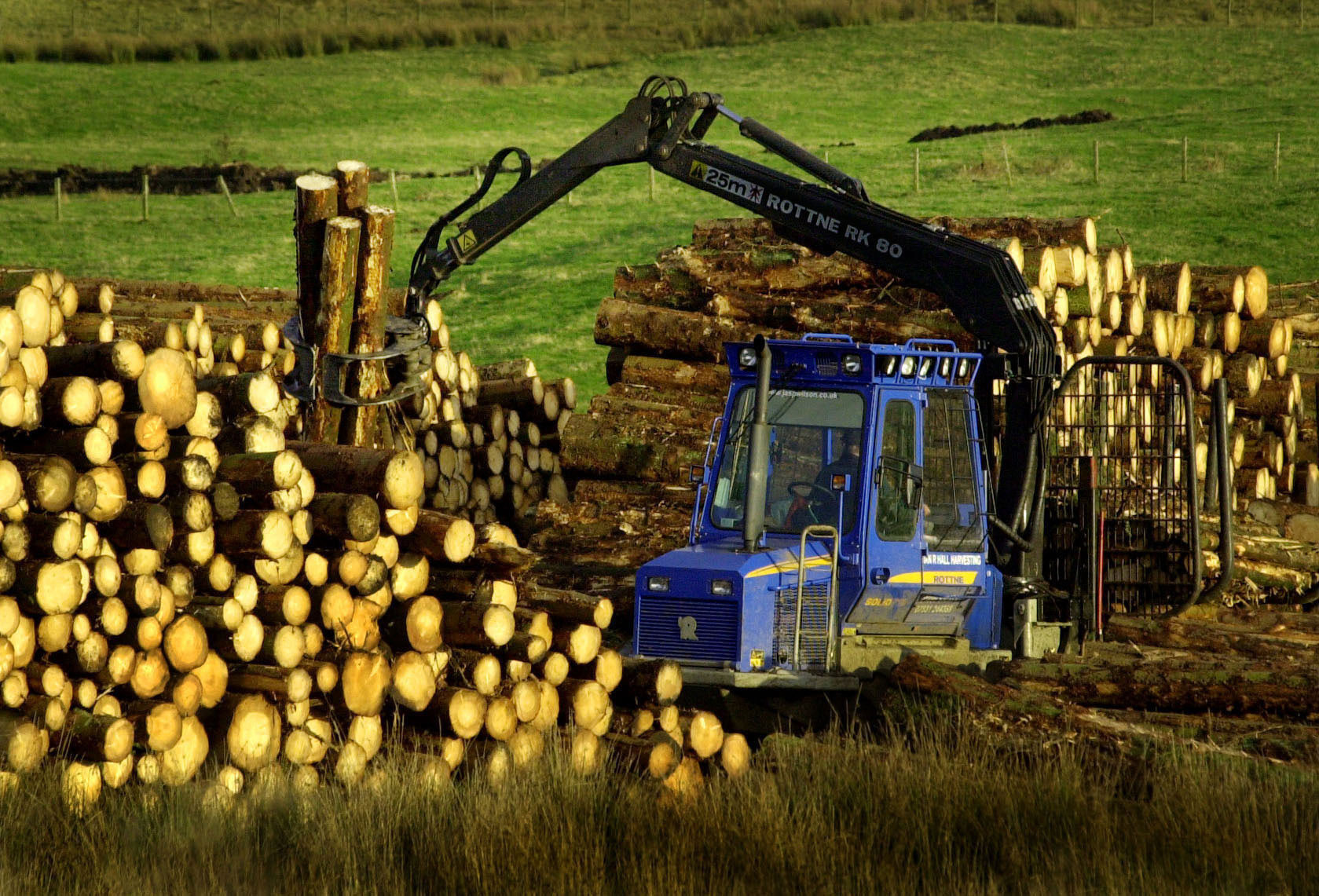
The vast majority of our commercial plantations comprise just one species of tree planted in blocks, which are clear-felled at a relatively young age. This causes the immediate destruction of whatever habitat value these woods have amassed, often during the nesting season, while contributing to soil erosion and pollution of local waterways.
Our forestry industry is much too focused on a handful of conifer species, which makes it highly vulnerable to disease or pests like the spruce bark beetle. In turn, this results in a high reliance by foresters on pesticides and treatments.
I think these fast-growing conifers will always have an important place in Irish forestry, but their management must change.
We need to adapt our woodland management to a multi-species continuous cover model, instead of monoculture blocks for clear-felling. This would maintain forest canopies, maximising resilience and biodiversity, while vastly reducing soil erosion and nutrient run-off from those trees that are felled.
Contrary to what some Irish forestry industry spokespeople often repeat, sawmills and craft industries can use native hardwoods, whose ability to regenerate after harvesting offers new opportunities for Irish timber growers — from longer-lasting fenceposts to higher quality building materials — than sitka spruce, a relatively soft wood, can provide.
The Government needs to support adaptation of the forestry industry to wider species mixes using more sustainable management techniques like coppicing, which is the rotational harvesting of long-lived stools from fast growing hardwoods like hazel, sweet chestnut and even oak.
Through education and training we can bring true diversity to our forestry landscape, making it an industry which any landowner will be proud to join.
Tom Jordan
Trees Please Cork
Macroom and District Environment Group
Management fails to deal with crisis in An Garda Síochána
The recent dispute between civilian staff and the Garda Commissioner shows a force in perpetual crisis.
That civilian staff will be subject to the same rules under the new Policing, Security and Community Safety Bill, as that of their uniformed colleagues could see a mass exodus to other government departments. That they could be prevented from transferring to other departments will heighten this crisis.
Civilian staff are responsible for some key areas within the force but there has been a growing fractious division between some civilian staff and frontline uniformed staff in some of those key areas.
As this is only part of the overall crisis that is coming to a head, we can see that the number of recruits in Templemore will not reach the dizzying heights of 1,000 this year that was mooted by the Justice Minister or the Garda Commissioner.
Given that there were only 370 recruits in Templemore in July of this year, it barely meets the losses sustained this year alone with 150 retirements and 59 resignations.
Last year alone, gardaí lost 75,000 days approximately due to injuries on duty. A total of 235,000 days were lost to a variety of illnesses which was equivalent to 645 gardaí off on any given day.
The vote of no confidence in the Garda Commissioner, and further disputes over pay and pensions for new recruits, rosters, bureaucratic oversight, suspensions etc, is leading to the perfect storm and one that this Government and the commissioner seem to have lost control of, such as on the streets of Dublin.
It seems that those in charge are lacking the basic skill sets in industrial relations conflict resolution and management, as well as effective negotiation skills.
Christy Galligan
(retired garda sergeant)
Letterkenny, Co Donegal
Target high flyers for carbon taxes
In the West Cork area, you might often see helicopters overhead. Perhaps you’re visiting Garrettstown beach, and you look up at the chopper flying low above the beach, and you think to yourself: ‘Isn’t it lucky we have such a brilliant air rescue service, Godspeed” — until you see the helicopters, sometimes in pairs, descend slowly in the distance at the Old Head of Kinsale.
They are not emergency craft at all, unless you count getting 18 holes of golf in before sunset an emergency.
These helicopters might come from anywhere. There’s a service on offer to collect a tourist from any hotel in Ireland. Often it’s Killarney to the Old Head, or vice versa, to get two games in one day.
This is astonishingly self-centred to think that you deserve a 20-minute journey in the air, instead of a two-hour drive by car. The carbon emissions are inversely increased.
Who does this indulgence benefit? Only very large hotels and golf courses. None of these wealthy visitors are spending money with real, local people — don’t pretend tips to waiters is a sustainable economy.
Meanwhile, the rest of us pay a tonne for energy, and we try to turn off lights.
All private aircraft should be banned in Ireland, as we can’t afford this importation of carbon emissions. Let them fly in other countries if they can’t handle our roads. We will be fined in the future for failing to meet climate targets — let’s start targeting high-flying fruit instead of low-hanging fruit.
Fachtna O’Raftery
Clonakilty
Co Cork
Ireland should align with Brics
All empires have a limited lifespan — as one declines another emerges. The writing is on the wall for the American empire now being torn apart by internal division. It is now being eclipsed by an emerging grouping of 11 nations led by Brazil, Russia, India, China, and South Africa (the Brics countries) which will represent up to 50% of the world’s population and one third of its economic output.
While it will have differing political systems, ranging from repressive autocracies to developing democracies, it will essentially represent the economic interests of the Global South — interests largely ignored by our Global North.
While we are having a national debate on where we stand with our traditional military neutrality and security in Europe and the world, it would be remiss of us not to consider if membership of this new international order would better suit our interests and identity.
Such a debate would force us, as a nation, to define our future standing in the world, in a withering global North or with an emerging global South.
Brendan Butler
Drumcondra
Dublin 9