Letters to the Editor: Ireland's fight for neutrality has only just begun
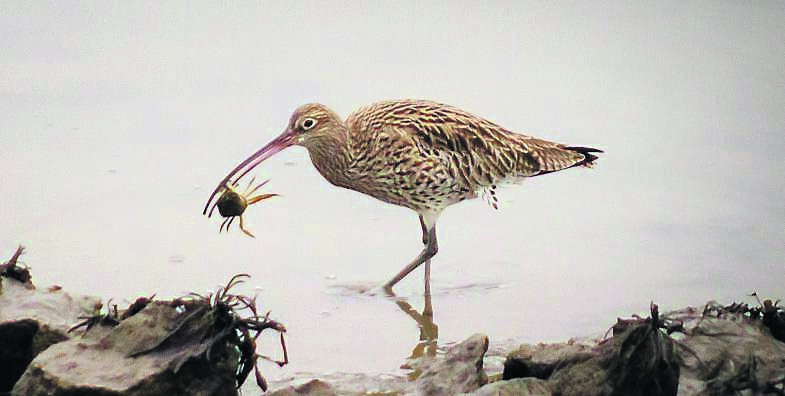
The work done by NARGC has major beneficial impacts to other species such as curlew. 	Picture: Brian Fahy

The work done by NARGC has major beneficial impacts to other species such as curlew. Picture: Brian Fahy

Seán O’Riordan warns that Being neutral means nothing to despots. Just ask the Belgians. He’s referring to Hitler’s 1940 defeat of Belgium, whose declared neutrality failed to protect it from invasion.

Part of the problem for Belgium is that it had seized Rwanda and Burundi from the German Empire during the First World War. Belgium’s neutrality was therefore somewhat compromised, given its firm intention to fight to keep its African colonies and Germany’s determination to recover them, among its many other war aims.

Thankfully, Ireland has never engaged in imperialist conquest. So our neutrality cannot usefully be compared to Belgium’s in 1940. It must be considered on its own merits.

Neutrality is still considered the best, if imperfect, foreign policy stance by 20 states, regardless of the tendency of despots, and even non-despots, to invade countries despite their neutral status (eg the 1989 US invasion of neutral Panama, which was deemed illegal by the UN).

Regrettably, Ireland’s neutrality is becoming increasingly threadbare, given the current Government’s constant erosion of it and the clamour in establishment circles to ditch it altogether. Citizens who value neutrality will have to take an active stance in its defence. 

Otherwise, it’s full-steam ahead to a European army with Irish participation, and Ireland as a future Western Alliance war zone.

Dominic Carroll

Ardfield

Co Cork

Debate on our neutrality

Sean O’Riordan’s piece on neutrality — ‘Neutral or Nato? Time to give the public a say’ — highlights the gradual erosion by stealth of our neutrality over the last few years. He rightly points out that we are neglecting our own interests (fisheries protection and our proud UN tradition) to please the EU with participation in ‘battlegroups’ and to deal the continuing fallout from Nato’s disastrous attack on Libya in 2011.

Nevertheless he argues we cannot stand idly by if our friend is attacked by a bully.

He advances our inability to protect vital submarine infrastructure that lies underneath our west coast as an argument to consider joining Nato. 

As it happens, a friend, our fellow EU member Germany, has only recently had vital submarine infrastructure attacked by a bully. Our media seems disinterested in the debate as to who that bully might be. 

How are we to have a national debate or referendum on Nato and neutrality if the media remains so coy at best, downright partisan at worst, on news that is so relevant to any such a debate. Would that be democratic?

Tim O’Halloran

Finglas

Dublin 11

For the love of grouse

The article by Donal Hickey ‘Does hunting birds on a conservation list make sense’ failed to acknowledge that the three largest and most successful grouse projects are actually ran by game shooters linked to the National Association of Regional Game Councils (NARGC) all on a voluntary basis with no funding from the State.

The grouse projects are carried out by these volunteers involved in:

  • Heather management and control;
  • Setting out medicated grit;
  • Predator control;
  • Controlling access to nesting areas;
  • Doing species counts.

The above projects and the work by our club members who are passionate about the grouse, has major beneficial impacts to other species such as curlew (Ballydangan Grouse project).

The season for red grouse is short lasting only one month, and all clubs that manage grouse bogs and that shoot grouse have voluntary bag limits and limit the number of days and cast lots to see who will hunt. Without an open season for grouse there is no incentive to balance the hard work of habitat management and predator control involved and monies spent, grouse will go the way of the grey partridge and curlew, and it wont be because of hunting.

Hunting, whether you agree with it or not, and the hunting community do more for conservation of species and are involved in more foot on the ground conservation projects in the world than armchair ecologists who ring their hands decrying an activity that accounts for less than 1% of the pressures that wildlife has to deal with.

Encroaching development, Single species commercial forestry, and agricultural practices driven from Europe that forces farmers to cut down ditches and drain habitat rich bottoms that are generations in the growing is the real cause and I cant understand why this isn’t acknowledged more. 

The NARGC grouse projects have got European, NPWS, and ministerial recognition, and along with our the grey partridge projects across the Country. Our open days are so successful that we need mini buses to convey people around.

Keith Foran

Mountmellick

Co Laois

No substitute for live music

The recently-concluded, three-part Cork Proms season has served up an outstanding feast of musical entertainment and enjoyment for the people of Cork.
I missed the second element devoted to Broadway musicals, but was privileged to be able to take in the Beethoven and Beatles nights, memories of which I will treasure for the rest of my life.

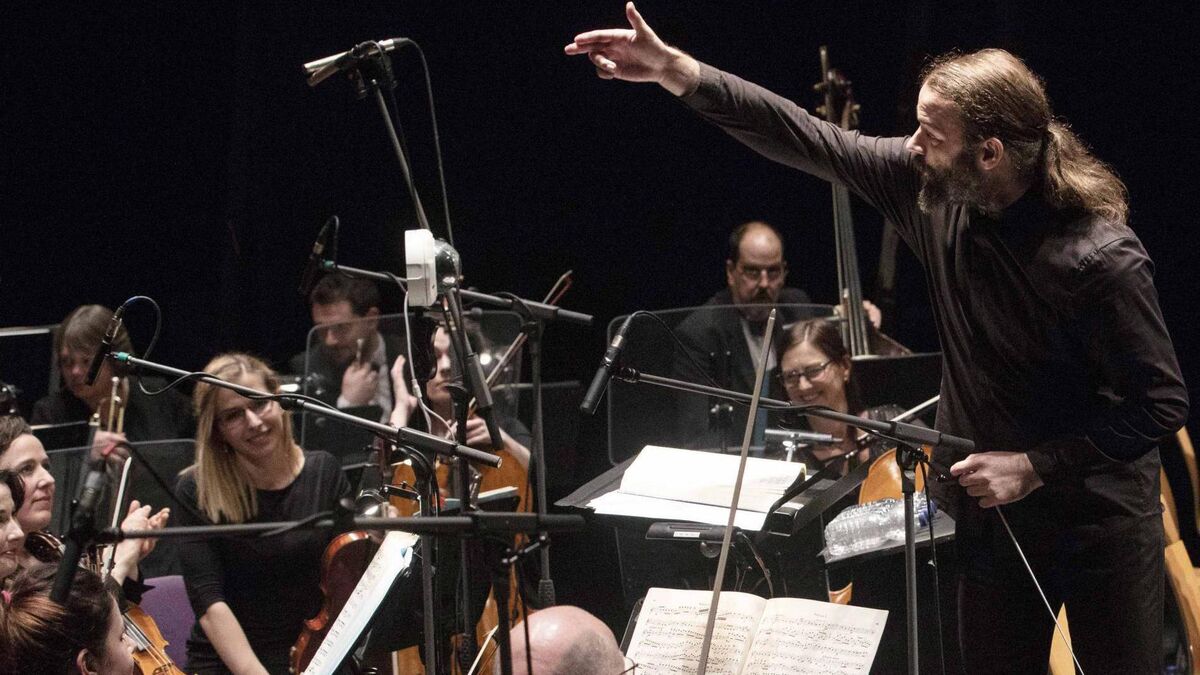
The Cork Opera House Orchestra, made up of musicians from, or connected to Cork, with leader Alan Smale, and under the dynamic direction of conductor, John O’Brien, delivered electrifying performances of Beethoven’s groundbreaking ‘Eroica Symphony No. 3’, and his renowned ‘Symphony No. 5’, leaving the audience both emotionally drained and elated, proving yet again, that there is no substitute for live music!

John O’Brien conducts the Cork Opera House Concert Orchestra. Picture: Clare Keogh

The orchestra returned two weeks later, this time conducted with such verve and enthusiasm by Elaine Kelly, to provide the backing for a number of artists in a 24-song concert devoted to the music of The Beatles. This series of songs showcased the diversity, scope, and melody-laden range of the songs composed by Paul McCartney, John Lennon, and George Harrison.

There were stand-out performances by all the singers with Christiana Underwood singing a plaintive version of ‘Something’ and following it later with an upbeat treatment of ‘Come Together’.

Lead singer, Dylan Howe, with the band, Rowan, delivered a riveting performance, both vocally and on the piano of ‘A Day in the Life’, Cork soprano, Emma Nash — no relation — gave a very tender rendition of ‘If I Fell’, and when accompanied by Rowan, brought the house down when she sang ‘Lucy in the sky with Diamonds’. 

The pocket rocket with the stunning voice, that is Wallis Bird, had the audience on its feet when she belted out ‘Get Back’ and also when she sang 'Hey Jude’.

And then there was Jack O’Rourke — with the Ovens native showing himself to be such a superb singer, musician, and all-round entertainer.

Beginning with the challenging ‘I am the Walrus’, he next sang a sensitive, soulful interpretation of ‘Let it Be’, and followed that with a haunting ‘Yesterday/For no One’ medley, accompanied by Wallis Bird, and finished by raising the roof with his raucously, coruscating, version, à la Cocker, of ‘With a little help from my Friends’. 

Kudos also to individual members of the orchestra who delivered solo contributions on some of the songs. 

One minor quibble — I felt that some of the arrangements were over elaborate, particularly in the case of ‘Blackbird’ — but that was a very small price to pay for what was such a marvellous night’s entertainment.

Congratulations to Eibhlin Gleeson and all her team on a wonderful series of concerts and I am looking forward to more of the same in 2024.


Tadhg Nash

The Mara

Ovens

Co Cork

More in this section

Revoiced

Newsletter

Had a busy week? Sign up for some of the best reads from the week gone by. Selected just for you.

Cookie Policy Privacy Policy Brand Safety FAQ Help Contact Us Terms and Conditions

© Examiner Echo Group Limited