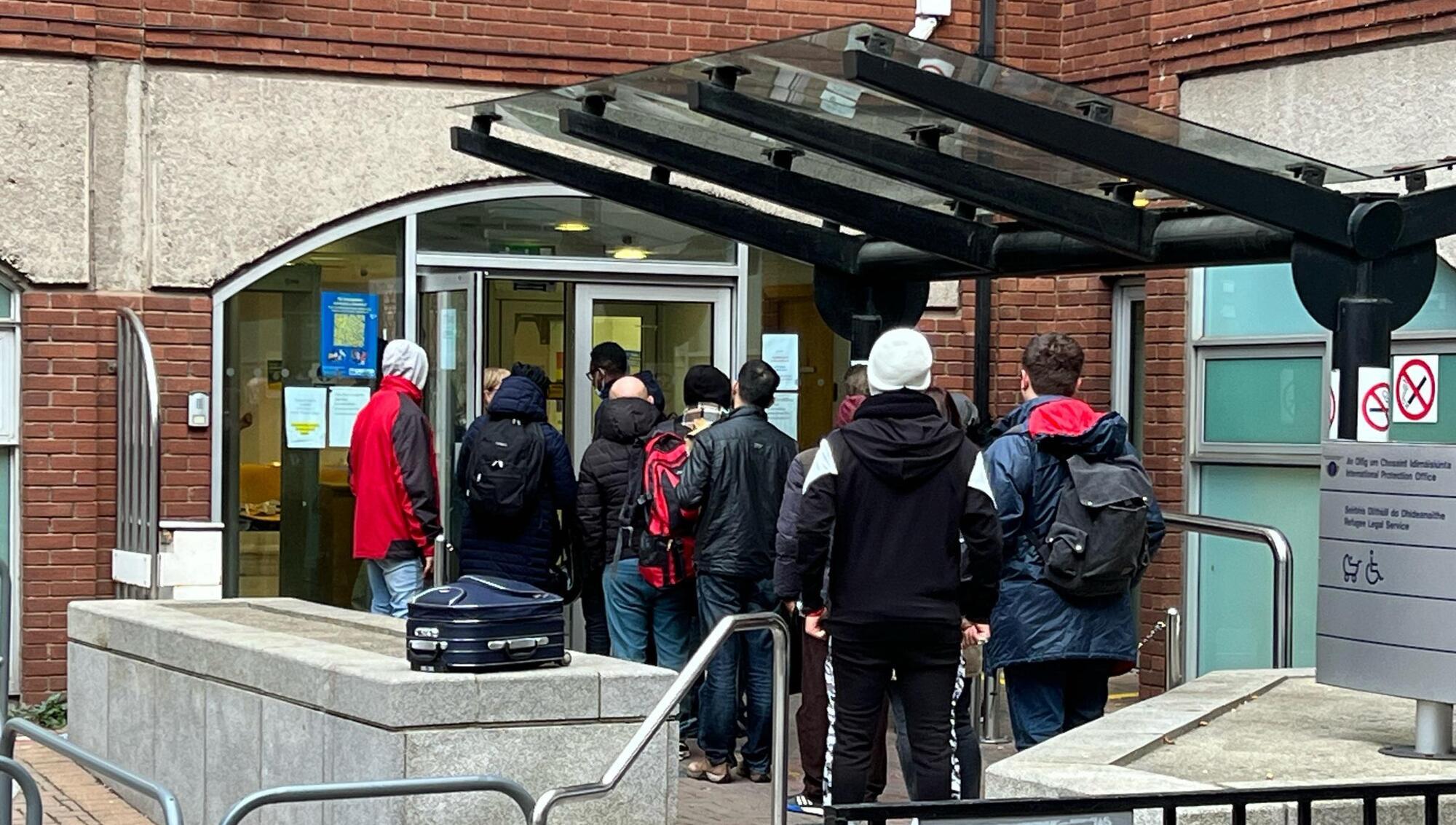
We are a group of like-minded lawyers, who are deeply concerned by the misinformation that is currently being spread in Ireland relating to asylum seekers/international protection applicants and refugees.
The Convention Relating to the Status of Refugees, also known as the 1951 Refugee Convention, was codified on 28 July 1951 and extended by the Rome Convention of 1967. A person has the legal right to apply for asylum (what is now termed “international protection”)
if they have “a well-founded fear of being persecuted for reasons of race, religion, nationality, membership of a particular social group or political opinion”, and they are unable to avail of protection in their own country; or they cannot return to their own country because they are at risk of serious harm.
People flee their countries for many reasons relating to persecution, not only in the context of war.
The international protection system in Ireland is a rigorous one and is robustly administered by the Department of Justice. Those who are not entitled to international protection are not granted that protection.
While in the process of having their international protection application assessed, the vast majority of asylum seekers stay in accommodation provided to them by the International Protection Accommodation Services (IPAS), better known as the direct provision system. In 2019 the Joint Committee on Justice and Equality report found that direct provision is “not fit for purpose” and called for fundamental reform of the “flawed” international protection application process.
The Irish State has outsourced its obligations to asylum seekers through commercial leasing of hotels and guesthouses while refusing to construct appropriate accommodation for those in its charge. This flagrant disregard is mirrored by the State’s continuing refusal to construct sufficient social and affordable housing for those in Ireland most in need of homes. Instead continuing to pour money into the private rental market through the Hap (Housing Assistance Payment) and into the pockets of the owners of hotels and B&Bs, thus making it ever harder for private renters to obtain accommodation. This failed policy has caused untold hardship for those waiting for years on the housing list and for asylum seekers, some of whom are now living in tents in the depths of winter, and new arrivals face immediate homelessness, to our everlasting shame as a nation.
While many are justifiably frustrated by the failure of the State to provide affordable housing and healthcare, these frustrations should be directed at government mismanagement over the last decade and beyond, and not at asylum seekers and refugees.
Those fanning the flames of racism in Ireland do so while deliberately ignoring the real causes of this widespread miscontent. It has always been easier for those who stoke hatred to blame the “other” than to propose complex answers to longstanding societal problems. Irish emigrants have faced this ill-informed prejudice for generations.
The many problems we have in this country are best faced together and will not be addressed through division and hatred
Lawyers Against Racism
(Names with editor)
Cycling into conflict with pedestrians
Michael Moynihan wrote in his column on the issue of people cycling on footpaths ( E-scooters drive demand for better legislation to protect public, Irish Examiner, February 2).
The next time people are in town I’d ask you to look around at where exactly the cycle lanes start and finish.
In the vast majority of cases it is onto footpaths.
For the most recent examples, built in 2022, look at the new cycle lanes on Merchants quay and Christy Ring bridge.
Cycle lanes are being designed and built in Cork to send people cycling into conflict with pedestrians.
Best practice and national guidelines are clear and known for years. The NTA National cycle manual, published in 2011, states that cycling infrastructure should not “pop out of nowhere into the pedestrian environment”.

The Department of Transport National Cycle Policy, published in 2009, states that designs should not resort to the “pedestrianisation of cycling in areas of difficulty”.
There is more investment than ever before planned for active travel infrastructure.
However, if we keep making the same design mistakes of the past, we will continue to see the same issues Moynihan raises in his column.
If people feel walking and cycling is not safe, it will not encourage mode shift out of private vehicles.
Better connectivity of footpaths and cycle lanes is key if we want more people to switch to walking and cycling.
Kevin Long
Model Farm Rd
Cork
Motorised vehicles just add to danger
Michael Moynihan’s piece on e-scooters on footpaths is very relevant. He could have added motorised cycles, so beloved of pizza deliverers to the lists of hazards in using pedestrian footpaths. I am currently recuperating from hip surgery and so am walking with crutches. These scooters and cycles make for a potentially dangerous collision.
Suggesting there are no cycle lanes on footpaths incurs, usually, a raised middle-finger response.
Pat Moriarty
Clareview, Limerick
Educators’ fears over Leaving Cert reform
I wish to draw readers’ attention to the subject of the current Minister for Education’s Leaving Cert reform agenda.
There is a real danger that many schools will move to devote significant time to Paper 1 of English and Irish in students’ Transition Year. This will be in response to proposed changes and in an attempt to bridge the gap between the former two year senior cycle course and the new ‘reformed’ Leaving Certificate.
It is envisaged that Paper 1 in both these subjects will now be examined at the end of students’ 5th year. This would be a complete derogation from the aims and objectives of Transition Year and can only result in less time for extra-curricular activities, musical productions, sport, and all other pursuits that so many young people and parents value.
There is a clear concern among many in education that this reform may result in unintended consequences. The State Exams Commission, Irish and English subject associations, both second-level teacher unions TUI & ASTI and the representative body of students at second level, the ISSU, have all expressed concerns about aspects of this proposed ‘reform’.
The minister does not seem to want to listen to anyone. Finally, since the actual announcement of this ‘reform’ last March, in a press release there has been nothing from the Department of Education — no update/information, no resources, no plan, and evidently no clue.
We must not throw out the baby with the bathwater in reforming the Leaving Certificate, especially if students will suffer as a result.
Stephen O’Hara
School Chaplain
Carrowmore, Sligo
The debacle of nursing home fees
It seems we are now faced with another political debacle in relation to “questionable” charges levied on residents of nursing homes.
Again actions of civil servants must be reviews and questioned.
Perhaps the victims may need to take legal advice as there well be a case of “conspiracy to defraud” these nursing home residents.
In addition, there is the matter of taxpayers’ money used to defend the actions — another matter which could well be abuse of funds.
Michael A Moriarty
Rochestown, Cork
Cover-up State needs to change
Whether it is cervical smears, nursing home charges, abuse in institutional care, or medical negligence in hospitals the State’s approach to litigation by its citizens is always the same. Cover up, admit nothing, deploy a battery of lawyers and heavy artillery, bleed the citizen or patient dry, and eventually (if necessary and unavoidable) settle on a secretive and confidential basis without introspection or admission of liability. That needs to change.
Michael Deasy
Bandon, Co Cork
St Brigid gets her chance to shine
It’s great that, as a nation, we are finally celebrating St Brigid with a public holiday on the first Monday of February. When February 1 falls on a Friday, the public holiday will occur on the Friday. Why not simply celebrate her on her feast day?
St Patrick is celebrated on his feast day every year, while by my calculation St Brigid will not be celebrated on her feast day until 2030.
Perhaps, the Government could consider a similar decision for the celebration of St Patrick in the interests of gender equity!
Joe Harrison
Spanish Point, Co Clare