Letter to the Editor: Religious icons have their place in healthcare
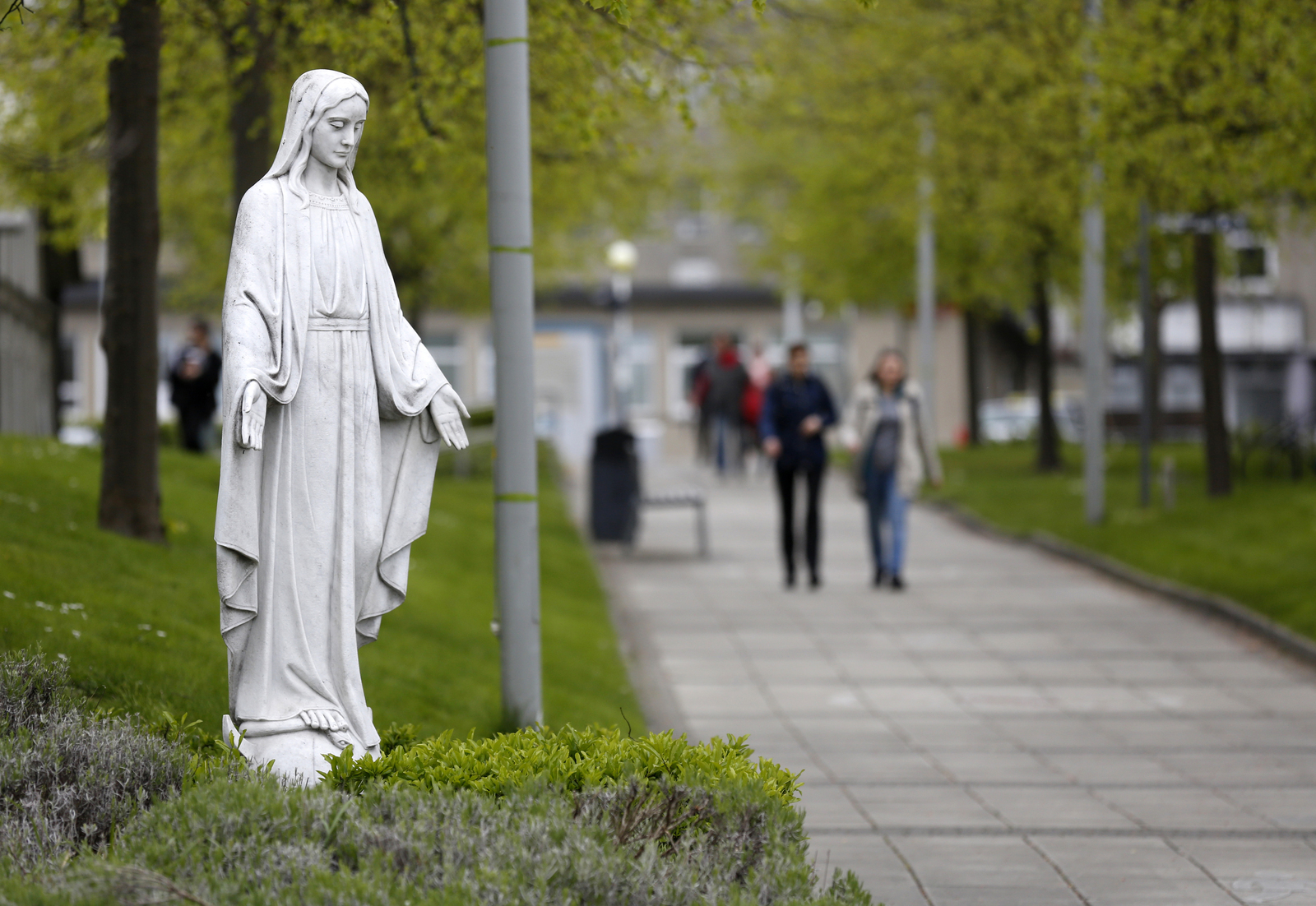
Religious icons in many of our hospitals are a source of comfort and support. Picture: RollingNews.ie
The debate around the location and ethos of the new National Maternity Hospital (NMH) has stirred up many emotions the length and breadth of Ireland.
This debate, its nuances and quagmires are now well-known and much challenged within the public sphere — part of another ongoing and parallel conversation around detraditionalisation or separation of Church and State particularly in matters of education and healthcare.
Niamh Griffin in her article With NMH finally signed off, is it time to talk about religious influence on health services (Irish Examiner, May 21), writes about the issue of religion and the potential to engage in a conversation “around whether all hospitals should remove religious icons and chaplains” from the heartbeat of their institution.
This, to my mind, offers a challenge to explore the essence of what such entities and people bring to the experience of illness and loss.
As a working chaplain and practitioner, chaplaincy educator and theologian, I would like to borrow a word used in this article to offer a degree of insight that can at times be missed within the complexity and emotion of the debates that are stimulated in such contexts — “compassion”.
From personal and pastoral experience I know that chaplains offer the hand and experience of compassion to people of all faiths and none during key moments in their life.
When people find themselves in a crisis situation, sick or at end of life stage they can feel bereft, alone, isolated, frightened, and unsure.
Journeying with the person, they seek to console and to support, to assure they are not alone, that they are heard and seen as is their pain.
Indeed, compassion is one of the lynchpins of the chaplaincy ministry and profession and it is given freely, without judgment, without question, and without expectation.
In my experience of nearly 12 years of ministry I have encountered people of all faiths and none, in myriad life contexts and situations and when offered the hand of compassion, it has never once been refused.
Freely given, compassion is one of life’s greatest gifts. Compassion when offered by an authentic, congruent, judgment-aware, agenda free chaplain can and is a source of great comfort in any moment of loss or illness.
So too for many (not all patients and their families of course) are the religious icons in many of our hospitals, a source of comfort and support.
I would earnestly suggest that removing the chaplain and/or the religious icons that are and have been part of many of our hospitals for many years would be a grave mistake.
Certainly, as a chaplain, the origins and history of my role may be religious or sacramental in nature, but in pastoral practice compassion is never blocked, denied or in short supply to those we meet at the bedside.
With the brouhaha over the ownership of the NMH passed, might citizens now be given clarity as to the ownership of the yet-to-be-built Children’s Research and Innovation Centre (the CRIC), stated by An Bord Pleanála (ABP) to be an “integral” component of the as-yet-unnamed Children’s Hospital at St James’s Hospital campus in Dublin?
When built, the CRIC will replace the National Children’s Research Centre at Our Lady’s Children’s Hospital in Crumlin and which over decades has been fully funded by charitable donations through the children’s hospitals fundraising foundations.
It is imperative that the CRIC (which is to be built on Trinity College land at the far end of the campus from the Children’s Hospital) is owned by Children’s Health Ireland, and not by Trinity College or the adult St James’s hospital, and that such ownership is clearly established in law.
This has not happened. In the future were the Children’s Hospital to move location from the constrained (ABP’s description) site beside St James’s Hospital to a more suitable accessible location to serve the children of Ireland with a new co-located maternity hospital the CRIC must move with it.
Therefore ownership to ensure this must now be clearly established.
Yet another heartbreaking gun-related mass killing in the United States. Yet more obfuscation by second amendment extremists.
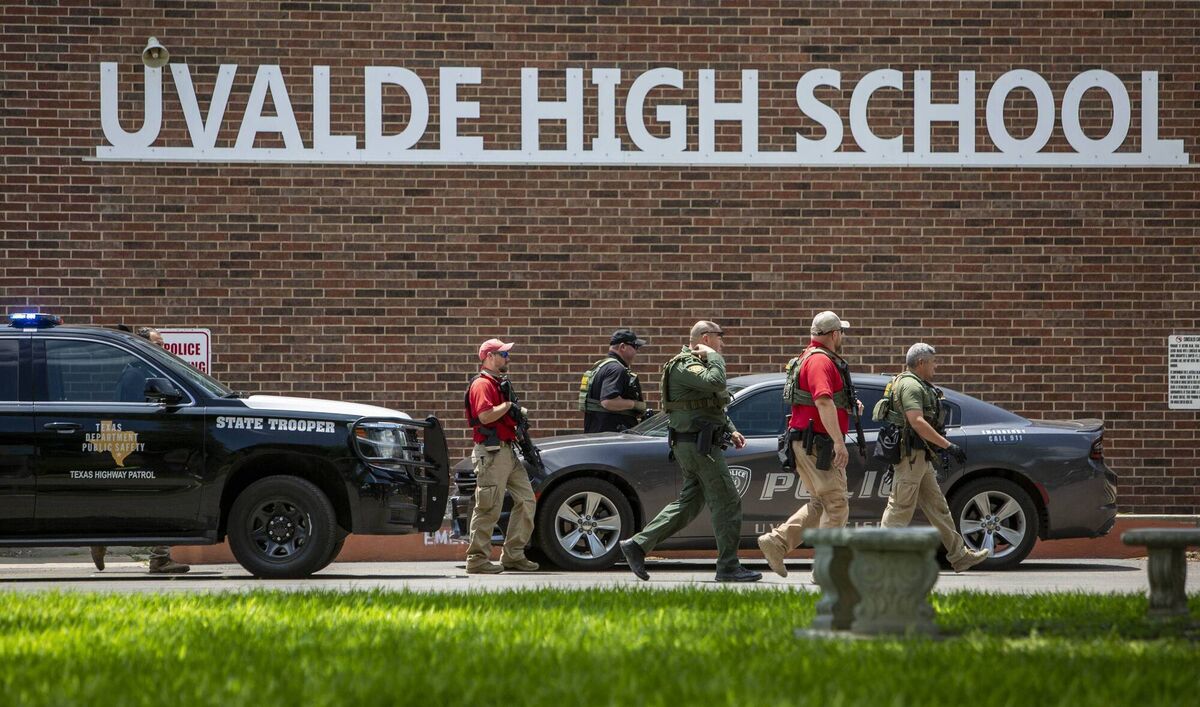
Nicholas Kristof, writing in The New York Times, stated that more Americans have died from guns — including suicides, murders, and accidents — than in all the wars in US history, going back to the American Revolution.
One study found that Americans aged 15 to 19 are 82 times more likely to be shot dead than similarly aged teenagers in peer countries.
There are an estimated 400m privately-owned guns in the US.
The suspects in both the Texas and the Buffalo mass shootings were 18 years old.
After a mass shooting in New Zealand in 2019, gun laws were tightened in that country within a month. What do we get in the United States? Thoughts and prayers.
Ireland supplies itself with arms to defend itself against all those who would wrongly attack us from without and within.
Why then would we not supply arms to any country seeking to do the same in the face of active attack by a rogue leader and state in breach of all international law and UNHCR principles.
This is especially so when Ireland is both politically and diplomatically non neutral on the issue, and on the issue of war crimes against civilians and soldiers who would defend against such a rogue aggressor based on those very same principles.
While neutrality has its place in otherwise non one-sided international issues, it has no logical or useful place faced with a rogue state on the shores of Europe.
Ireland should both call out the aggressor and act in a way that is consistent with those accepted principles of international law, a civilised world and human dignity, the right to defend.
We have been a laggard, hitching a ride on the backs of other nations in the area of defence for too long.
Discussion of whether people should use the term “Northern Ireland”, instead of “The North” or “The Six Counties”, constitutes more manufactured unionist indignation, in this case from Ian Paisley Jr — Michelle O’Neill ‘not hung up’ on what to call Northern Ireland (Irish Examiner, May 24).
Unionists are not wedded to ‘Northern Ireland’, historically.
In the 1950s the unionist regime sought to delete the word ‘Ireland’ from the territory’s official title. No alternative was found.
‘Ulster’ was out since three counties outside NI are in Ulster. ‘West Briton’ was unsuitable also since NI is not in Britain, it is in the UK.
Unionist terminological indignation is a post-Troubles phenomenon with a political purpose. It was not always so.
When he welcomed Sean Lemass to Stormont in 1965, ill fated unionist premier Terence O’Neill said, “Welcome to the North”.
The leader of the Orange Order during that decade referred to the Six Counties; the British monarch used the same term inaugurating the territory in the 1920s.
Unionist harrumphing at US Congressman Richard Neal’s use of the term “planter” (a term once celebrated by unionists) is part of the same phenomenon.
A transition to a non planter unionist perception of themselves and the world around them shows that identity is not fixed.
Rejection of the term and a view that it is insulting may indicate a gradual if not entirely conscious shedding by unionists of a planter political identity.
The value of Irish identity is that it inclusively absorbs those who live on the island of Ireland, including unionists.
As unionists are rooted in Ireland and have a valuable contribution to make to this island’s future, this makes a United Ireland more, and not less, likely. We are all planted here.
Regarding Dervla Murphy a uniquely Intrepid traveller/explorer/writer/socio-political commentator and more.
Many people have already endeavoured this past week to capture the quintessential ‘Dervla’ in varied compelling reminiscences of her inspirational escapades and book narratives of same. All worthily appropriate of course.
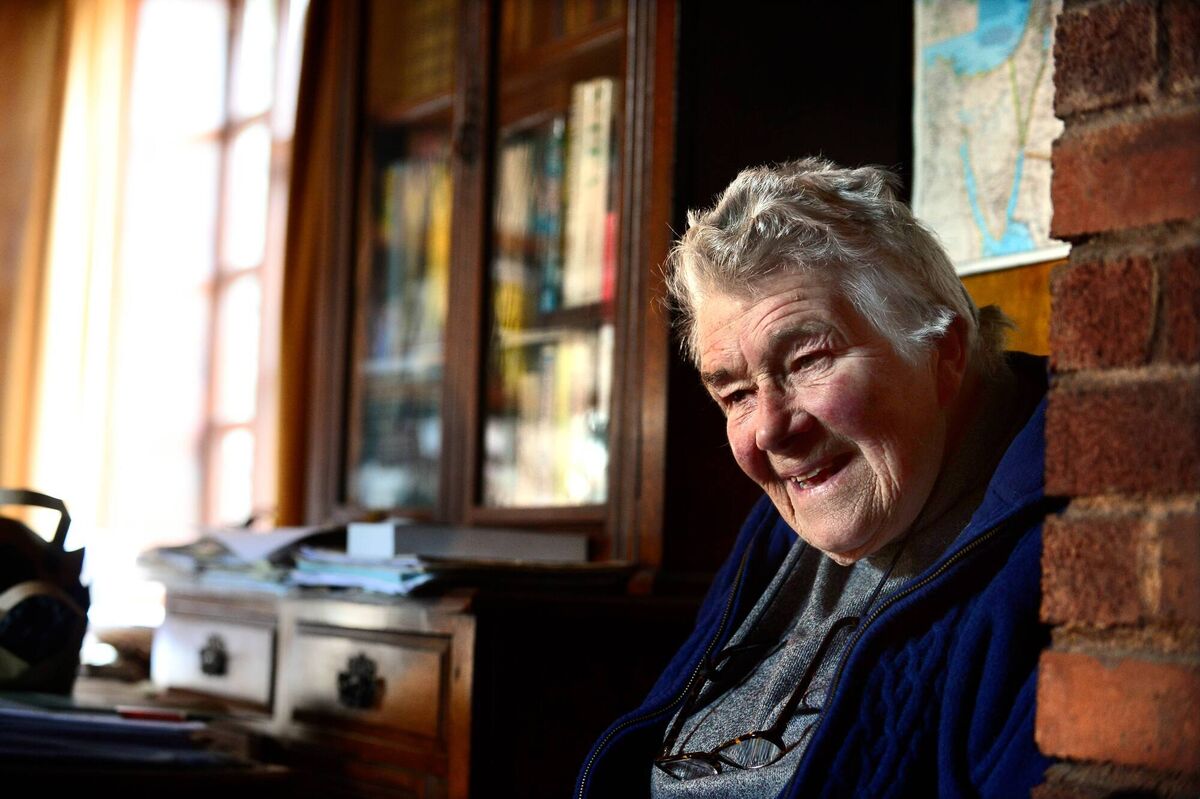
Unflinching candour, enduring empathy for the oppressed and total absence of pretension, despite her well deserved reputation, were truly her hallmarks, and all this allied to to a supremely healthy distaste for marauding materialism, corrosive capitalism and allied socio-political corruption.
She was a dedicated doyenne of authentic human decency on every score, and always willing to come forth to articulate same — and not with any boastful bombast or indulgent arrogance, just straight-talking truths aimed at exposing and challenging the ongoing global travesties.
Her persistent penchant for personal privacy and perpetual eschewing of intrusive limelight afforded her a clear path to an unfettered independence and her frequent courageous commentary on salient social issues.
She leaves an inspiring legacy for all and sundry, for sure, and sadly, her noble ilk is in extremely short supply within this modern world of selfish flux and calamitous chaos. More the shame.