Letter to the editor: Clinical music therapy asan option is overlooked
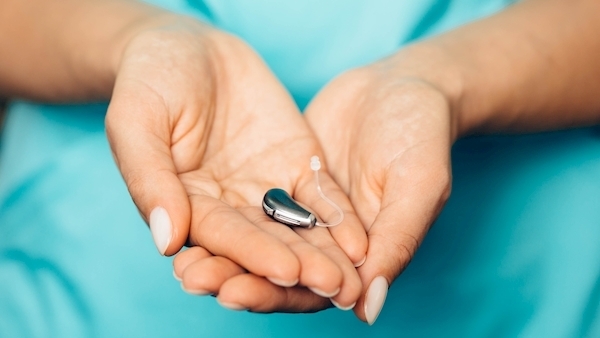
Terry Prone illuminates a crucial salience regarding hearing loss and the development of dementia ‘Hearing aids could be the answer to helping prevent dementia’ (Irish Examiner, January 6).
She does so with an apposite, yet very accessible, aplomb, scanning various claims and research zones which attempt to classify contributing social issues and precursor proto-symptoms to this increasingly common malaise.
Hearing is a fundamental survival resource that should never be underestimated in its capacity for the whole organism to thrive, physically, cognitively, emotionally and socially.
As a basic sensory strand of personal vibrancy, it originates very early in human foetal development.
By 16 weeks, an unborn baby is particularly receptive to the mother’s voice.
This is made possible via the vibrations that travel through her body to the womb, which are stronger than noises from outside the womb.
At 20-24 weeks, an unborn baby is able recognise the deeper tones of its father’s voice.
The reassuring dependence of the vulnerable developing baby on these familiar soundscapes ensure a vital complexion of aural recognition is developed, laying the basis for ongoing discernment of tonality variations, frequency modulations, rhythmic patterns, etc, over a lifetime — a facility that is key to wholesome development.
Thus, diminution of hearing at any age is a serious loss.
Of course, in a healthy young person, such shortfalls may be compensated for by honing vibrational acuity, lip-reading and sign-language, affording a fulfilled social and personal life experience.
For the older person, such compensations are rarely available, and the isolation, confusion and physical debilitation ensuing from loss of hearing can dwindle health and well-being efficacy.
While Terry Prone outlines a strong case for ensuring hearing longevity with regard to stemming dementia development, she might also have mentioned the crucial alignment of creatively attuned and personalised music sound-scaping to any therapeutic regimen of support.
Music-sound has been engaged in every culture known to humankind, past and present.
We all experience emotions as physical events in our body-soma as, for instance nausea, trembling, sweating, heart-rate, muscle-tone, lightness and heaviness.
Since the somatic cells and body organs all have optimum, operational homeostasis, any influx of received vibrational content will have at least some effect on some of these.
Thus the precise vibrational mosaic of sounds received can indeed interact with us not only at a brain-level, but also in our bodies, where we fully sense and feel the actual emotions.
This vital interplay of vibrational complexes of music-soundscape with the sensory-soma, provides the essential efficacy rationale of clinical music therapy, which, sadly is not always engaged even when patently valid and valuable to someone living with dementia.
While many recreational music activities abound in many health service provisions, the engagement of specific clinical music therapy is usually overlooked.
Despite many pilot programmes over many years, and years of campaigning for statutory recognition of same, this therapeutic option still hovers in the margins of decency.