Irish Examiner view: Andy Burnham's border poll comments may suit some
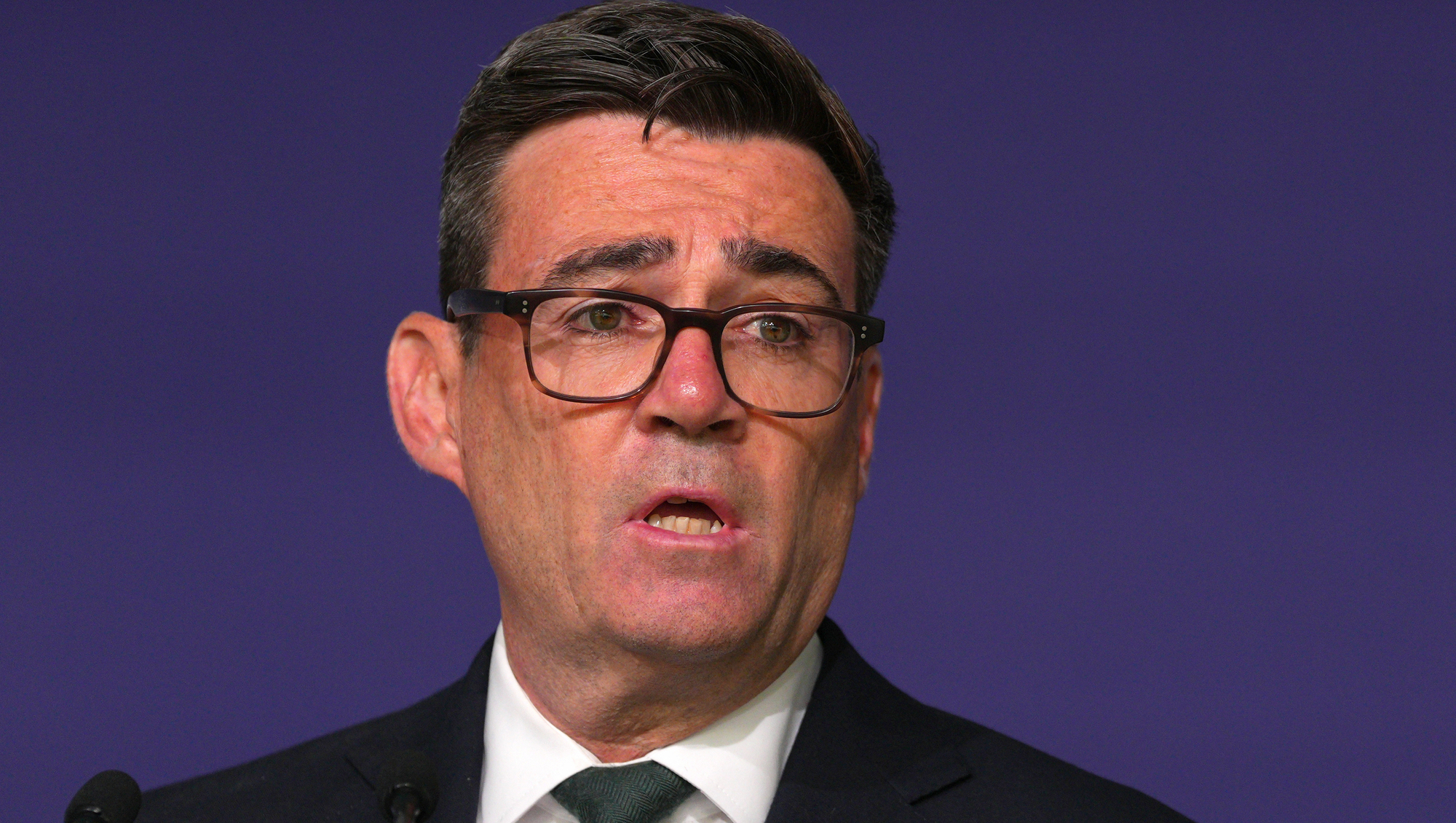
British prime minister Andy Burnham has said the possibility of an Irish border poll was 'off the table'.
If British prime minister Andy Burnham was enjoying a honeymoon in terms of Anglo-Irish relations since hisappointment, reality entered the picture this week when he discussed the possibility of a border poll.
Mr Burnham said bluntly that such a poll was “off the table”, adding that it was preferable to focus on issues such as “the cost-of-living pressures that are hurting people in Northern Ireland”.
He also referred to the rifts which can be caused by referendums, name-checking the Brexit and Scottish independence votes in recent years.
Clearly a poll on Irish unification would have the potential to leave even the bitter and divisive campaigns cited by Mr Burnham in the ha’penny place.
Predictably enough, commentators and politicians have been swift to point out that the Good Friday Agreement assigns the power to call such a poll, not to the prime minister, but to the UK’s secretary of state for Northern Ireland.
He or she is required to do so if it appears likely that a majority in the North would support Irish unity.
In that context, the intervention from Mr Burnham could be construed as overstepping the mark, assuming powers he does not have to rule out any such vote.
The logic of avoiding votes in the future because votes in the past generated bitter debates also appears flawed: If that argument were accepted, then the possibility of divisive argument would rule out any future vote.
However, despite the metaphorical pointing to the small print of the Good Friday Agreement, Mr Burnham may have done the Irish political establishment a good turn with his intervention this week.
Successive governments have shown little appetite for getting into the detail of organising a border poll, and the unequivocal statement of the British prime minister is unlikely to spur the current administration into action on that front.
In fact, there may be a way to see the last few days as a mechanism to allow our own Government to focus on matters such as “cost-of-living pressures that are hurting people”, in Mr Burnham’s own words.
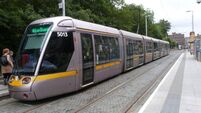
The vagaries of public transport are nothing if not diverse.
Earlier this week, we learned of concerns about the plan to implement contactless ticketing on Dublin’s public transport network, while in Cork it emerged that €15.3m had been spent on a temporary bus depot at Tivoli — which opened over a year behind schedule.
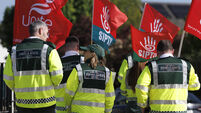
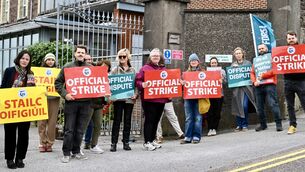
The National Bus and Rail Union (NBRU) also stated that bus drivers had left the industry because of antisocial behaviour, or been out on leave due to assaults.
The impression of chaos on our public transport system was only strengthened by Amy Campbell’s report on complaints received by the National Transport Authority about the Cork-Dublin train line.
Passengers and staff reported being spat on, assaulted, and subjected to racism on trains to and from Cork in the last year; there were also complaints about drunkenness, intimidation, and drug use on the service.
Some passengers complained about the lack of action being taken by Irish Rail staff in some of these situations.
However, it should be acknowledged that those staff members are “by and large customer service people”, in the words of Dermot O’Leary of the NBRU: “They’re not security, and they’re definitely not police.
“The company have done their best with security personnel, but they don’t have powers of detention and arrest.”
He added that the union had long called for a dedicated public transport policing resource.
This must surely become a consideration when — as Mr O’Leary outlined — staff have had to move from customer service roles with Irish Rail to other positions because of “being assaulted, threatened with assault, or regularly abused”.
Safety is a basic requirement of every workplace, and the staff of Irish Rail should not have to be concerned by assault or abuse.
If we cannot guarantee passenger safety either, then is our rail system fit for purpose?
This level of antisocial behaviour is a serious disincentive to those wishing to travel by rail.
Making public transport a feasible and attractive alternative to the private car would help the environment and ease traffic congestion, yet clearly the opposite is happening.
It is that time of the year again, when thousands of music fans decamp from every corner of the country to descend en masse on a village in Laois.
Stradbally hosts the Electric Picnic festival again this weekend, with 80,000 people expected to make their way to hear the likes of Gorillaz, Geese, and Fontaines DC.
It’s not all about the music either — Croí is the festival’s wellness-and-music hub, with two stages and a cluster of smaller spaces focused on movement, meditation, poetry, and live performance.
Mindfield, meanwhile, is an arena of ideas, spoken word, politics, and other hot topics.
The festival dates back to 2004, when it was a relatively modest one-day event, but now it sprawls across the entire weekend and seems to draw bigger and bigger names every year.
Its status may derive in part from timing — it takes place just before the schools and colleges return fully, and can be seen as the final jaunt of the summer.
On that point, good luck to those camping in Stradbally — the heatwave is now in the rear-view mirror and the
weekend may see more ‘traditional’ festival weather.
CONNECT WITH US TODAY



Be the first to know the latest news and updates