Irish Examiner view: Needless war on Iran has come at a high cost — especially in human lives

A motorcyclist in the southern suburbs of Beirut, Lebanon, flashes a victory sign as he passes a banner that reads 'Thank you Iran' following a deal between the US and Iran. Picture: Mohamed Azakir/Reuters
The much-heralded agreement between the US and Iran on a framework for ending the war was greeted positively by many political leaders, and the all-important markets, when it was announced late on Sunday. Oil prices fell immediately, easing fears of a prolonged energy shock, while hopes grew that the Strait of Hormuz, through which a significant share of the world’s oil supply passes, would soon reopen.
Of course, optimism about an end to the fighting remains tempered by uncertainty. Within hours of the agreement being announced, strains in US-Israeli relations, already evident during the conflict, became even more pronounced. While the deal provides for an end to military operations in Lebanon, Israel has insisted that its forces will remain in the country ‘indefinitely’, raising questions about how far the region can move beyond this latest crisis.
What is beyond dispute is the enormous cost of this needless war.
Read More
The greatest cost is measured in terms of human lives.
Thousands of people, including the 120 schoolchildren who died in Iran on the first day of the attacks, have been killed in Iran as a result of the US and Israeli military action. Many more have lost their lives in Lebanon where Israel opened up a second front.
Tens of thousands of people have been injured and millions have had their lives turned upside down by displacement and destruction of homes, schools, hospitals and other vital infrastructure that supports ‘normal’ life. For countless families, the consequences of this war will endure long after the bombs stop falling.
The suffering experienced by the people living in the conflict zone is of a different order, but the economic consequences have been felt far beyond the Middle East. The disruption to energy supply sent fuel prices soaring around the world, leading to higher transport, food and household costs.
We know in our own country of the many families, already struggling with a cost-of-living crisis, pushed to the brink by the more recent price hikes. Small businesses operating on tight margins are in a fight for their very survival.
Then there is the staggering financial cost of the war itself. Every missile launched, every drone deployed and every bomb dropped represents resources that could have been spent on more life-saving or life-enhancing projects.
Speaking in London in April, the head of the United Nations humanitarian agency Tom Fletcher said the military operations were costing $2bn every day. The contrast is stark.
The money consumed by just two weeks of warfare could instead fund life-saving humanitarian programmes reaching tens of millions of people.
This war has brought death, destruction, and economic hardship on a vast scale with the costs borne not only by those directly caught in the fighting, but also by ordinary people throughout the world. The agreement, due to be signed this Friday, offers an opportunity to halt the damage. We can only hope that the key players come to accept that diplomacy, however difficult and imperfect, is always less costly than war.
Tánaiste and finance minister Simon Harris did not mince his words when he criticised local authorities this week for “badly failing” to tackle the scourge of dereliction. He spoke of government frustration and “some bit of anger” that councils, who had been given extra staff and funding, had not done enough to bring derelict homes back into use. His tone was harsh, but he does have a point.
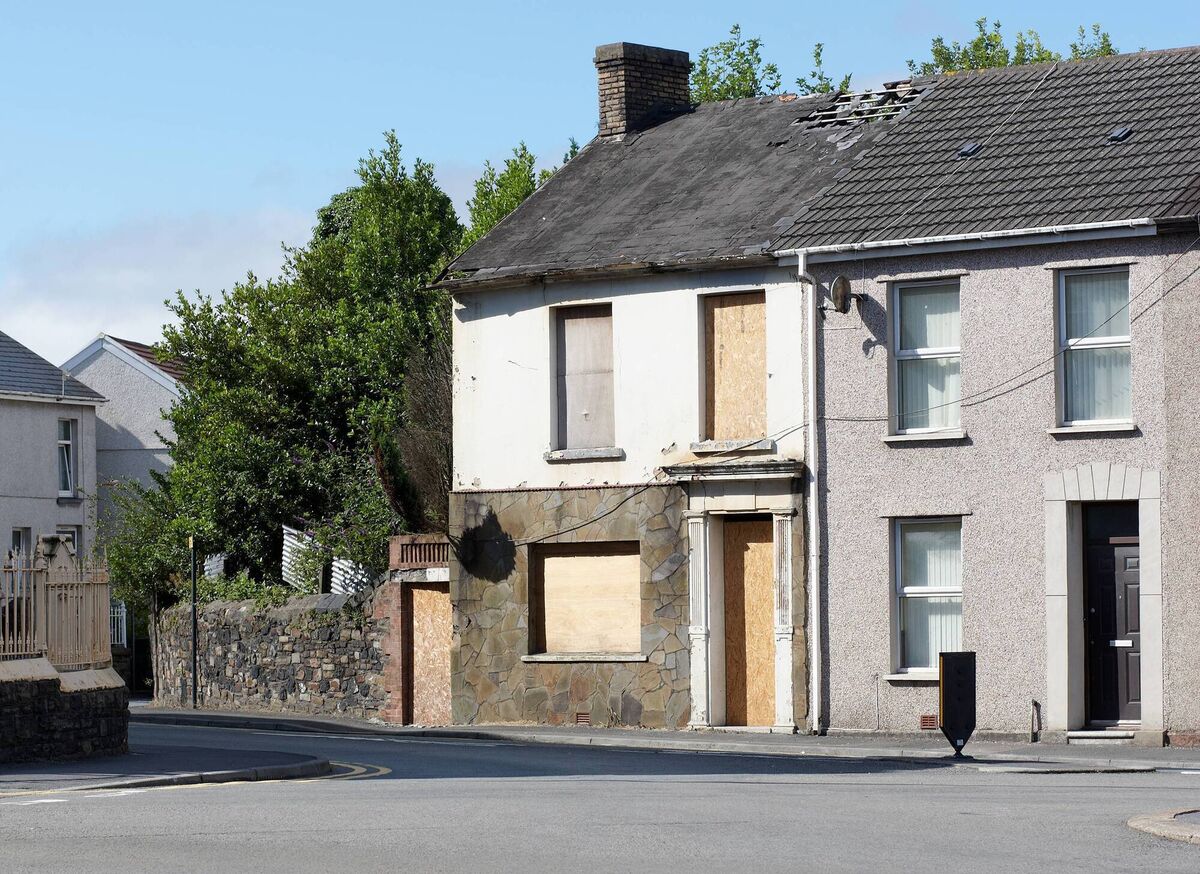
Since 1990, local authorities have had the power to maintain derelict sites registers. They can serve notice requiring owners to carry out remedial works, impose an annual levy — currently 7% of the market value — and pursue compulsory purchase orders if the owners don’t act. However, it emerged in the Dáil last year that 10 local authorities had never levied a single owner of a derelict site in their area.
Some 17 out of 31 councils had collected no levies in 2023, the last year for which figures were available at the time, and councils collected only €604,621 from a total of €5.6m levied that year. Cumulative unpaid levies are now running at well over €20m.
As of late last year, there are an estimated 19,500 derelict residential units across the state. These are an eyesore at any time, but in the middle of a housing crisis, they are an affront to the many people trying and failing to acquire a home of their own. That is why Mr Harris now plans to involve the Revenue Commissioners in the fight against dereliction.
He will brief Cabinet today on a new tax to be administered by Revenue, replacing the levies which some local authorities appeared to find difficult to impose and even more difficult to collect. It is to be hoped the prospect of Revenue pursuing owners of derelict properties will, in the words of Mr Harris, “focus the minds” around this persistent problem.
News that the Government may consider banning certain slush ice drinks — or slushies — for young children may come as a shock for parents who find themselves pestered to buy the sweet treat, particularly at this time of year.
As reported in this newspaper yesterday, the Food Safety Authority of Ireland (FSAI) recently updated its guidance to advise that children aged 10 or under should not consume slush drinks that contain glycerol. Health minister Jennifer Carroll McNeill said any ban would have to be in keeping with EU laws and she would be liaising with the FSAI on the prospect of a ban or mandatory warnings.

So should parents be alarmed? The issue centres on glycerol, an EU-approved food additive, used to maintain the ‘slushy’ texture of the drinks. In a small number of reported cases, glycerol consumption has been linked to adverse effects in children, including nausea, headaches, and vomiting.
The concerns first emerged in the UK early in 2023 after two children became seriously unwell after consuming slush ice drinks. Since then, the UK Food Safety Agency has recorded nine confirmed cases, and another seven unconfirmed cases of glycerol intoxication requiring hospital treatment.
Given that there are between 40m and 50m servings of slush ice drinks consumed in the UK each year, the risk of serious illness is extremely low.
Those figures may not tell the whole story. Many parents may never connect a child’s upset stomach or headache with a slush drink consumed earlier; so while severe reactions are rare, the potential risks are better understood than they were just a few years ago.
For parents, the prudent approach is straightforward. If a slush drink contains glycerol, or if you are unclear about whether it does, choosing an alternative treat for younger children is a small precaution worth taking.
CONNECT WITH US TODAY



Be the first to know the latest news and updates