Irish Examiner view: Let’s lead on a tobacco-free culture
It is time for another substantial push
Irish Examiner view: Let’s lead on a tobacco-free culture

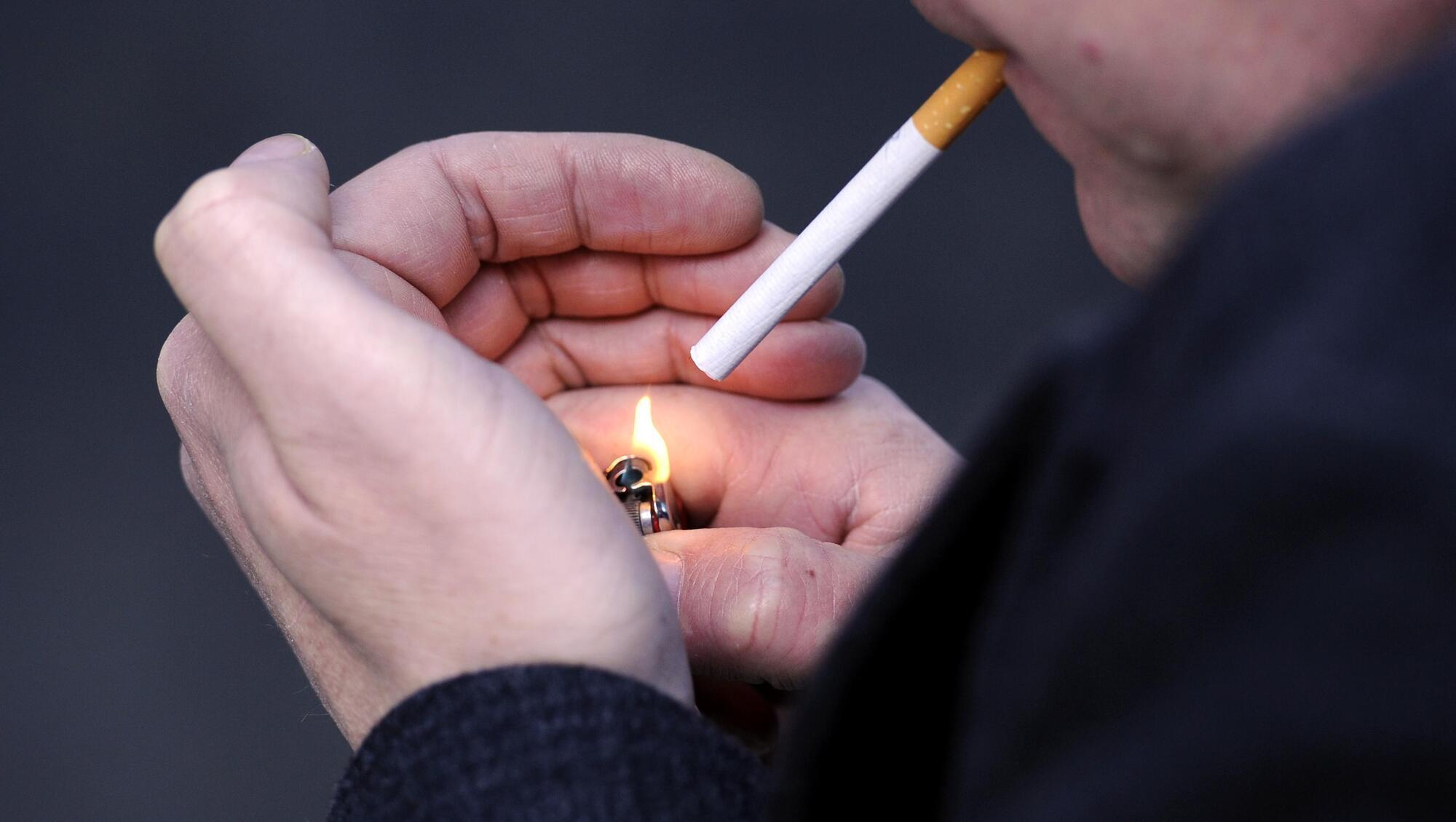
Campaigners are calling for a radical new set of measures, including the creation of a tobacco-free generation, to move towards an endgame where tobacco products would be eliminated. File picture

Ireland made international headlines in 2004 when it became the first country to introduce an outright ban on smoking in all indoor workplaces, including pubs and restaurants. At the time, the move was widely regarded as groundbreaking and was not without controversy. Yet, in the years that followed, dozens of other countries adopted similar measures.

The benefits were immediate. Non-smokers could now work, socialise, and travel in cleaner, healthier environments, free of the toxic haze to which they had been long accustomed. Protecting non-smokers from the harms of second-hand smoke was one of the legislation’s key objectives. The other was to reduce smoking rates themselves — and that goal was achieved. Marking the 20th anniversary of the legislation, Micheál Martin, who championed the ban as the then health minister, highlighted its lasting impact. 

Smoking rates had fallen significantly while hundreds of thousands of people had quit. The proportion of the population who smoked dropped from 27% in 2004 to 18% in 2023, and an estimated 800,000 people quit in the same period.

The problem is that the move to drive down smoking has stalled. Smoking rates have remained stuck at between 17% and 19% in recent years, and the popularisation of e-cigarettes, or vaping, is introducing new generations to the dangers of nicotine addiction. The Healthy Ireland Survey found last year that 11% of people aged 15 to 24 use e-cigarettes daily. The cost to public health remains high. Every week, 1,000 people are admitted to hospital in this country and 100 people die because of smoking-related illnesses.

Campaigners are calling for a radical new set of measures, including the creation of a tobacco-free generation, to move towards an endgame where tobacco products would be eliminated. As reported in these pages yesterday, the Royal College of Physicians of Ireland is calling for legislation that would prohibit the sale of all tobacco products to people born after a certain year.

Successive governments have not stood still since the 2004 ban. Restrictions on the size of cigarette packs, on packaging, and on point of sale displays have been introduced. Smoking in cars carrying children was banned in 2014, while legislation enacted in 2023 prohibited the sale of vapes to those under 18. But the UK is now leading the way on the concept of a tobacco-free generation; it will be illegal in the UK from next January to sell tobacco products to anyone born after January 1, 2009. The effect is simple but profound: Today’s children in Britain will never legally be sold cigarettes.

Ireland once showed the world what bold leadership on public health looked like. The gains of the past two decades have been substantial, but they are not enough.

If the goal of a tobacco-free Ireland is to be realised, it is time for another substantial push.

Next step in life

Some 65,000 young people are today nervously counting down the hours to the start of the written Leaving Cert exams, which get underway tomorrow. No doubt, tensions are approaching breaking point in homes up and down the country; The pressures are enormous, and are not eased by the current turbulence in global affairs, climate crisis, and the looming spectre of AI taking all the jobs.

Notwithstanding all of that, it is worth acknowledging that the educational opportunities and choices available to Ireland’s teenagers today were unimaginable even a couple of generations ago. 

This year, around 75% of Leaving Cert students can expect to progress directly to third-level education. When their parents sat the Leaving Cert in the mid-1990s, the figure was closer to 35%-38%. In their grandparents’ time, even sitting the Leaving Cert was a minority pursuit — less than 20% of the relevant age cohort sat the Leaving Cert in 1970, and only 5% went on to college.

It is true that many jobs available then did not require degrees, or even the Leaving Cert — tens of thousands of people got entry-level jobs in the public service, in retail, in hospitality, in offices, in construction, and many other sectors without prior formal training. It is also true that many school leavers would have welcomed the chance to continue their formal education before being pulled into the workforce.

The Leaving Certificate remains an arduous and, for most students, deeply stressful experience. Yet there may be some comfort in recognising that today’s students have educational opportunities their parents and grandparents could not have imagined. Whatever happens in the next few weeks, the Leaving Cert results will be just one step in a journey that offers more choices than ever before.

Vital testimony

Holocaust survivor Tomi Reichental, who died on Sunday at the age of 90, dedicated the latter part of his life to educating people about the evils of the Holocaust, and the dangers of prejudice, hatred, and indifference. He was 60 before he ever spoke publicly about the horrors he had experienced — before that, he, like many other survivors, was unable to speak about the trauma they had endured.

Born in Czechoslovakia, he was just nine when he was deported along with his family to the Bergen-Belsen concentration camp in Germany — he would lose 35 close family members in the Holocaust. He moved to Ireland as a young man in his 20s, but it would be years before he would begin to talk about what he had witnessed. He began telling his story, he said, because he feared people were beginning to forget the lessons of that dark period, and he felt he owed it to the victims to ensure that their memory was not forgotten.


In his tribute to his friend, Oliver Sears of Holocaust Awareness Ireland said that once Mr Reichental broke his
silence, he became a passionate educator, visiting schools throughout the country and speaking to more than 200,000 students. He also told his story through his autobiography, I Was a Boy in Belsen, made three documentary films, and availed of other opportunities to promote peace and understanding between people.

The need for such testimony remains pressing. Only this year, a survey found that one in 10 adults in Ireland aged 18 to 29 believe that the Holocaust was a myth and did not happen. Half of that age group reported that they had encountered Holocaust denial or distortion on social media. More than 60% of all adults surveyed believe that something like the Holocaust could happen again today.

Tomi Reichental understood that memory is not simply about recalling the past, but about shaping the future. In sharing his story so generously, he ensured that the lessons of the Holocaust will continue to resonate after his voice has fallen silent. We now have a responsibility to ensure that his testimony, and that of other survivors, continues to be preserved and shared.

More in this section

Revoiced

Newsletter

Had a busy week? Sign up for some of the best reads from the week gone by. Selected just for you.

Cookie Policy Privacy Policy Brand Safety FAQ Help Contact Us Terms and Conditions

© Examiner Echo Group Limited