Irish Examiner view: Garda commissioner's words must be followed with action
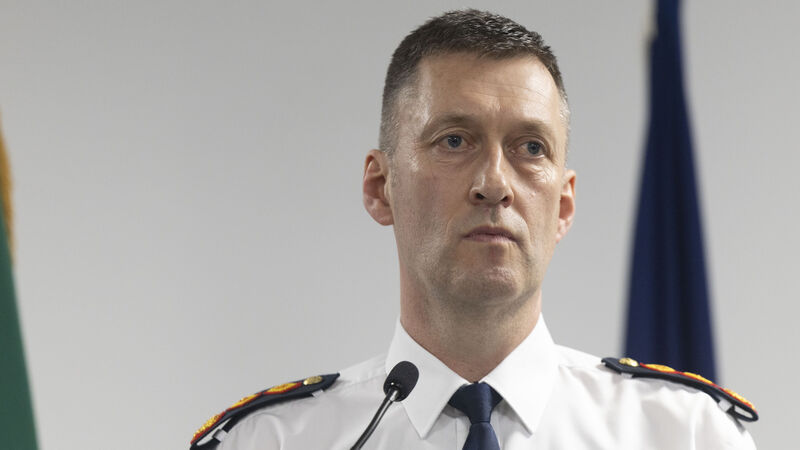
Garda Commissioner Justin Kelly admitted to specific weaknesses in the Garda response to domestic abuse. Picture: Sam Boal/Collins Photos
This week, Garda Commissioner Justin Kelly was in Cork and commented on policing procedures in general, and procedures on Leeside in particular.
As reported here by Liz Dunphy, the commissioner was at the first public meeting in Cork of the Policing and Community Safety Authority (PCSA), which has said that despite the prevalence of domestic abuse, it has identified low per-capita rates in the reporting of sexual crime in Co Cork.
The commissioner admitted to specific weaknesses in the Garda response to this issue — on its merits a valuable admission, as acknowledging flaws in the operating of any large organisation is a rarity.
However, it also underlines a significant problem: The ongoing challenge of dealing with domestic violence in our society at a time when no-one can credibly claim ignorance of the scope and seriousness of that violence.
The commissioner acknowledged, for instance, that for gardaí in Cork, it is now mandatory that a risk evaluation tool used with reported domestic abuse must be completed.
Yet the PCSA stated that that tool has had low completion rates in some areas, including in Cork.
This begs some obvious questions: Why are completion rates so low when this is mandatory, and why are they lower in some particular regions compared to others?
The real-world consequences of such low completion rates are significant — if gardaí cannot evaluate domestic violence properly, how can we be sure the numbers of such alleged crimes are recorded accurately?
Precise statistics are essential to combating all forms of crime; they are the key to identifying the specific resources required, and where those resources are best allocated.
If it is known that the gardaí are not equipped to evaluate domestic violence, then it would hardly be surprising that victims of such violence were discouraged from reporting incidents, which immediately compromises those statistics — and, more importantly, makes those victims more vulnerable.
The honesty from the commissioner this week was refreshing, but such honesty is useless unless matched by quantifiable improvement on ground.
As reported here this week, huge numbers of Irish people are applying to the HSE for funding for weight-loss drugs.
Niamh Griffin reported that at least 26,000 people have applied for just one drug, Saxenda, while another weight loss medication, Mounjaro, is currently being considered by the HSE for inclusion in its reimbursement scheme.
These numbers of applicants represent a huge investment of time and money.
As outlined by National Centre for Pharmacoeconomics clinical director Professor Michael Barry, each application has to be processed individually to determine whether applicants are suitable for treatment.
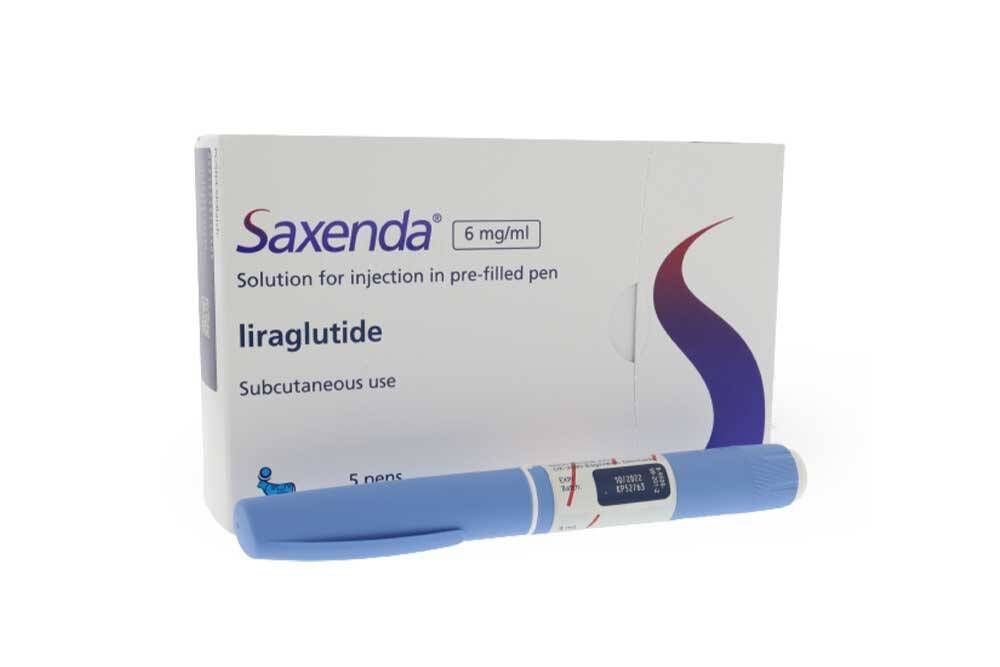
This means a huge commitment of adminstrative manpower, as noted by Professor Barry: “At the start of this year, we had reviewed 24,000 applications, and that’s now 26,000.
"You can imagine we go through each individual application, so it’s very time-consuming.”
The fact that the HSE is reimbursing users for the weight-loss drug raises the costs considerably, and if the use of Mounjaro is included in the reimbursement scheme that will raise costs even higher, obviously.
Notably, as recently as last December Professor Barry stated that Mounjaro was then too expensive for the HSE to justify covering it for a large number of people.
At that time a study by the National Centre for Health Economics (NCHE) said the estimated cost per patient per year to the HSE would range from €5,526 to €6,214, depending on the dose.
The NCHE then estimated that the five-year impact on the net drug budget — at the December 2025 price — would range from €5.2bn to €1.4bn.
This would be an enormous outlay on drugs in just one area of healthcare.
This week, Prof Barry noted that many EU countries do not cover the cost of such drugs, and at those prices that is no surprise.
That cost should certainly give us pause when we consider committing large resources to this area.
Last year it was reported that the OPW was unable to find 37 pieces of State-owned art in its care.
At that time, the official term used by the OPW about the artworks was “unallocated”, which is a polite way to say “lost”.
When this emerged last December, it was pointed out that the OPW has considerable responsibilities in this regard, with approximately 13,500 pieces of art in over 500 locations around the country.
In that context, having 37 pieces unaccounted for was perhaps understandable, if still unsatisfactory.
However, this week it emerged that just three of those 37 artworks have been located since those questions were first raised in December — a rate of discovery which works out at around one piece being located every six weeks.
The OPW’s air of secrecy about this matter is not aiding its cause.
It refuses to release records relating to audits or missing artworks, even though publicity might be a help rather than a hindrance in finding these lost works.
The OPW has found itself embroiled in some embarrassing controversies recently, such as the notoriously expensive security hut at Leinster House.
On that basis, one would have thought the organisation would be alert to the possibility of being shown as secretive, careless about its responsibilities, and sluggish in locating properties in its care.
The evidence suggests otherwise, however.
CONNECT WITH US TODAY



Be the first to know the latest news and updates