Irish Examiner view: Delay in fuel supports at odds with speed of price hikes
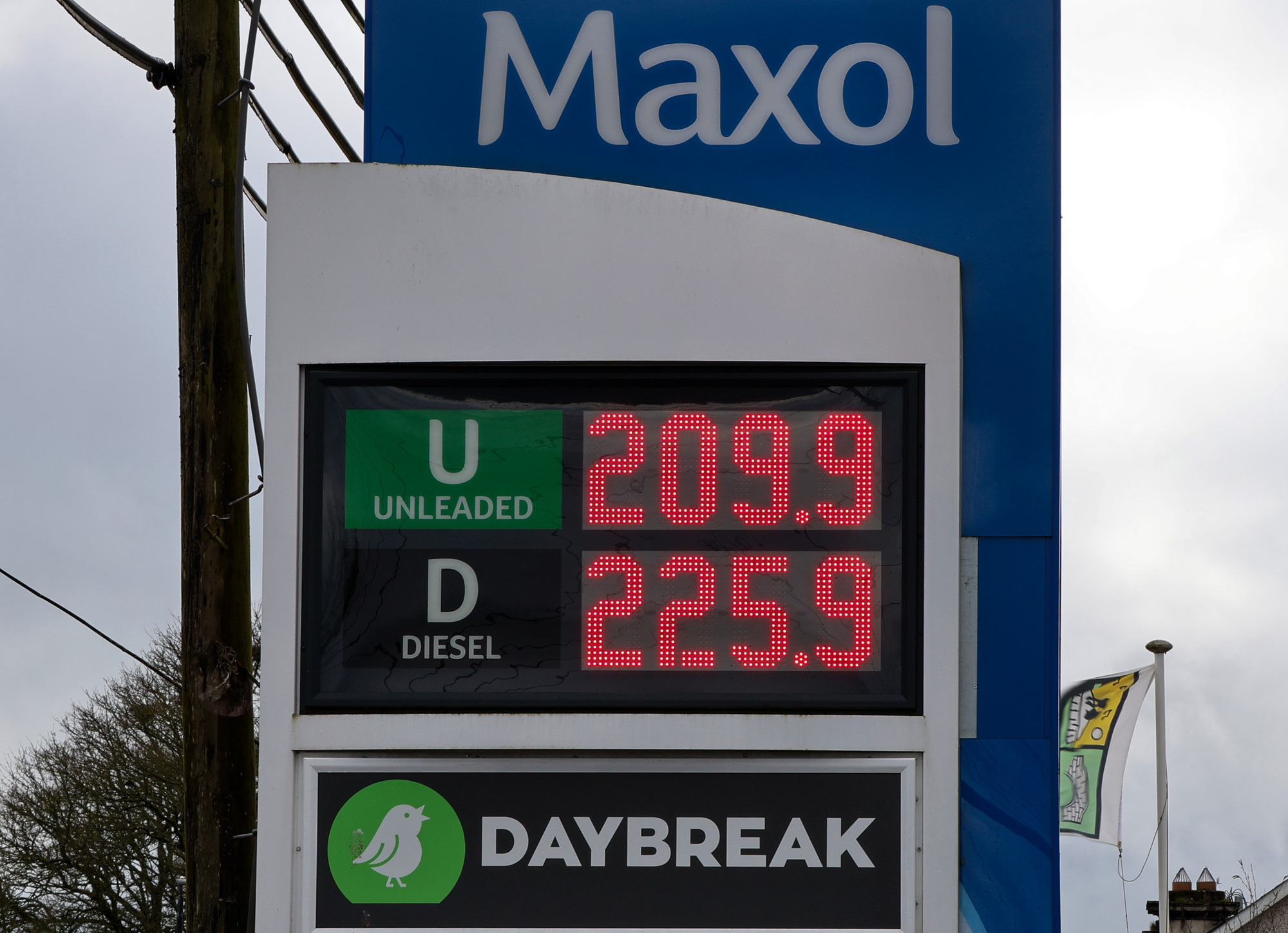
It is unfortunate that the consumer always seems to be the one paying the price
Irish Examiner view: Delay in fuel supports at odds with speed of price hikes

Taoiseach Micheál Martin stressed that the measures are “targeted and temporary”, and dependent on how the conflict in the Middle East progresses. Picture: Colin Keegan/Collins

The Government’s support package for consumers, hard pressed by the rising price of fuel, came into effect at midnight, with excise on petrol falling by 15c per litre and excise on diesel falling by 20c. These reductions will remain in place until May 31 — while the fuel allowance will be extended for April, which will benefit 420,000 households.

This move is not before time, given the sharp spike in fuel prices driven by the conflict in the Middle East. Taoiseach Micheál Martin stressed that the measures are “targeted and temporary”, and dependent on how that conflict progresses.

Mr Martin also urged people to examine how they can improve their own energy efficiency, citing remote work and lower driving speeds, saying: “We already have a significant degree of remote working in our economy, particularly in our public service. On the road speed limit, if you reduce them, it does impact on energy efficiency.”

This is laudable, but some readers may be less than impressed by some of the fine print surrounding the proposed excise cuts. Drivers might have been considering a trip to the local service station after midnight last evening to avail of a cut in price, but they were probably dissuaded by comments from Fuels for Ireland.

The representative body pointed out yesterday that the fuel being sold at forecourts had been purchased in advance and held in storage, so any reduction in excise duty would only be reflected in pump prices once service stations begin selling fuel delivered after the reduction came into effect.

Readers can draw their own conclusions about the delay in passing on excise cuts, as explained above, which may last for some days.

They need only compare that with the swift hike in fuel prices when the conflict in the Middle East broke out a few weeks ago. It is unfortunate that the consumer always seems to be the one paying the price, no pun intended.

Striking lack of consistency

It should give pause to all of us that social welfare overpayments to dead people worth more than €25m were uncovered by the Department of Social Protection in 2025.

First, there is the sheer scale of overpayment, which is staggering. It should also be noted that this figure is on the increase year-on-year — the amount was €24.5m in 2024, €23.9m in 2023, and €17.5m in 2022.

Does this mean that the department is becoming more inefficient rather than less? It is difficult to argue against that conclusion.

There are mitigating factors. The most common type of overpayment identified was state pension payments to deceased recipients. It is entirely understandable that a bereaved family would not immediately move to notify a government department that a loved one’s pension should be stopped.

However, such pension overpayments amounted to €23.3m paid out to 489 people last year. At an average of over €47,000 per person, that is clearly far more than a couple of weeks of payments before the department is informed of a pensioner’s death.

By now, the Department of Social Protection should have recognised that this approach, where it relies on the family to make contact, is not working and needs to be changed.

In addition, there is a striking lack of consistency in the department’s approach.

When this matter was discussed in the Dáil this week, Aontú TD Paul Lawless spoke for many when he pointed out: “I am also aware of cases where a person dies, the bereaved family distraught and overwhelmed, fail to notify the department immediately, only to find themselves pursued for a week or two of an overpaid disability or carer’s allowance.”

This overzealous attitude to recovering a pension or allowance on one hand is in sharp contrast to the laissez-faire attitude to overpayment running into the millions, year after year, on the other.

A consistency of approach would be far better all round, and far more efficient to boot.

End of the road for signage?

With the evenings lengthening and some blue skies appearing, readers could be forgiven for looking ahead to the joys of spring and summer.

However, there may be one particular challenge to overcome first: The vexed issue of misleading road signs.

In recent days, Fine Gael senator Gareth Scahill has claimed that road signs which were damaged by Storm Éowyn last year are not helping tourists and travellers at all; the gales which swept the country in January 2025 have left many signs pointing in the wrong direction.

He also said: “This extends beyond storm damage, with road signs suffering from poor maintenance, with many obscured and difficult to read.

“There’s another busy tourism season coming this summer, and it is essential that signs are visible, legible, and pointing in the right direction. Local authorities need to be encouraged to make an extra effort in the coming months, this is a matter of road safety.”

It has long been an apocryphal mainstay that bored teens in remote areas like to point road signs in misleading directions to send the unwary astray, but this is a different challenge. The senator is correct to point out that road safety is paramount, and if a road sign is difficult to read then a driver may put themselves at risk.

Of course, few drivers now travel without a mobile phone, and the ubiquity of navigational features and apps on such devices may present a more existential threat to the traditional signpost than any storm we have experienced.

More in this section

Revoiced

Newsletter

Sign up to the best reads of the week from irishexaminer.com selected just for you.

Cookie Policy Privacy Policy Brand Safety FAQ Help Contact Us Terms and Conditions

© Examiner Echo Group Limited