Irish Examiner view: White House visit passes without incident
Visitors such as the Taoiseach must tread a fine line
Irish Examiner view: White House visit passes without incident

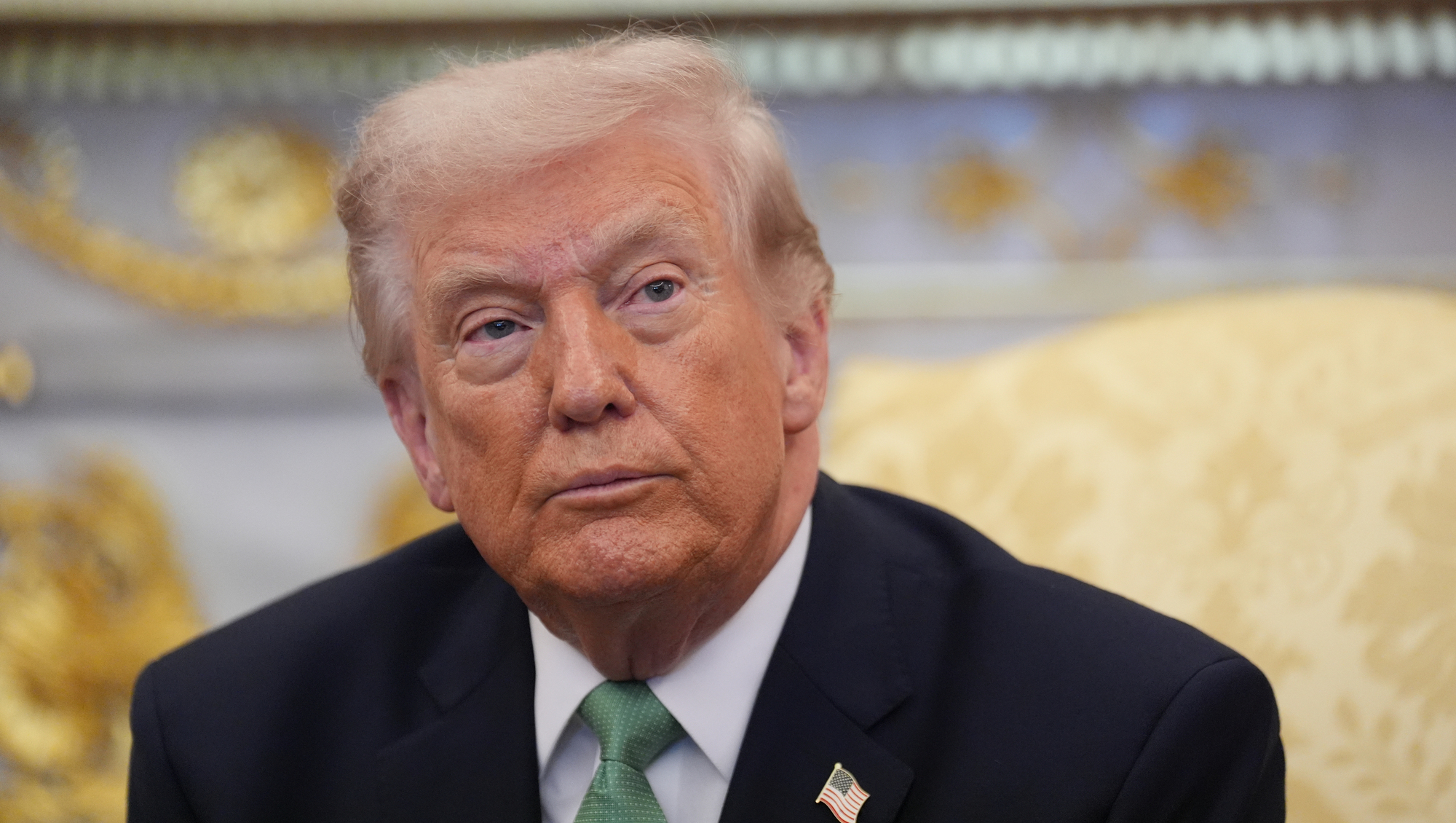
Monday’s meeting gave a glimpse of future headaches, such as a possible visit by Mr Trump to his Doonbeg golf course in Clare this September, when it hosts the Irish Open. Picture: Niall Carson/PA

Taoiseach Micheál Martin made the traditional St Patrick’s Day visit to the White House yesterday, and the formalities appeared to pass off without incident.

The sheer unpredictability of US president Donald Trump makes such encounters fraught. What should be a routine engagement has the potential to go badly wrong, given Mr Trump’s fondness for provocative statements and confrontational public encounters.

Visitors such as the Taoiseach must tread a fine line, as a result, in representing their views. Yesterday in the Oval Office meeting the Taoiseach made all the right noises about Ireland, Europe, and immigration, for instance, while Mr Trump sounded a surprisingly positive note on this country: “We have a tremendous trade relationship with Ireland and we’ll keep it that way. I think it’s going to be expanded very quickly.”

Whether that is a solid commitment or an uncharacteristically polite aside, only time will tell, but other contributions from Mr Trump illustrated the scale of the challenge facing Mr Martin.

The US president clearly wished to unburden himself of his unhappiness with British prime minister Keir Starmer and his position on the US conflict with Iran, which he did at some length. The Taoiseach therefore had to phrase his subsequent defence of Mr Starmer with some delicacy: “I do believe that he [Mr Starmer] is a very earnest, sound person who I think you have the capacity to get on with and you’ve got on with before. And you got on with other European leaders as well and I think you have that capacity again.”

Monday’s meeting gave a glimpse of future headaches, such as a possible visit by Mr Trump to his Doonbeg golf course in Clare this September, when it hosts the Irish Open.

That is something to be considered in the future, however. For now, there must be a sense of relief among the Irish delegation that yesterday was relatively routine.

Wisdom in song and in story

The effects of some voices are never really forgotten by their audience, and Dolores Keane’s was certainly one of those. She died earlier this week in her native Caherlistrane in Galway at 72.

To say that Keane had a long and illustrious musical career is a considerable understatement, given her first musical recording came at the age of five for what was then Radio Éireann. As a youngster in the 1960s she came through a traditional route by winning medals at many a fleadh cheoil, having been schooled in sean-nós singing by her aunts, and by her uncle in the whistle and flute.

In the mid-‘70s she co-founded the folk music group De Dannan and, with the likes of Frankie Gavin and fellow vocalist Mary Black, enjoyed more success.

By the early ’90s, Keane, Mary Black, Eleanor McEvoy, and other female singers had hit the heights with A Woman’s Heart, which became one of the biggest-selling Irish albums of all time.

Many readers, however, will associate Dolores Keane’s soulful voice with particular songs of loss and emigration such as Caledonia, which recounts the loneliness of a Scottish emigrant, or My Love Is In America.

Her deep, clear tone imbued those songs with a particular emotional pull which no other singer could match.

She also brought her own experiences to bear in her music, speaking openly in recent years about her struggles with depression and alcohol.

“I’ve had a lot of ups and downs during my life as a singer,” she said in 2023. “A few major things, drink being one of them, and I think, and I’m saying this to the audience now, it doesn’t help anyone.”

Wise words, and all the more convincing from someone whose art helped all who heard her sing. Rest in peace.

Who knows when Trump will stop?

It is now well over 60 years since the United States backed the Bay of Pigs invasion, a shambolic attack by Cuban exiles and the US on Fidel Castro’s regime.

That 1961 incursion was quashed swiftly by Castro and its failure haunted US foreign policy for decades, but now president Trump has indicated his interest in taking over the Caribbean island.

Mr Trump told reporters this week: “Taking Cuba. I mean, whether I free it, take it. I think I can do anything I want with it. They’re a very weakened nation right now.”

Even allowing for a relationship between the two countries which has veered between distrustful and hostile for over half a century, Mr Trump’s comments were extraordinary. His nonchalant assessment of the power imbalance between the US and Cuba needs some context, however.

Cuba is certainly in crisis at present because the US has blocked its access to oil, which has led to power outages and blackouts and has resulted in a humanitarian crisis in that country.

We have long since moved beyond the normal expression of diplomatic niceties, the verbal hints and nudges with which states indicate their options and preferences. The US president’s fondness for outlining his aims bluntly has obliterated all subtlety from such exchanges.

Surprise at this crudity should not obscure the most significant revelation here. Mr Trump clearly believes the strictures of international law and national sovereignty mean nothing, and it is concerning to think that Venezuela, where he unilaterally removed the head of state, may not be a once-off.

He has expressed an interest in taking over Greenland in the past, he has attacked Iran, and now Cuba is in his sights. It is unlikely that he will stop there.

More in this section

Revoiced

Newsletter

Sign up to the best reads of the week from irishexaminer.com selected just for you.

Cookie Policy Privacy Policy Brand Safety FAQ Help Contact Us Terms and Conditions

© Examiner Echo Group Limited