Irish Examiner view: The Irish Government is right to take case against UK over Troubles law
Britain's Tories are playing the Union Jack card to pander to the lowest common denominator
Irish Examiner view: The Irish Government is right to take case against UK over Troubles law

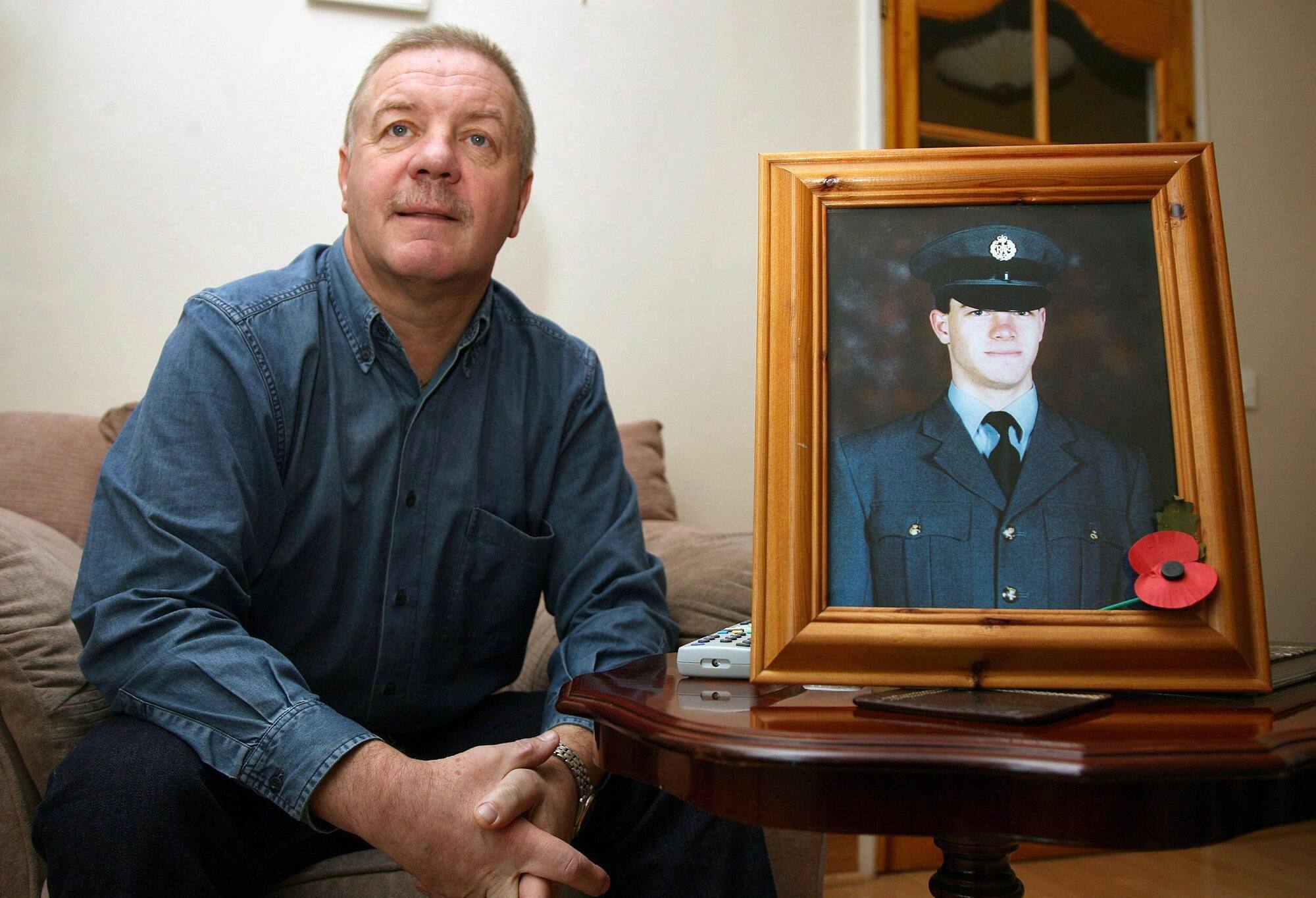
Raymond McCord Snr in 2006 with a portrait of his son, Raymond McCord Jnr, who was killed by loyalist paramilitaries in 1997. Mr McCord Snr is one of the campaigners who have challenged Britain's new Troubles reconciliation act. Picture: Paul Faith/PA

News that Ireland is to take an inter-state case against the UK due to its proposed Northern Ireland Troubles (Legacy and Reconciliation) Act 2023 should come as no surprise.

The act offers immunity from prosecution for those involved in offences related to the Troubles if they co-operate with the UK’s new commission for reconciliation.

By last September, it was already facing 16 different legal challenges and it is being widely criticised for denying families of victims access to justice.

Now Ireland is to take action against the act, with Tánaiste and Minister for Foreign Affairs Micheál Martin saying earlier this week that while he regretted that action, “... the decision by the British government not to proceed with the 2014 Stormont House Agreement and instead pursue legislation unilaterally, without effective engagement with the legitimate concerns that we, and many others, raised left us with few options”.

The key term used by the Tánaiste is “unilaterally”. There is hardly sufficient space in the entire newspaper to chronicle the past perfidies of Albion, but the British government’s decision to proceed with this legislation is of a piece with its recent attitude to the island of Ireland.

HISTORY HUB

If you are interested in this article then no doubt you will enjoy exploring the various history collections and content in our history hub. Check it out HERE and happy reading

Former British prime minister Boris Johnson’s shamefully cavalier approach to Brexit, for instance, saw the Northern Ireland protocol reduced to the status of a bargaining chip. 

Earlier this year, Michel Barnier of the EU described current prime minister Rishi Sunak as “much more responsible” than Johnson in this context, but progressing with the legacy legislation calls Barnier’s judgement into question.

The legislation also needs to be viewed through the prism of the British political scene.

The incumbent Tory administration led by Sunak is viewed as running down the clock to a Labour landslide at the next general election. Hence headlines such as this week’s by the Daily Telegraph (‘Sunak vows to defend Ulster veterans’), showing the Tories playing the Union Jack card to pander to the lowest common denominator.

Raymond McCord Snr arriving for a court hearing in November related to the inquest into the murder of his son, Raymond McCord Jnr. It has been ascertained that one or more government agents were involved in the murder. Picture: Alan Lewis/Photopress Belfast

The Government is entirely correct to take action on this matter, thus illustrating how the attitude of the British establishment towards this island remains rooted in the past.


Welcome, if overdue, legislation on vapes

At long last, a ban on the sale of e-cigarettes or vapes to children in Ireland has come into force.

The Public Health (Tobacco Products and Nicotine Inhaling Products) Act comes into effect from today, meaning it will be an offence to sell a nicotine-inhaling product to someone under the age of 18. The offence carries a penalty of a fine (up to €4,000) and a prison sentence (up to six months).

This is not before time. There has been widespread criticism of the increasing use of vapes, while the cynicism of the vaping industry in focusing on children and young users has been striking.

On the latter criterion alone, the vaping industry should have been regulated far more strictly, but there are other grounds for concern. Disposable vapes have been described by environmental campaigners Greenpeace as almost impossible to recycle because of the way they are manufactured. The materials involved in making vapes include pollutants and hazardous chemicals, while the detritus from vape users is seen as litter all over Ireland.

Even the retail outlets which sell vapes and vaping products have become a byword for urban decline — when vape shops open in any street in Ireland, they are seen by many as a marker of deterioration in that streetscape.

It’s a significant list of indictments for any product, which begs an obvious question: Why did it take so long for legislation to be introduced in this area? There have been vaping shops operating in Ireland for a decade, and a stroll around any urban area in the country would have confirmed that schoolchildren were using vapes in ever-increasing numbers in recent years.

While this legislation is welcome, there is no valid excuse for such a lengthy delay before introducing regulation in this sector. And whether that legislation is enforced appropriately remains to be seen.

Winter solstice brings a grand stretch

It has been a testing year on many fronts, and the dark winter nights of recent weeks have been a fitting accompaniment to the decline of 2023.

Readers will be aware, however, that yesterday marked the winter solstice, the astronomical phenomenon which marks the shortest day and the longest night of the year.

In strict astronomical terms, the solstice occurs when the sun shines directly over the Tropic of Capricorn. However, for Irish people it has a far more concrete application: It is taken as the beginnings of the stretch in the evenings, as the nights begin to get shorter, even if that process is a slow one.

The solstice has another resonance in Ireland, of course. Every year at the Neolithic tomb complex in Newgrange, Co Meath, a particular chamber is illuminated by the rising sun on mornings around the solstice. The alignment of a 19m passage to the chamber means the sun shines right down the passage to illuminate the entire chamber for 17 minutes.

Widely available via livestreaming, this sight retains its power to amaze viewers. It is equally awe-inspiring to consider the work of the original builders of Newgrange (which is older than the pyramids in Egypt) is still functioning perfectly, thousands of years after it was completed.

Perhaps it’s less surprising that so much work went into marking this important milestone: The start of the grand stretch in the evenings.


More in this section

Revoiced

Newsletter

Sign up to the best reads of the week from irishexaminer.com selected just for you.

Cookie Policy Privacy Policy Brand Safety FAQ Help Contact Us Terms and Conditions

© Examiner Echo Group Limited