Irish Examiner view: Banning advertising for cars would be hard to sell
TD says the ubiquity of car adverts flies in the face of the climate action Ireland has to take — but that outlook will meet considerable resistance, and not just from the auto industry
Irish Examiner view: Banning advertising for cars would be hard to sell

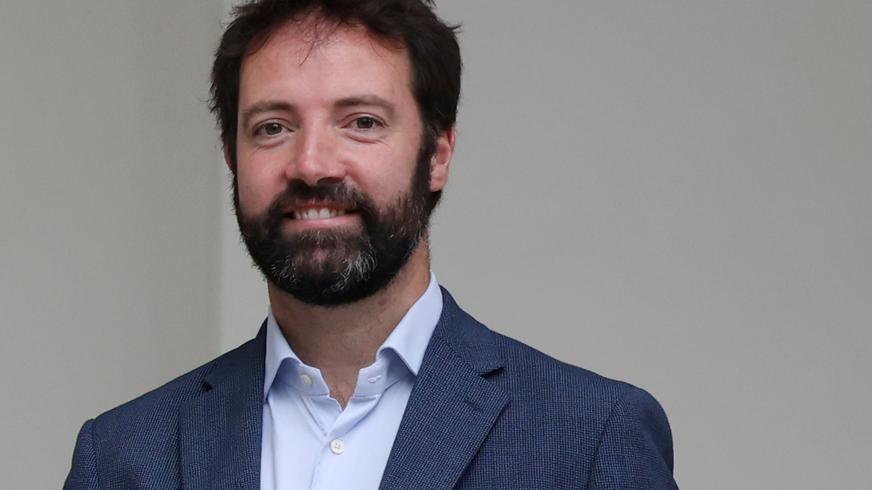
Limerick City Green TD Brian Leddin said: 'We need as many people as we can to shift to bikes, e-bikes, public transport, and walking.' File picture: Sam Boal/RollingNews

With hotter weather comes an increase in feverish ideas about how to combat the climate crisis with one of the latest decrying the “bombardment” of Irish citizens with car advertising and the “insidious” cumulative impact on our desire to invest in the internal combustion engine.

Oireachtas climate committee chairman, Green Party Limerick City TD Brian Leddin, says “almost constant” advertising of cars on radio, television, and podcasts flies in the face of the action required to reduce emissions. 

“Electric vehicles are not going to be enough,” he said. 

“We need as many people as we can to shift to bikes, e-bikes, public transport, and walking. We’ve seen the effects of climate change before our eyes in Europe over recent days. We need more urgent action.

It is possible to sustain an argument that anything which can be manufactured and sold legally should also be capable of being advertised legally and openly — although that position has been subjected to ever-increasing attrition, predominantly for health reasons and to protect young people from callow and self-damaging decisions.

For those reasons, restrictions on tobacco and alcohol advertising are widely accepted by the public. Junk food and gambling promotions are also the subjects of energetic lobbying from campaigners seeking bans. Gambling has become much more ubiquitous since the advent of mobile telecoms. Italy banned almost all gambling marketing at the start of 2019 with the introduction of the Decreto Dignità (‘dignity decree’). The Belgians have been similarly assertive, banning advertising across multiple platforms from the start of this month with further prohibitions on ads in stadia and team sponsorships to follow.

Yet it is hard to believe that there would be general support for any ban on car advertising. Our cities are dominated by cars with few politicians willing to risk alienating drivers  and public transport infrastructure still nowhere near to providing a suitable alternative for most  of the population.

Our tiny 1.9% reduction in greenhouse gas emissions in 2022 was achieved despite a 6% increase in transport emissions, so Mr Leddin is right to bang the drum on our car industry. In France, he points out, car ads were changed to encourage people to walk or use other methods of travel.

But don’t hold your breath for a similar move here. The automotive industry wouldn’t be the only one up in arms about a move to restrict advertising. If it were implemented, ads for overseas travel would be next in the firing line and, despite the catastrophic climate impact playing out on a daily basis now, voters are for the most part unmoved.

An example of this can be found across the pond. In this week’s Uxbridge and South Ruislip by-election, the Tories managed to hold a seat  despite the predicted impact of “Long Boris” in the constituency of the former prime minister.

Uxbridge is part of the potential expansion area for Ulez, the ultra-low emission zone planned by London mayor Sadiq Khan. While this policy is popular in central London where integrated public transport is one of the best systems in the world, it is a manifest vote-loser in the suburbs where buses and trains are less frequent and reliable.

Remind you of anywhere?

Public order failures 

When a city gains a reputation for street violence, it can be difficult to overcome. And when a tourist or a visitor to these shores is the victim, the impact becomes magnified many times in the echo chamber that is social media.

The brutal gang attack which left a 57-year-old US citizen with life-changing injuries took place just around the corner from Store Street Garda Station, close to the International Financial Services Centre and hotels and guesthouses in Dublin. He was left on the ground in Talbot St after being punched and kicked in the head.

The thuggery took place after another recent bestial incident when a Ukrainian actor had his face cut out open by five assailants near the Abbey Theatre. Taoiseach Leo
Varadkar says Dublin “has a problem with public order
offences”, while Justice Minister Helen McEntee promises “a tough and firm response” which will “send out the message that we will not tolerate this thuggery on our streets”.

The problem for our politicians is that predatory and
aggressive behaviour is increasingly common. While Americans are used to violence in some of their major cities such as Los Angeles and San Francisco, which have opioid epidemics and some quarters which are effectively no-go areas after dark, they do not expect it in the oul’ country.

Ms McEntee says the best way of making the streets safer is having more gardaí on patrol. But, as we reported last month, there is a recruitment crisis, with Garda strength standing at 13,395 last April. Assaults causing harm have almost doubled in a decade, from 3,071 offences in 2013 to 6,092 last year.

This implies not only a failure in targeting but also a problem with sentencing. We are a long way from zero tolerance. Failure to make our streets safe could not only have political ramifications for our elected representatives, but may also lead to a rise, as is common in many other countries, in private security firms filling a public order gap.

A peculiar parallel

Is there any reason we should care Nigel Farage has been, to use another of those ugly modern constructions, ‘debanked’? After all, you must be a millionaire to bank with Coutts, and its parent company, NatWest Group walked away from the Republic when it withdrew Ulster Bank. And, of course, he’s an odious blowhard.

Yet confirmation he was denied services due to his political views in conflict with freedom of expression laws should give us pause, and may cost CEO Alison Rose her €6m per annum job. It is another example of how power comes to be wielded behind closed doors. There is a peculiar parallel, though at the opposite end of the political spectrum, with the ostracisation of scientist Robert Oppenheimer whose story is being recreated by Cillian Murphy in cinemas this week. He fell foul of McCarthyism, Farage has found his opinions jar with current, and secret, corporate orthodoxies.

More in this section

Revoiced

Newsletter

Sign up to the best reads of the week from irishexaminer.com selected just for you.

Cookie Policy Privacy Policy Brand Safety FAQ Help Contact Us Terms and Conditions

© Examiner Echo Group Limited