Books of the year: Three titles that tugged at the very fabric of Irish history
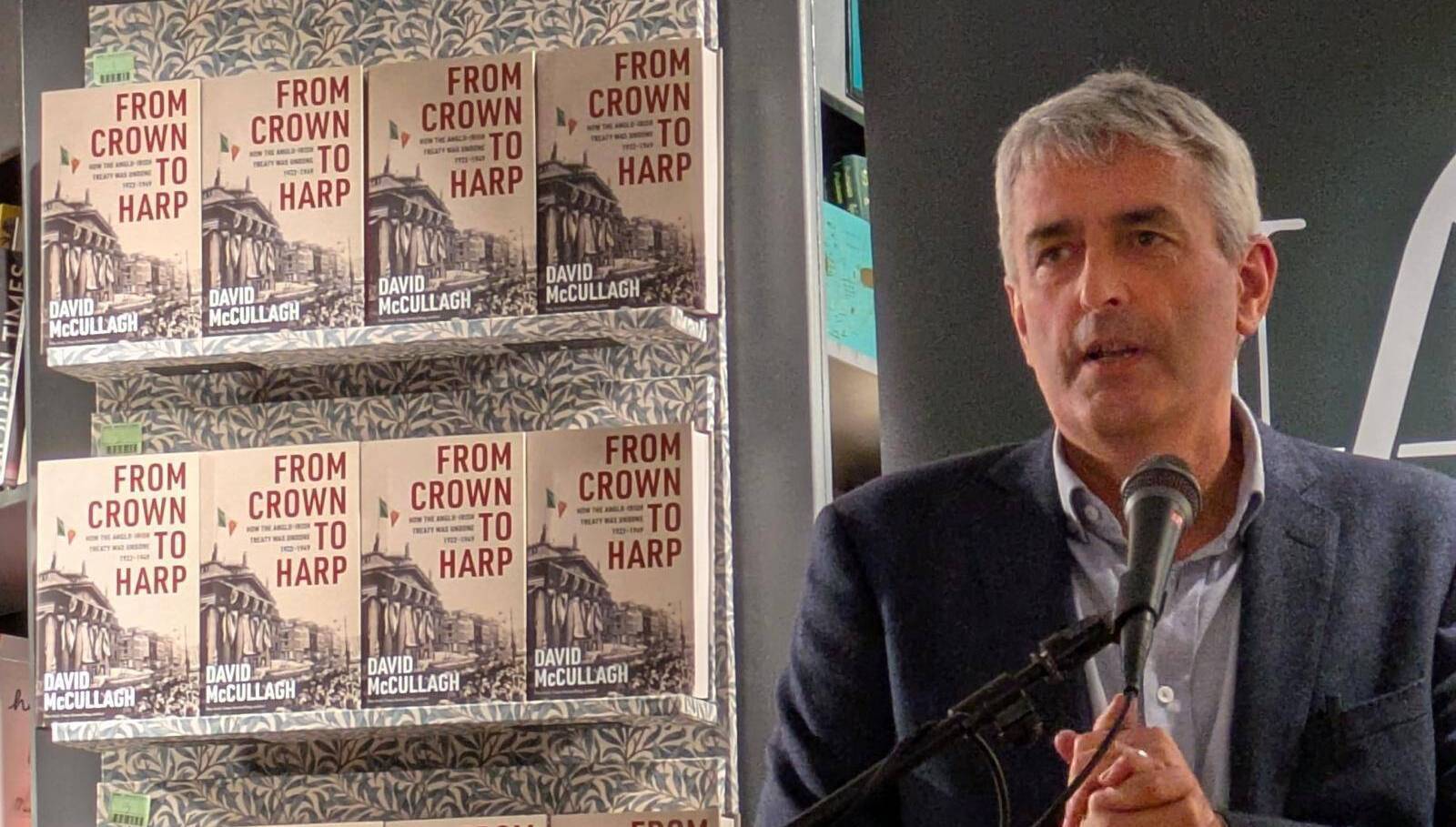
Writer and broadcaster David McCullagh at the launch of his book, 'From Crown to Harp'.
Philosophers often muse about the changes in circumstances experienced as we pass through life. People generally find themselves on a continuum between idealism and expediency.
The serenity prayer grapples with the same question, asking us to seek the grace to accept, with serenity, the things we cannot change and the courage to change the things we should. More importantly, it asks that we have the wisdom to tell the difference.
But, where should courage stop and wisdom take over?
Several books I read this year featured people who changed their minds from their original position because, in their wisdom, they believed it was the correct thing to do as the circumstances changed.
Some of these books focus on the 30 years from the War of Independence to the 1948 declaration of a 26-county republic, which few foresaw in 1918. Yet many of those who took up arms in 1918 were accepting of the 26-county Republic by 1948.
This raises the question, did these men in 1948 accept, with serenity, the certain things they could not change, or did they no longer have the courage to effect greater change which could have yielded a 32-county republic?
and published by Pen and Sword.
Sean Moylan fought in the War of Independence, leading several engagements with British forces in North Cork. He also played a major role in organising the Sinn Féin courts and was elected to the 2nd Dáil in 1921.
He joined the anti-treaty forces during the Civil War. When the war was over, he settled down, reared a family and developed a business. In 1932, he answered Éamon de Valera’s call and stood for election on the Fianna Fáil ticket. He was elected to the Dáil for the North Cork constituency.
Moylan became a minister in several of the de Valera governments before losing his seat in 1957. He died later that year.
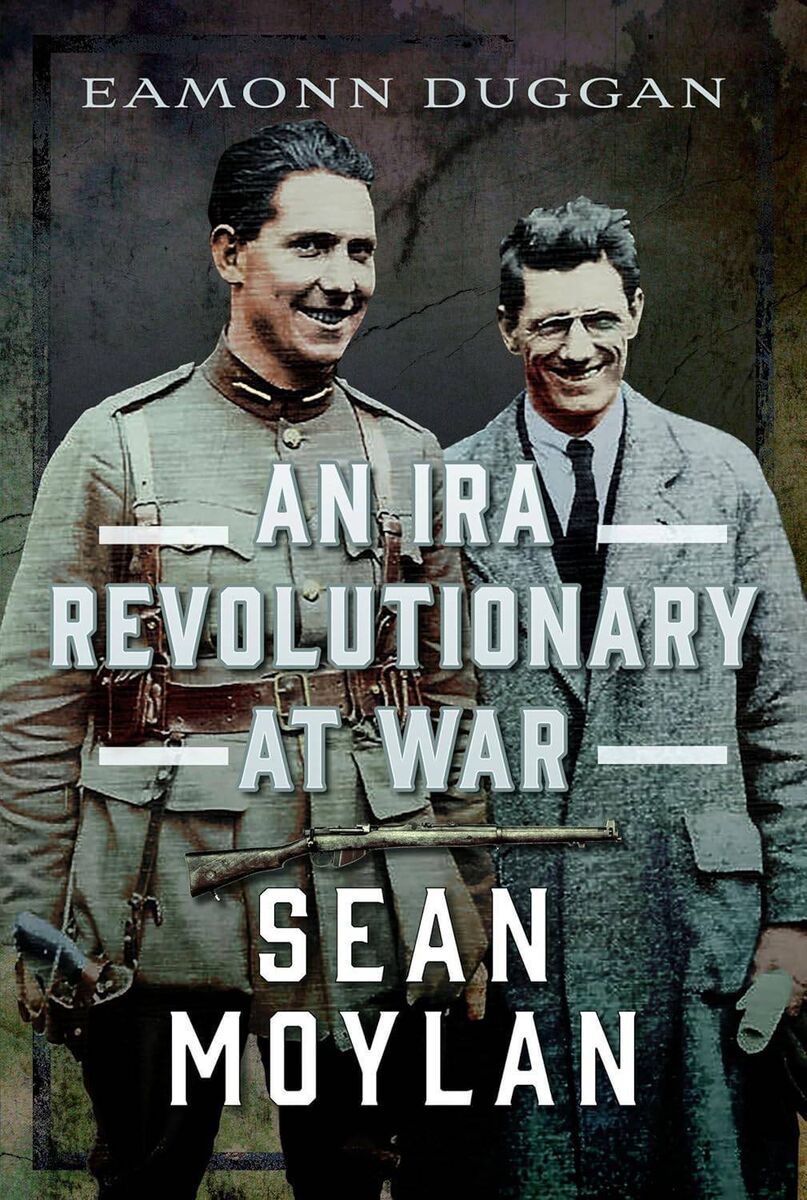
Author Eamonn Duggan has long held the view Seán Moylan never got the recognition his career deserved.
Duggan’s book serves as a reminder of the sacrifices the people who lived in the 1918 to 1924 era made to the establishment of our country. Moylan is just one example of the many who eventually decided it was better to accept a lesser deal to make progress towards their ideal.
During that 1918-21 period, Moylan and many more were mere cogs in the wheel of a greater mechanism; one which had to negotiate with an experienced British government.
The 1921 negotiations tested Michael Collins and his fellow negotiators. The British team had vast experience behind them. Collins’ team felt they had achieved the best deal possible, at that time. It was ‘the best possible deal at that time’ which led to the Civil War.
After the Civil War, diplomatic work had to be done on the international stage. This work could never have been envisaged by the men who lay in wait for the British forces during the ambushes of the War of Independence.
One of the first tasks for the new government in 1922 was the setting up of a Boundary Commission with Britain and Ulster. The story of this commission is outlined in , published by Irish Academic Press.
It was Michael Collins who suggested the establishment of a border commission to decide the jurisdictions of the Dublin and Belfast governments. Lloyd George adopted the idea and produced an ambiguous clause that became Article 12 of the treaty.
The Dublin government hoped the Boundary Commission would add Tyrone and Fermanagh to the south, but Britain refused to risk upsetting Ulster’s Unionist majority.
Reading Moore’s brilliantly researched book, it is clear the Cosgrave-led Free State government had no coherent plan on how to deal with the Ulster Unionists. As Moore says: “The Irish Government failed to grasp that Ulster unionism’s hatred of Dublin was stronger than its love for the empire.”
The Boundary Commission report was never published, the Free State government agreed to the non-publication in exchange for a badly needed debt write-off from Britain. Was this serene acceptance of a situation or a courageous choice?
Running parallel to the work of the Boundary Commission was the task of seeking international recognition for Ireland. This was to ensure Ireland would not be seen as a puppet state within the British commonwealth.
This was no straightforward task. It took six months to negotiate the treaty; the failed Boundary Commission took five years. Changing Ireland from a commonwealth country to a republic took 27 years. This journey is excellently outlined by published by Gill Books.
It took hundreds of meetings over 27 years to make progress towards a republic. Often, these meeting were on minute matters like the wording of a toast to the king (of the British commonwealth) at an international dinner.
McCullagh shows the progression to a republic in Ireland began with a tiny diplomatic victory. Many similar victories by successive Cosgrave and de Valera governments followed until Taoiseach John A Costello declared Ireland a 26-county republic in Ottawa, Canada, in 1948.
The price paid for the 26-county republic was the abandoning of the nationalist community in Ulster — an outcome which was undreamt of in 1918. Yet, it was many of those same men who survived the War of Independence, the Civil War, and who saw the Boundary Commission fail, who settled for a 26-county state.
Was this the wisdom to accept what could not be changed, or the gradual erosion of the courage to change? The answer may differ depending on where you live on this island.
What these three books give us is a view of the circumstances from which Ireland has evolved. As Oscar Wilde said: “Change is the only quality we can predicate on.”
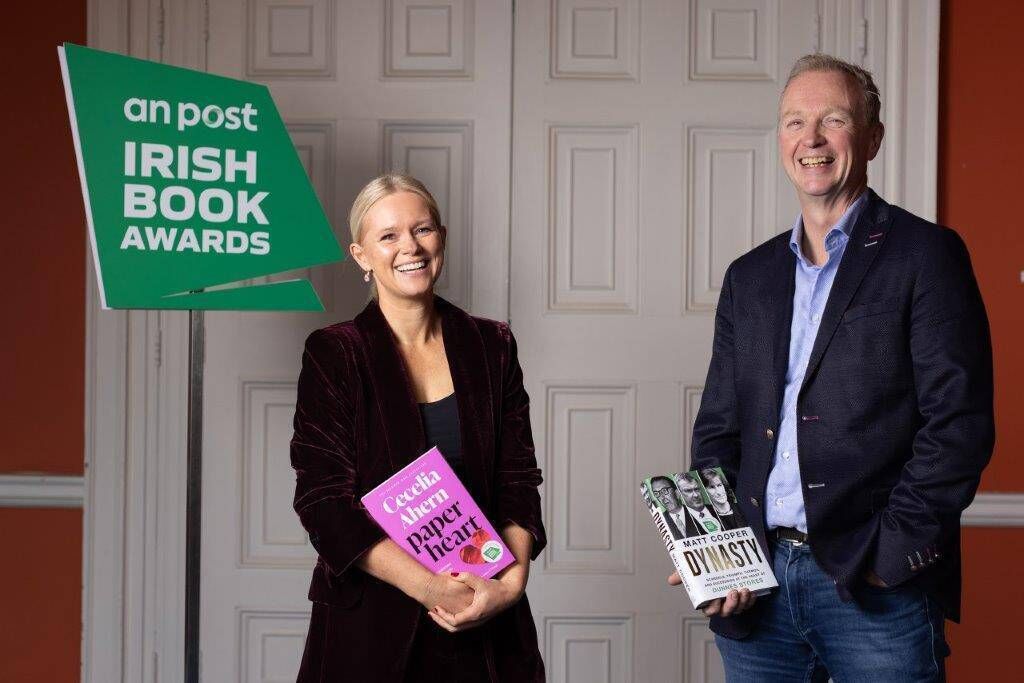
Another book that caught my eye this year is , published by Bonnier books. This is a story of a family whose beliefs and mission have not changed in over 80 years. They remain focused on developing their successful business.
Matt Cooper has become one of Ireland’s most respected journalists. His account of the Dunne family’s dynasty is undoubtedly one of my best reads of the year.
Bernard Dunne Senior was driven by the ambition to succeed in business. He moved to Cork to take up a job with Roches Stores in the early 1940s. He left in 1944 and set up Dunnes Stores across the road. From then until their death, Dunne Snr and his wife Nora grew the business into the largest retail business in the country.
The Dunnes drove hard bargains with their suppliers. They insisted on 90 days' credit which allowed the company to bank their turnover and earn significant interest on top of their profit. The Dunne children gladly entered into the business as soon as they were old enough, and willingly embraced their parents' obsession.
However, the drive to succeed came at a cost. From the 1960s, Dunnes Stores, or family members, have been embroiled in some of the most infamous disputes and scandals of the country. Personal tragedy was never far away — alcohol and, in Ben’s case cocaine, cast a shadow over the family name.
But the dynasty not only survives, it thrives. It is the story of an Irish family who have given their lives to achieve their ambition and the ideal companion for those days between Christmas and the new year.


BOOKS & MORE
Check out our Books Hub where you will find the latest news, reviews, features, opinions and analysis on all things books from the Irish Examiner's team of specialist writers, columnists and contributors.