Irish Examiner view: The hard road back to freedom 
Irish Examiner view: The hard road back to freedom 

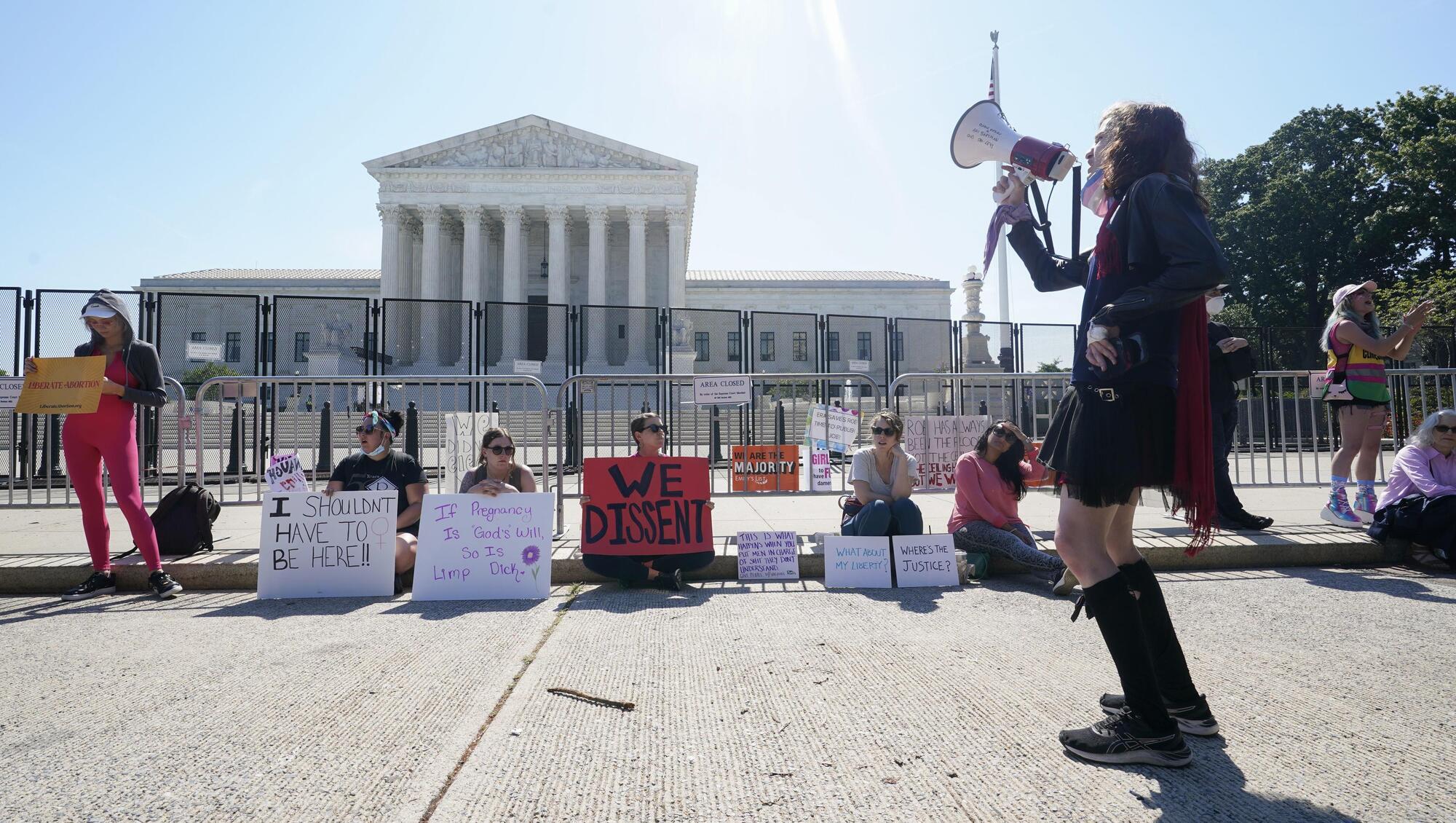
People protest outside the Supreme Court in Washington. The Supreme Court has ended constitutional protections for abortion that had been in place for nearly 50 years.

The cries of rage which rang out around the various stages at the Glastonbury Festival this weekend whenever the US abortion judgement was mentioned mark the beginnings of a generational campaign which may take years or decades to bring to a successful conclusion.

Confirmation, long anticipated, that a politically loaded US Supreme Court has formally decided to set the clock back 50 years on women’s rights does not make the decision from what prides itself as the land of the free palatable. In fact, it is worse. Because the detail of the judgement, heavily leaked in advance, marks open season on what might be termed “modern” laws because they do not have specific underpinning in a constitution which is 233 years old.

Justice Samuel Alito, the author of the reasons for the majority decision, says that the matter must be referred back to politicians because “the constitution makes no reference to abortion, and no such right is implicitly protected by any constitutional provision, including... the due process clause of the 14th Amendment”. 

Any such right, he adds, must be deeply rooted in the nation’s history and tradition and “implicit in the concept of ordered liberty.” The immediate impact will be to create two generations of women with lesser rights than their mothers and grandmothers. If Margaret Attwood wanted an example of life imitating art for her dystopian novel The Handmaid’s Tale she could look no further.

In prohibition states, any pregnancy loss beyond a specified cut off may have the potential for criminal investigation with all the demands for disclosure of personal information. Even obtaining abortion pills could be unlawful. Missouri has proposed classifying the shipment of such pills as drug trafficking. Louisiana has a law that makes mailing abortion pills to a resident of the Pelican State a criminal offence, carrying six months’ imprisonment. The “Every Mom Matters” Act in Arkansas requires women considering abortion to contact a state hotline and compels providers to itemise patients with a unique ID in a central database.

Fetal personhood

The concept of fetal personhood, which was referenced in the harrowing case of Savita Halappanvar, appears deranged in some of its legal implications, but is strong within the US where, bizarrely, national support for abortion is high. Nearly two thirds of Americans were in favour of retaining Roe v Wade while 57% support a woman’s right to abortion in any circumstances.

The unprecedented reversal of laws will allow more than half of the US to ban abortion with an instant impact on tens of millions of Americans. There will be two Americas; one which protects women’s health and freedoms, and one where women will have much reduced, or no, reproductive rights.

Thirteen states immediately have the right to ban abortion because they put “trigger” laws in place awaiting the publication of Friday’s final decision. Ultimately 58% of all women of reproductive age, around 40m US citizens, will live in states which are hostile to termination. The US has become only the fourth nation to roll back abortion rights in 30 years and is by far the most influential. The others are Poland, El Salvador and Nicaragua.

Given this surreal decision, and the affirmation that rights not specifically included in an aged constitution can now be called into play, what other matters might be on the radar of the religious right?

Birth control

If abortion has gone, then what about birth control? American rights in this date back to 1923 which guaranteed that parents could raise children without undue state intervention and permitted the freedom to use contraception. But some argue that forms of birth control may sometimes work by preventing a fertilised egg from implanting in the uterus and should therefore be considered abortifacients. Sounds crazy, but who knows what a good lawyer could make of this.

Landmark rulings which outlawed criminalisation of gay sex, and which legalised same-sex marriage date back to 2003 and 2015 respectively. Laws affecting gender identity, IVF, and any other scientific advances may also be measured by fundamentalist campaigners and added to the target list.

The only answer is to ensure political change at a federal level, a slow process. But in the short term, pregnant women will be subject to onerous, and intrusive, legal obligations which rob them of their freedom.

That is a bad message from the world’s most-powerful democracy. It will embolden anti-abortion and anti-women forces in other countries. It is a devastating denial of what so proudly they hail’d at the twilight’s last gleaming.

More in this section

Revoiced

Newsletter

Sign up to the best reads of the week from irishexaminer.com selected just for you.

Cookie Policy Privacy Policy Brand Safety FAQ Help Contact Us Terms and Conditions

© Examiner Echo Group Limited