Irish Examiner view: Preserving light of democracy after Ukraine's 100 days
Russians will only be stopped by will and determination and, at the moment, they have it, and our comfortable and collegiate alliance of nations does not
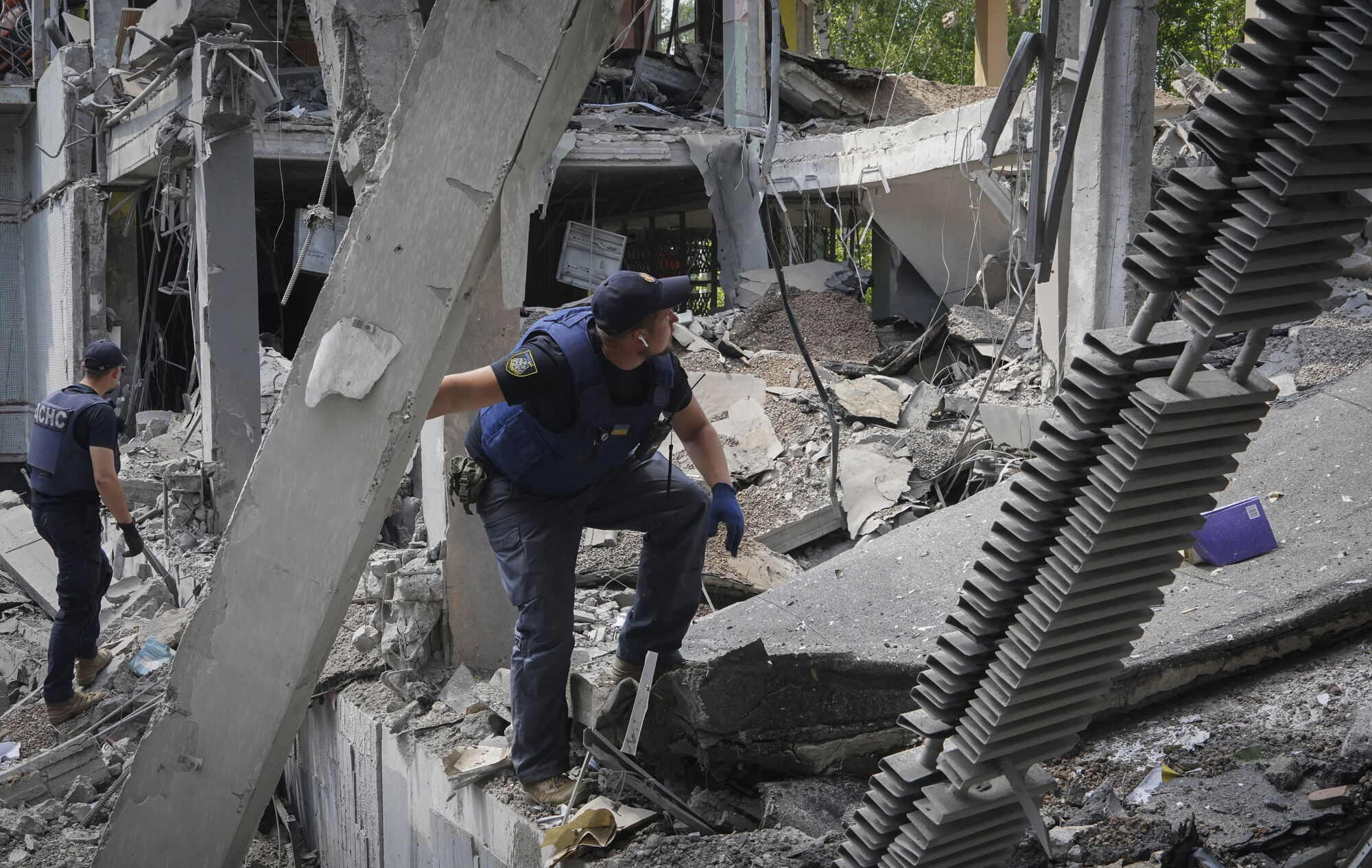
Ukrainian Emergency Situations Ministry employees search the site of a bombing in the school where a graduation ceremony, called the Last School Bell, was supposed to take place in Kharkiv, Ukraine, on Thursday. Picture: AP Photo/Andrii Marienko
Ukrainian Emergency Situations Ministry employees search the site of a bombing in the school where a graduation ceremony, called the Last School Bell, was supposed to take place in Kharkiv, Ukraine, on Thursday. Picture: AP Photo/Andrii Marienko

Few international conflicts start and finish in 100 days, although there are several whose crucial phases are settled within such timescales. The final defeat at Waterloo of Napoleon, after his return from Elba, took 115 days in 1815. The end of the First World War was marked by a relentless surge of victories after four years of bloody stalemate, commencing with the Battle of Amiens in August 1918 and ending with the armistice that November.

The campaign in Ukraine is not going to be like that. Today marks its 100th day. “What happens if it becomes a ‘forever’ war”? asked an article by Princeton history professor Harold James in the Irish Examiner this week. It is a pertinent question.

Although Vladimir Putin announced his “special military operation” to “demilitarise and denazify” Ukraine on February 24, all the warning signs had been in place for many weeks, just as they were before the invasion of Poland in 1939.

At the start of February, we led our front page on the US sending additional forces to strengthen Nato and then on advice to British and American citizens to leave Ukraine. “It looks dangerous, and it is,” said our opinion writer.

On February 18, the British ambassador to Ireland, Paul Johnston, told Irish journalists that the forthcoming invasion represented “the most dangerous moment for the European security order in our lifetime”. So, it is not as if we didn’t get the heads-up.

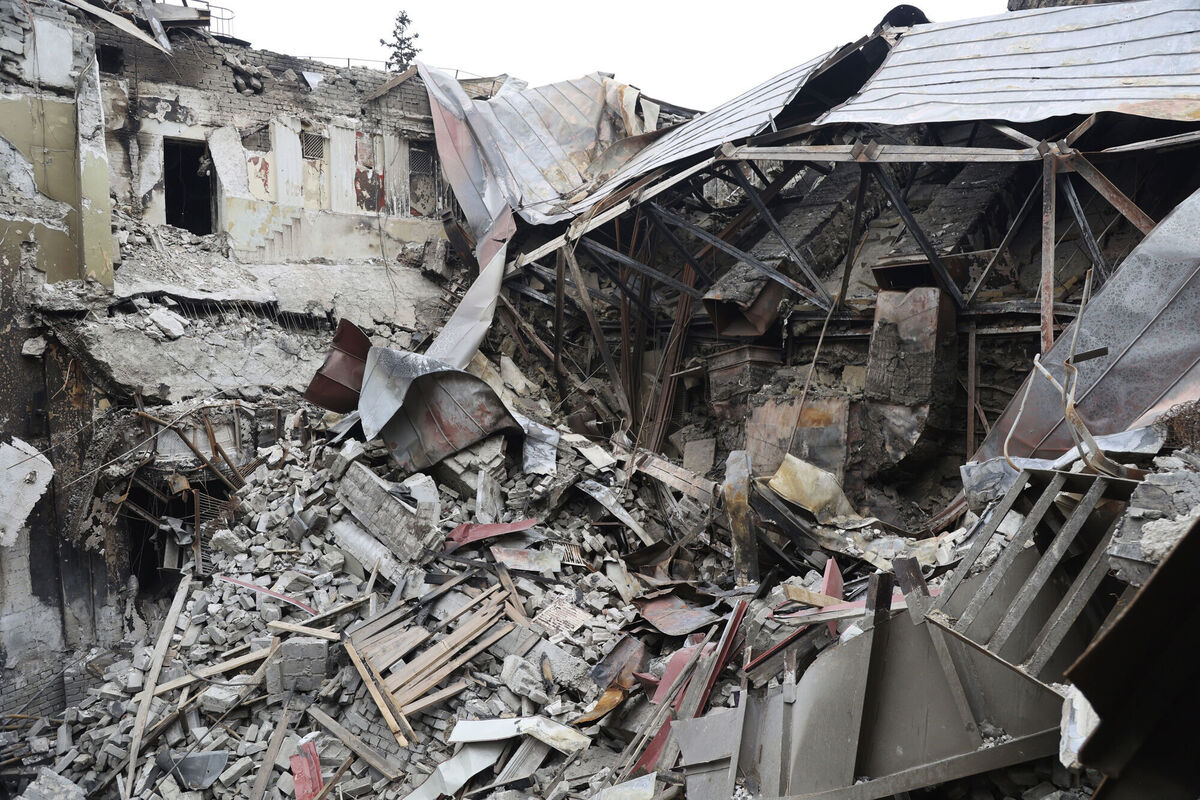
Rubble from the damaged Donetsk Academic Regional Drama Theatre sits after the March 16, 2022, bombing in Mariupol. Picture: AP Photo/Alexei Alexandrov

And when the Russians went in, we warned that, just as the Americans had found in Vietnam, and the Russians discovered in Afghanistan, getting into a country could be the easy part. Retaining control, particularly if the civilians are hostile, could be impossible.


Since Invasion Thursday, when Russia entered Ukraine from the north, east, and south, a widely distributed attack that led to many problems for what was once the vaunted Red Army, we have become familiar with names with which we once had only a passing acquaintance: Kharkiv, The Azov Sea, Kherson, Chernihiv, and Mariupol; Kyiv, where special forces made two attempts to kill the president, Volodymyr Zelenskyy, on the first day; Bucha, where evidence of atrocities was manifest; and now Sievierodonetsk, the latest target for the Kremlin suppression.

And the totemic moments have been many: Zelenskyy and his cabinet demonstrating, from the first day, a mastery of social media that the Ukrainians have weaponised to rally support internally and externally. Their selfie video from the capital was memorable: “We are all here ... our soldiers ... our citizens ... protecting our independence.” Then, the message from Snake Island: “Russian warship, go fuck yourself.”

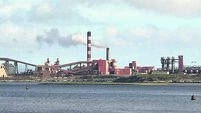
And much darker memories: The bombing of the Mariupol Theatre; the grim fighting through the Azovstal Steelworks; the sinking of the Moskva Black Sea flagship with a Neptune missile; an old lady on a shaky plank trying to ford a torrent under a destroyed bridge.

The war has created 6.5m refugees; plunged much of the world to the edge of famine; expanded Nato; witnessed the continuing ‘Groznyfication’ of what was once a neighbour, ally, and friend of Moscow, and precipitated Europe into an energy crisis for which it has yet to develop a cohesive and meaningful strategy. It has also found fault lines in the European Union, which may become dangerously wider the longer the turmoil continues and which will pose challenging questions for Ireland over the next two years.

Changing face of war

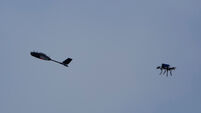
It has also changed the face of war. For the first time, drones have had a major impact on the battlefield. Intelligence has been shared in unprecedented ways to identify troop movements and crimes.

Russian armed power has been degraded by at least 4,000 items, including 700 tanks and 400 fighting vehicles. Ukraine has lost 180 and 82, respectively. Russia’s troop losses are estimated to be 15,000 dead and up to 60,000 wounded, more than a third of the forces originally committed. Ukraine casualties are calculated to be about 60% of those of Russia.

With reservists, the Ukrainians will soon have about 400,000 troops to put into the field, backed by another 600,000 training and integrating into territorial units. Kyiv says it could soon have a million under arms to fight a neighbour that may be 10 times its size but which has a total ‘peacetime’ roster of just under 300,000. So, without a full mobilisation, and even with ancillary forces from Belarus, Chechnya, the Wagner group of mercenaries, and Syria, Russia may be outgunned by late summer, as long as Ukraine has the weaponry.

Democracies have already warned that there may be power cuts at peak times this autumn and winter to conserve power, if Putin continues to use the oil-and-gas weapon alongside his food blackmail. This will test European unity to its maximum.

In August 1914, a British foreign secretary told a journalist: “The lamps are going out all over Europe, we shall not see them lit again in our lifetime.”

That four-year war cost 20m deaths and 21m wounded. It was fought to protect the territorial integrity of small nations and the right to self-determination.

We warned on February 26 that the Russians will only be stopped by will and determination and, at the moment, they have it, and our comfortable and collegiate alliance of nations does not. Much more work needs to be done by the leaders of Europe to demonstrate the resolve that is the only characteristic that Putin holds in regard.

x

More in this section

Revoiced

Newsletter

Had a busy week? Sign up for some of the best reads from the week gone by. Selected just for you.

Cookie Policy Privacy Policy Brand Safety FAQ Help Contact Us Terms and Conditions

© Examiner Echo Group Limited