Irish Examiner View: Communities need action on flood defences
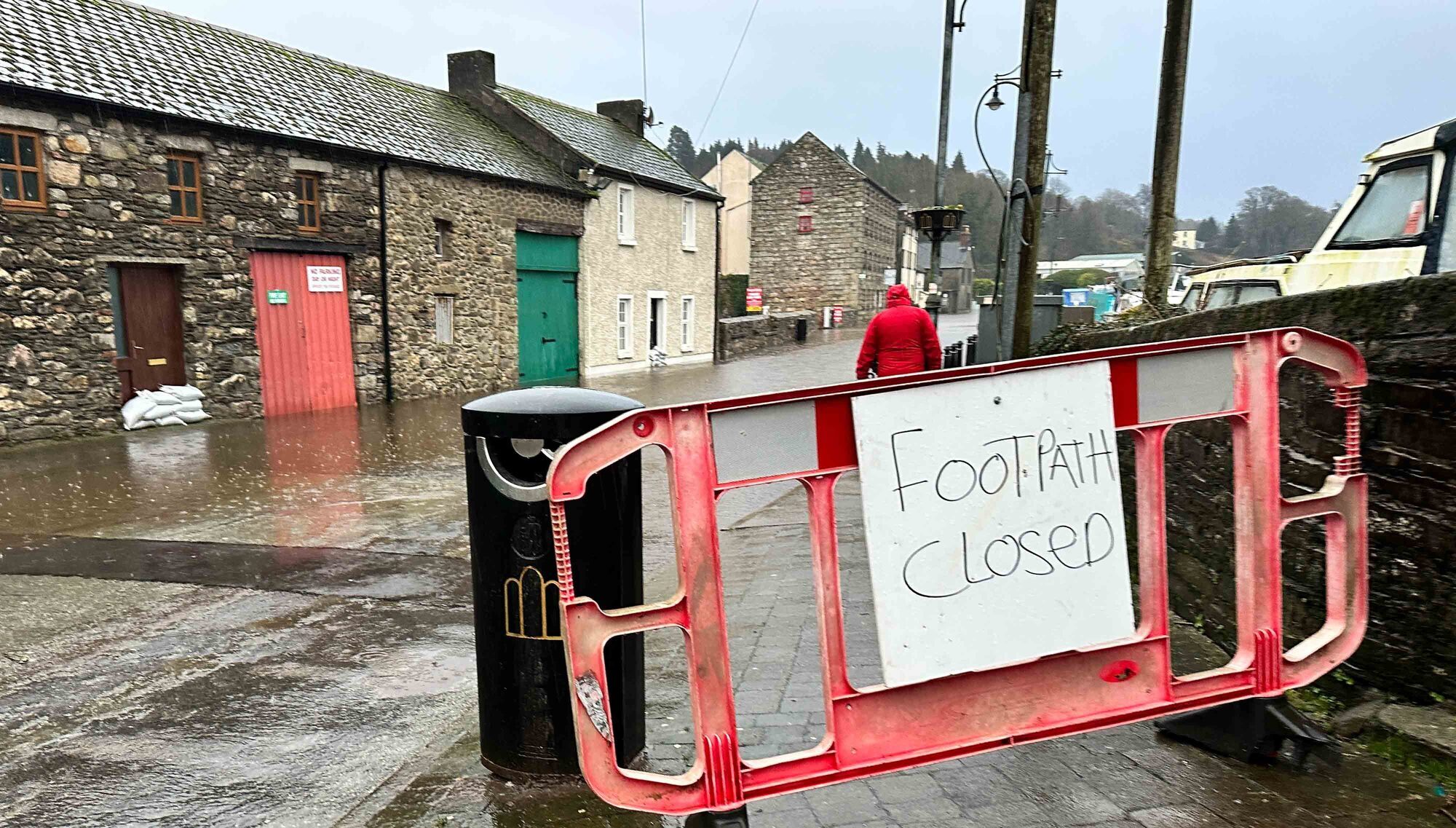
The flooded quays in Graiguenamanagh on the River Barrow. The town in County Kilkenny has seen flooding after the River Barrow burst its banks in the heavy rainfall following Storm Chandra. Picture: Eamonn Farrell/RollingNews.ie
Tell the people of Enniscorthy, or those in Midleton, who have been beset by life-changing flooding which deeply impacted lives and livelihoods — just in the last week in the case of the Wexford town, and in recent years in the Cork town’s instance. Locals have described the flooding events as the worst in a generation.
People in these communities have been awaiting flood relief schemes for unduly lengthy periods, leaving them in an unnatural state of heightened anxiety, in fear of a recurrence. They are not alone, as communities up and down the country live in fear of the next storm and its devastating aftermath.
These are live and very expensive examples of the collective torpor that seems to characterise this country when it comes to getting the necessary work done to protect individuals and the communities in which they live.
And here we have another rain warning coming in effect today and running into tomorrow, with communities bracing themselves again.
Taoiseach Micheál Martin is due to meet this week with those affected by the Storm Chandra floods; he can expect to be challenged on the Government’s record on protecting these communities from flooding.
We are told there will also be a special Cabinet committee meeting this week to discuss the overall approach to floods.
The fact that this problem has not yet been adequately addressed is indicative of a greater malaise across official Ireland, and that will be of little comfort to the people of Enniscorthy and Midleton — and many other communities throughout the country — where the need for remedial action is quite obvious, but not addressed.
Organ donation:Â A life-changing gift to others

It is a deeply concerning truth that an average of 300 people per day in this country are opting out of registering to be organ donors.
Legislation introduced here last June effectively makes every Irish adult an organ donor unless they expressly withdraw their consent. Since the new law came into effect, some 58,482 people have officially withdrawn that consent.
Ironically, the Human Tissue Act of 2024, which came onto the statute books last June, was aimed at increasing the numbers of organ donors throughout Ireland. While the rate of people opting out has slowed considerably in recent months, the number of those who have done so is startling, and completely at odds with the intent of the legislation.
In today’s Irish Examiner, we highlight the case of 10-month-old Alice Aurora Spang, who had been diagnosed with dilated cardiomyopathy, and died from multiple organ failure on November 14, 2019, as her parents, Majella and Jan-Bart, waited in vain for the potential donation of a new heart for their child.
Difficult as it was that a suitable donated heart could not be found for Alice, even more crushing for her parents was that none of Alice’s organs could be used to save any other child, because she was so ill.
They are now working to create awareness among people who tragically lose children at a young age to consider donating their organs in order to save another child.
There can be no doubt about the devastation and grief caused by the death of an infant, but that loss can be tempered by the knowledge that their baby saved the lives of others by donating perhaps a heart, or maybe lungs, liver, or kidneys. Even donated eyes could give the gift of sight to another.
Organ donation is one small way of knowing that at least their child breathed new life into that of another.
It is so disappointing that so many are opting out of organ donation and of creating the potential for a healthy and happy future for others.Â
Tangle netting:Â Act now on this threat to our sea

The creation nearly two years ago of Ireland’s first marine national park, Páirc Náisiúnta na Mara, CiarraÃ, in the waters around the Dingle Peninsula and the Blasket Islands, was widely applauded as a landmark for environmental protection.
But, despite the praise lavished on the project, it appears that there are still serious issues facing wildlife in the park.
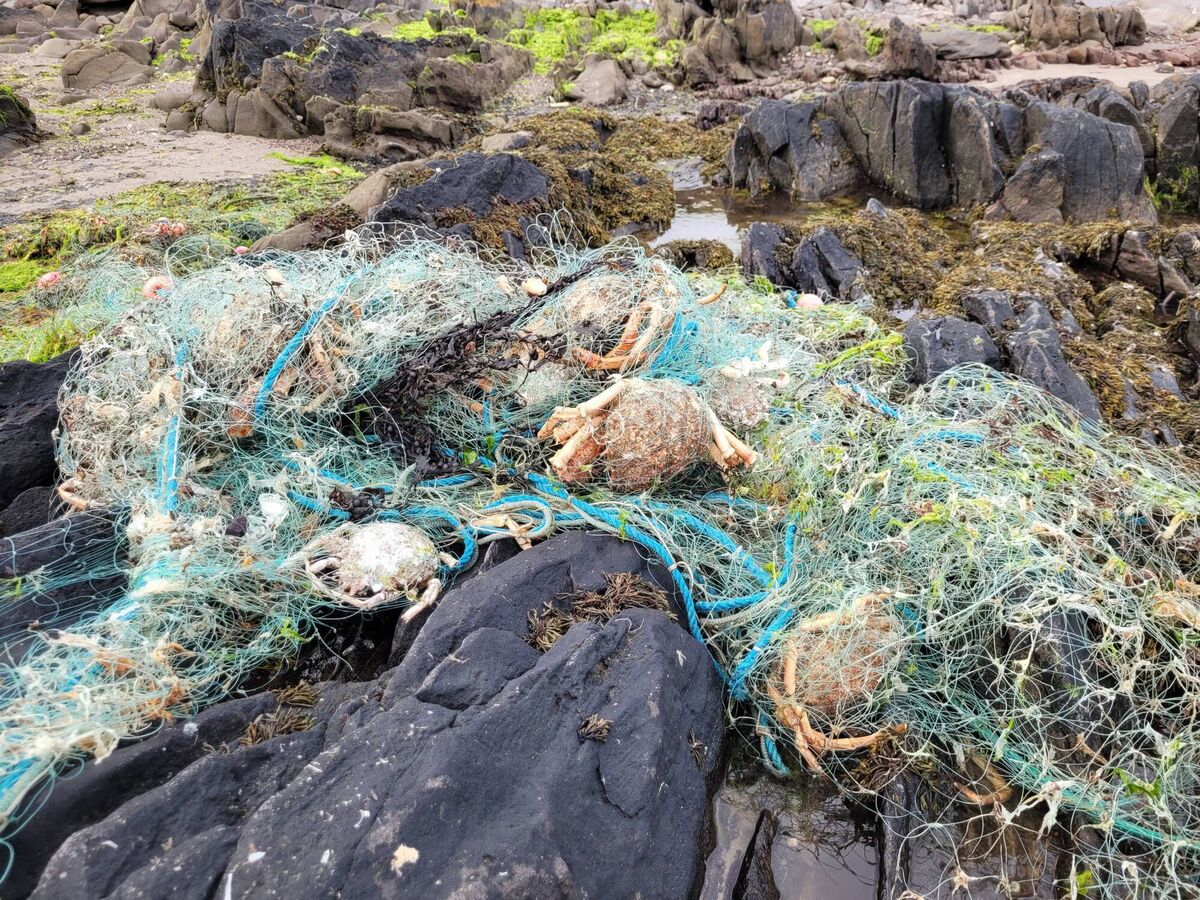
A report from the Marine Institute has highlighted problems created as a result of the practice of ‘tangle netting’ which is prevalent to target the increasingly valuable catch of crayfish.
The practice involves the placing of a weighted ball of monofilament net on the seafloor to catch crayfish, which are currently fetching up to €50 per kg at market.
As there are no limits to the number of crayfish that can be caught and no restrictions on the amount of netting being used, thousands of kilometres of netting are being spread across the Kerry seafloor. Traditionally a local method of fishing, it is now spreading north to Galway and Mayo and east to Wexford and Waterford.
Unfortunately for the crayfish population, it is a remarkably effective way of catching them — but not them alone. The native crayfish population is now suffering greatly, and so too are other marine creatures for whom the nets are an indiscriminate death trap.
In addition, a lost net can become what’s known as a ‘ghost net’ which will take the lives of countless marine inhabitants. These are becoming a serious issue, killing grey seals, angel sharks, stingrays, tope sharks, and flapper skates, among others.
This shameful matter needs to be addressed urgently.
CONNECT WITH US TODAY
Be the first to know the latest news and updates