Irish Examiner view: Russian church faces threat of schism
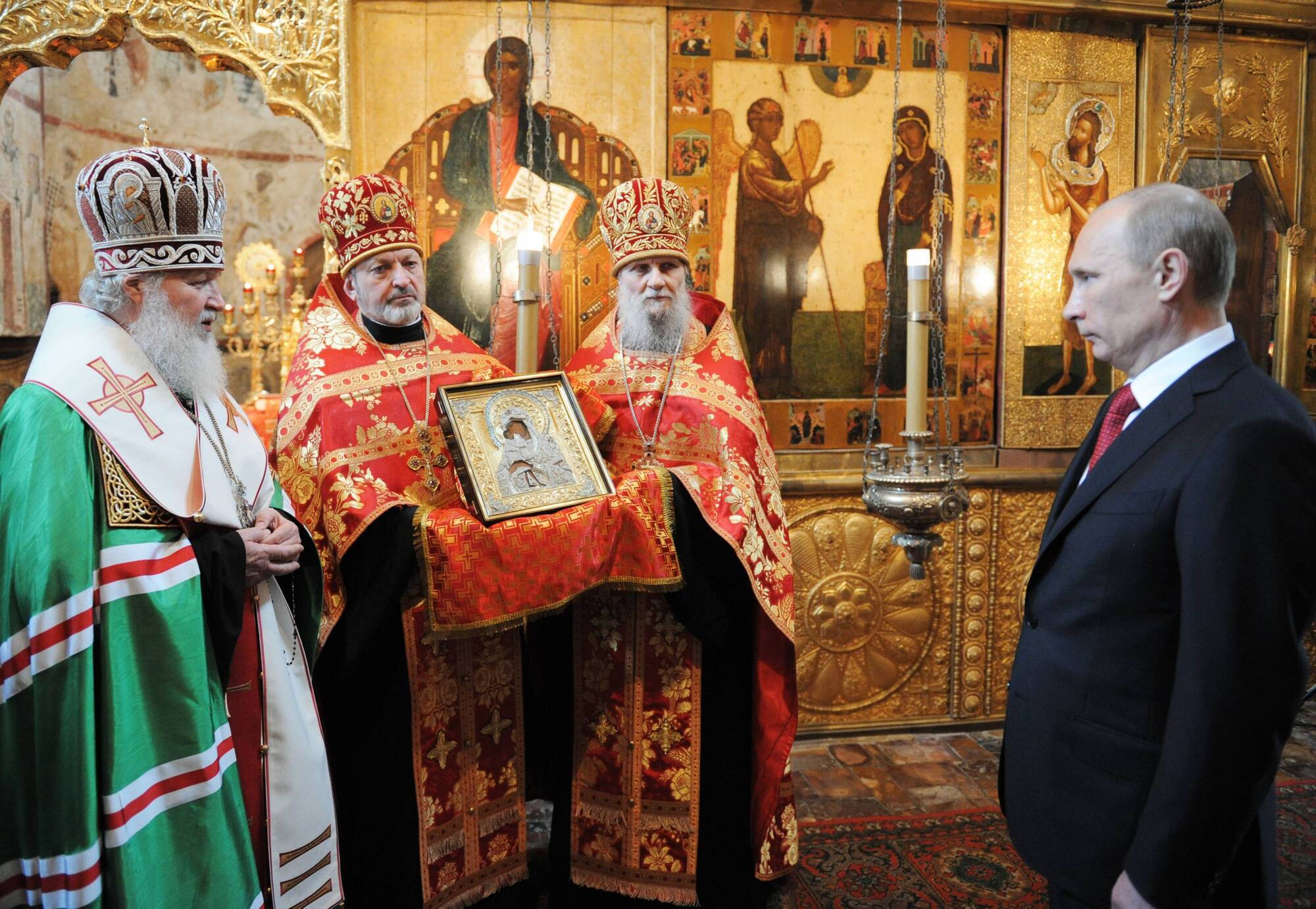
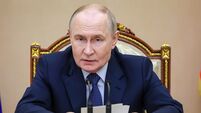
Russian Orthodox Church head Patriarch Kirill and Vladimir Putin. Kirill has praised Putin for pursuing the concept that Russia, Ukraine, and Belarus should be united as one spiritual people. File picture: Alexey Druzhinin/AFP/Getty
Where is God, or at least his earthly representatives, in the appalling conflict unleashed by Russia, which is threatening to set Europe aflame? We are clear where Pope Francis stands, kissing the blue and yellow flag of Ukraine sent from the “martyred city” of Bucha while welcoming children from the war-torn country into his audience in the Vatican City.
“Recent news, instead of bringing relief and hope, brought new atrocities such as the massacre of Bucha. Stop this war! Let the weapons fall silent. Stop sowing death and destruction,” he said.
Earlier this month, the Pope said he was considering a trip to Kyiv and implicitly criticised Vladimir Putin, saying a “potentate” was “provoking and fomenting” conflict for nationalist interests.
The Anglican Bishop of Europe, Robert Innes, has urged Christians to unite in prayers for peace and said that many Russians “deeply deplore” the “unjustified and aggressive war”. The Archbishops of Canterbury, Justin Welby, and York, Stephen Cottrell, described the invasion as “an act of great evil”. The spiritual leader of the world’s Orthodox Christians, Ecumenical Patriarch Bartholomew I, said the occupation of Ukraine was an “atrocious” act. The Russian Orthodox Church in Amsterdam has defected to the Ecumenical Patriarchate of Constantinople in Istanbul.
One church is providing theological and philosophical cover for the Putin war machine and, unsurprisingly, it is one which has been a huge beneficiary of his regime.
The Russian Orthodox Church (ROC) has 95m members in Russia. It is headed by Moscow-based Patriarch Kirill, 75, whose installation took place in 2009, the same year the Russian leader began to strengthen his autocratic grip while undermining the man he chose to succeed him, Dmitry Medvedev.
Kirill is regarded as having close links to the KGB security service (now the FSB) and it is regularly suggested that he was a serving agent. He has described Putin’s leadership as a miracle and praised him for pursuing the concept that Russia, Ukraine, and Belarus should be united as one spiritual people. The invasion is part of a “metaphysical struggle” against decadence, materialism, global power, and the promotion of homosexuality, he said. Kirill’s hardline stance poses a major dilemma for the World Council of Churches, which has appealed directly to him to use his good offices to persuade Putin to end his war.
He has sloughed off this request for help, answering: “Its initiators are not the peoples of Russia and Ukraine, who came from one Kievan baptismal font, are united by common faith, common saints and prayers, and share common historical fate. The origins of the confrontation lie in the
relationships between the West and Russia.”
With casualties and atrocities rising, Ukrainian warning that the forthcoming battle for Donbas will recall scenes from the depths of the Second World War, and Europe beginning to split on the severity of sanctions, there is an increasing likelihood that the ROC will have to be expelled from the World Council of Church’s mission. Putin probably shares the view of Josef Stalin, who reputedly asked: “How many divisions does the Pope have?” Schisms, however, take a long time to repair. It is looking increasingly like a protracted war.

Cancel anytime
CONNECT WITH US TODAY
Be the first to know the latest news and updates