Irish Examiner view: The numbers come in for Covid vaccination risks
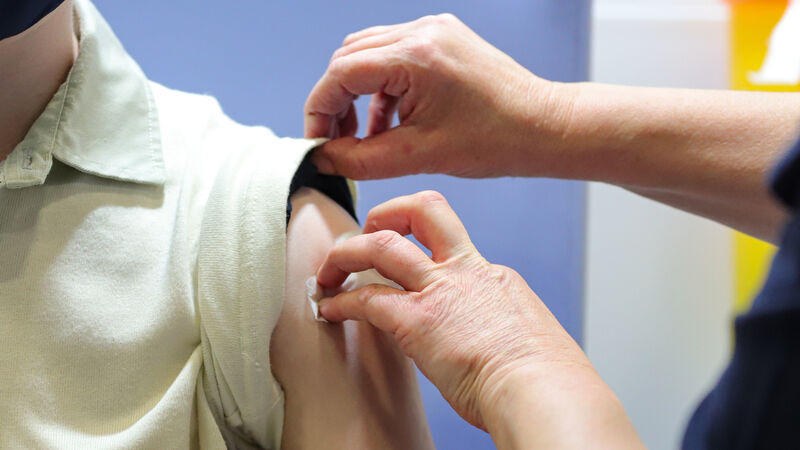
Frustrations mount at the impact that ill anti-vaxxers are having on health services globally
Irish Examiner view: The numbers come in for Covid vaccination risks

The Covid-19 infection carries a much higher risk of developing neurological conditions than posed by the vaccine.

After nearly two years of the pandemic and more than 12 months of the vaccination programme, the numbers are coming in to enable informed judgements to be made by even the most ardent of sceptics.

In research based on the anonymised healthcare records of more than 32m people across England, it has been found that people who received the AstraZeneca jab faced an increased risk of developing two types of complications: Bell’s palsy and Guillain-Barre syndrome. Those receiving Pfizer had an increased risk of haemorrhagic stroke.

But the Covid-19 infection carried a much higher risk of developing neurological conditions than posed by either vaccine, researchers and doctors suggested.

Bell’s palsy is a weakness, usually short-term, in one side of the face, while Guillain-Barre syndrome affects the nerves and produces numbness and weakness. Haemorrhagic stroke is a consequence of bleeding in the brain.

Julia Hippisley-Cox, professor of clinical epidemiology and general practice at the University of Oxford, said: “We know the Covid-19 vaccines are very effective at reducing risks of severe outcomes from Covid-19 infection.

While there are some increased risks of very rare neurological complications associated with the Oxford/AstraZeneca vaccine, these are much smaller than the risks associated with Covid infection itself.

These latest figures have been announced as frustrations mount around the world at the impact that ill anti-vaxxers are having on health services and their efforts to progress after many months of ceaseless effort.

In England, four in 10 people admitted to hospital with Covid are not fully vaccinated. The professor of intensive care at University College London, Hugh Montgomery, says Covid-deniers are occupying beds which should be taken by cancer patients and elderly people needing hip replacements. Some 12% of the population has refused to be jabbed.

“This amounts to millions of people,” says Prof Montgomery.

And it’s not just in Britain where patience is wearing thin. In New Zealand, prime minister Jacinda Ardern has acknowledged that its new plans on loosening restrictions risked turning the country into a “two-tier” society where the vaccinated will be able to move around and use services relatively freely. Not so the uninoculated.

Australia is considering home confinement, as is Austria. US President Joe Biden has announced a “jabs for jobs” policy for federal employees. Thousands of workers have left their jobs or been fired.

Those who resist have different reasons: The vaccines are too new, carry risks, have been distributed too quickly. Others oppose on religious grounds.

Many simply don’t like compulsion.

Across Europe vaccine passports known as the “pass sanitaire” in France have become common, as they have in Germany.

It is clear that incentives and persuasion will be required for more people to come forward. In some countries there is already an unpleasant atmosphere of “us and them” and several dozen schools have already been targeted in Britain as anti-vaccine campaigners seek to prevent the roll-out among young people.

The evidence is becoming clearer for all, but this journey still has some way to go and the road may be hard.

More in this section

Revoiced

Newsletter

Sign up to the best reads of the week from irishexaminer.com selected just for you.

Cookie Policy Privacy Policy Brand Safety FAQ Help Contact Us Terms and Conditions

© Examiner Echo Group Limited