Leading the GAA - the three presidential candidates make their cases
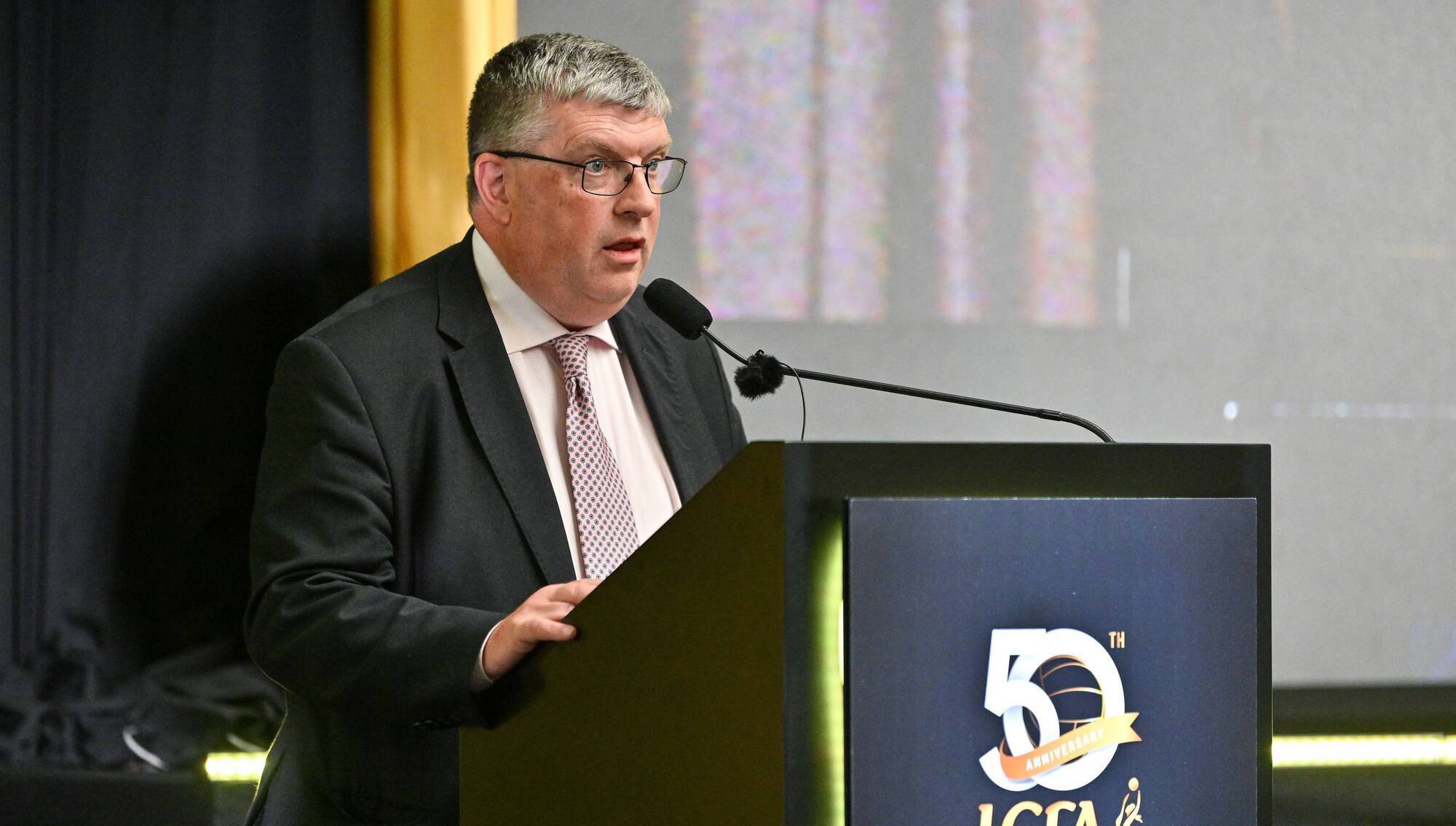
Derek Kent (Wexford), John Murphy (Sligo) and Ger Ryan (Tipperary, pictured) have put forward their names to become the 42nd uachtarán, succeeding Jarlath Burns in 12 months. The election will take place at Annual Congress in Croke Park on February 27th. {ic: Brendan Moran/Sportsfile
For the second time in a row, the GAA presidential race will be contested by three candidates.
Derek Kent (Wexford), John Murphy (Sligo) and Ger Ryan (Tipperary) have put forward their names to become the 42nd uachtarán, succeeding Jarlath Burns in 12 months. The election will take place at Annual Congress in Croke Park on February 27th.
Kent last month concluded three years as Leinster chairman, a period which overlapped for a year with a similar term as head of the Central Competitions Control Committee.
Murphy is a current trustee of the GAA and held the office of Connacht chairperson between 2021 and ’24. He has chaired his county as well as the national infrastructure body.
Ryan was Munster chairman from 2022 to ’25. He at presents heads up the central referees appointment committee and has led national medical, scientific and welfare and communication groups.
To the three men, we posed five questions relating to the GAA and themselves:
Volunteers will always be number one. Without volunteers, nothing functions. Every other priority depends on people giving time and leadership at every level in our Association. Fixtures and games are our core business. A player-centred calendar is critical as is the promotion of our games for future generations. The other areas share a value as ongoing challenges and areas to address. Population shifts and demographics are reshaping where games can survive or grow. Planning must match reality and the recent report has commenced that journey and building flexibility into competitions will be crucial to keeping our games alive in many areas.
Integration is important and inevitable, but it must support – not distract from – participation and club sustainability and grow from the from ground up with investment in our facilities. Our members, clubs and counties define the Association. Planning and development of infrastructure to facilitate the development our games will always be a priority to preserve the future of our Association.
Infrastructure and demographics are closely linked. There are currently a number of major infrastructure projects underway, with more planned at county level, alongside ongoing club development. Many stadia and centres of excellence now require upgrading, and it is essential that the Association manages these projects in a phased and controlled manner. The recent demographics report by Benny Hurl is a wake-up call for the GAA and should be essential reading for local authorities, planners and Government. The GAA has had an immense social and economic impact for generations, but that legacy must be carefully protected if we are to meet the demographic challenges that pose an existential threat to rural Ireland, while also presenting serious issues in urban areas.
A 2024 report estimated that replacing volunteerism in the GAA would cost in the region of €1 billion. Volunteers are the backbone of the Association, and we must ensure they feel valued, appreciated and supported. Integration will happen, but it must be implemented in a timely and carefully planned manner. It will require significant investment in facilities and other associated costs. Fixtures are always a challenge, but players are currently satisfied with the calendar as it provides certainty and allows them to plan their lives.
This is a list of items of equal importance for the next Uachtarán, all pretty much interlinked. Supporting our volunteers – the bedrock of our Association – more effectively and addressing the often unsustainable demands placed on them, will be a key focus for me. The GAA’s recent Demographics report highlights just how significant the challenge is that we face from population changes. These trends limit our ability to maximise participation in growth (typically urban) areas where there’s a need for new clubs and more infrastructure. At the same time, rural depopulation raises difficult questions for clubs with proud histories and must also be addressed. So, we need a long-term, properly funded, infrastructure plan in partnership with local and national government. On fixtures, retaining the split season and a balanced approach between club and inter-county is an imperative. Finally, integration requires a multi-year plan requiring a lot more consultation and preparation before clear timelines can be confirmed.
Yes – but imperfectly. It has improved clarity for players, reduced club–county conflict and created defined windows for each level. These were the original intentions when the split season was first introduced, and it has certainly been successful in those regards. However, it has also compressed fixtures and increased the workload for administrators and inter-county players. These are issues which we must address. Improvement requires a better balance between volume and recovery, stronger alignment with schools and third-level calendars, and greater protection for player welfare at club level. Overall, the principle of the split season is right; the scheduling detail needs refinement.
The split season is working and represents a significant improvement on the pre-2022 system. Training-to-games ratios have been greatly reduced, and the model should be given time to evolve further.
Yes, it is working well overall, but with room for improvement. The major positive is certainty about club and inter-county fixtures. The vast majority of players are happy with the split season. It has also brought a much-enhanced focus on and interest in club games among all GAA followers. I do, however, believe there is room for a short extension of the inter-county season into August. Areas for potential improvement include addressing any negative impact of the increased intensity of the condensed season on club and county players, role of pre-season competitions, demands on student players and better promotion of our games. This is our fifth year of the split season so a full review would be timely, consulting all key stakeholders from players to county boards, to determine how well it is working and identify any improvements, but maintaining a proper season for club activity.
Gaelic Football required an overhaul and the results of the review have had a significant impact on increasing the pace of the game, ensuring more contests for possession and the public have responded in a positive way. The same level of overhaul of hurling is not needed. The game continues to be widely admired for its speed and skill. However, it is not without its own issues. Modern coaching developments towards a possession game have reduced the number of one-to-one contests while increasing tactical fouling and the consequent pressure on referees. I would like to see development competitions used to trial clearer enforcement around cynical fouls, consistency in the interpretation of the tackle, and of course the handpass, which would help referees and make the game even more enjoyable for players and spectators alike.
I do not believe there is a need for a Hurling Review Committee at present, though hurling referees would benefit from increased support. Hurling is a wonderful game, and the Hurling Development Committee (HDC) should continue its work, with Willie Maher supported in developing his role to improve participation, particularly in weaker hurling areas.
In short, no. The crowds attending these games speak for themselves and I’ve had ongoing engagement on this with inter-county and club managers, coaches and players. The consensus is that hurling remains very attractive to play and watch. I support the changes being proposed on discipline but we need more consistency in the application of the rules, not least in relation to handpassing and steps while in possession. We should also monitor rules to identify any incremental improvements.
Our priority in hurling should be the protection, development and promotion of the game, particularly the work being done by the Hurling Development Committee (HDC). As per the HDC plans, we must focus on the different needs of the top tier, middle tier and developing counties. We need to deliver sustainable, long-term development to preserve and promote hurling as our national game.
The GAA has always been exceptional at building community, identity, and lifelong belonging through volunteerism and local club structures. Our members have developed facilities that are the envy of many. Our overseas units support every young person that leave our shores. We have been ahead of any other sporting organisation in ensuring inclusion through programmes like Go Games. We need to improve our communication with members of all ages and in all areas. We have at times been reactive instead of proactive and we need to ensure that we are properly prepared for all the challenges that lie ahead, of all types, so that we can continue to be Ireland’s foremost sporting organisation.
The GAA remains the focal point of the communities it serves, encouraging people to play, coach, volunteer and contribute to something bigger than themselves. That is not easy in the modern world, yet people continue to do so because it was done for them and because they want to pass it on. We should never take that for granted. My concern is that the Association has become a victim of its own success, with Government – nationally and locally – sometimes overlooking the GAA in favour of other sports. While this may be a back-handed compliment, we must be better at advocating for ourselves. We do not have an international parent body to rely on. The GAA returns 83 cent of every euro it generates, but there is further scope for Government support to ensure we remain the heartbeat of communities across the country.
The Gaelic Athletic Association stands as the world’s top volunteer-led amateur sporting and cultural organisation. As it was at its origins, it is far more than a games body; it is the glue that binds communities, providing identity and belonging. But from a games-specific perspective, it is without equal, offering sporting opportunities from under-six right through to adulthood, and acting as the heartbeat of local life. Its amateur status enables it to maximise commercial opportunities but, critically, reinvest them into participation and facilities at national and grass-roots level. Yet there is room to grow. The Association must better support its volunteers through clearer internal communication, strengthen long-term player welfare by managing demands on players, and tell its story more effectively. Deeper engagement with local and national government, responding to demographic change, robust protection of amateur status, and achieving integration will be essential to sustaining the GAA for generations to come.
I served similar terms as a County Chairperson, as a Leinster Chairperson and operated under the same principles: that of engaging and communicating with members, building connections, and collaborating with good people to ensure we achieved specific targets and getting value for our spend. I also place a value on the work of both volunteers and full-time people and ensured that every decision was based upon what we felt what was right for the association. Chairing a County Board gives you a real insight of the pressure the volunteers encounter. At county level that involved growing a financial platform, developing our facilities, and ensuring a games programme in both codes that would best serve our players in both codes and all grades. I would bring the same level of commitment and drive to the office of President, and am confident of achieving the same results, to leave the Association in an even better place at the end of my three-year term.
A national Club Support Unit bringing the resources of Croke Park to the doorsteps of our 1,600 clubs is both achievable and significant. Beyond that, placing hurling, camogie and Gaelic football on the national primary school curriculum is long overdue. A 10-year national infrastructure strategy to address urgent redevelopment and maintenance needs, alongside a comprehensive strategic review – the first since 2002 – led by experienced individuals from within and outside the Association, would serve the GAA well. Integration should proceed with clear, achievable timelines.
I’ve three decades of experience at all levels in the GAA and what I’ve learned, and for good reason, is that listening and consultation are essential for change. So, while I would be relentless in pursuit of delivery my focus will be on practical actions and real outcomes achieved through consensus. Within that, what I can and will achieve will include volunteers being prioritised by reviewing the demands placed upon them, improving practical supports, and enhancing communications.
I will make progress on the demographics challenges in both rural and urban areas by implementing actions agreed from our Demographics report. Protecting the amateur status of our games will be done by implementing collective measures to address the threats to amateur status at inter-county and club level. I will strengthen hurling by implementing HDC recommendations that recognise the distinct needs of counties at different stages of development. And I will advance a long-term facilities plan and progress a realistic, multi-year roadmap for integration, ensuring the Association not alone navigates these years but is in an even stronger place when the term ends.


CONNECT WITH US TODAY



Be the first to know the latest news and updates