Irish Examiner view: Extend funding on coastal erosion project
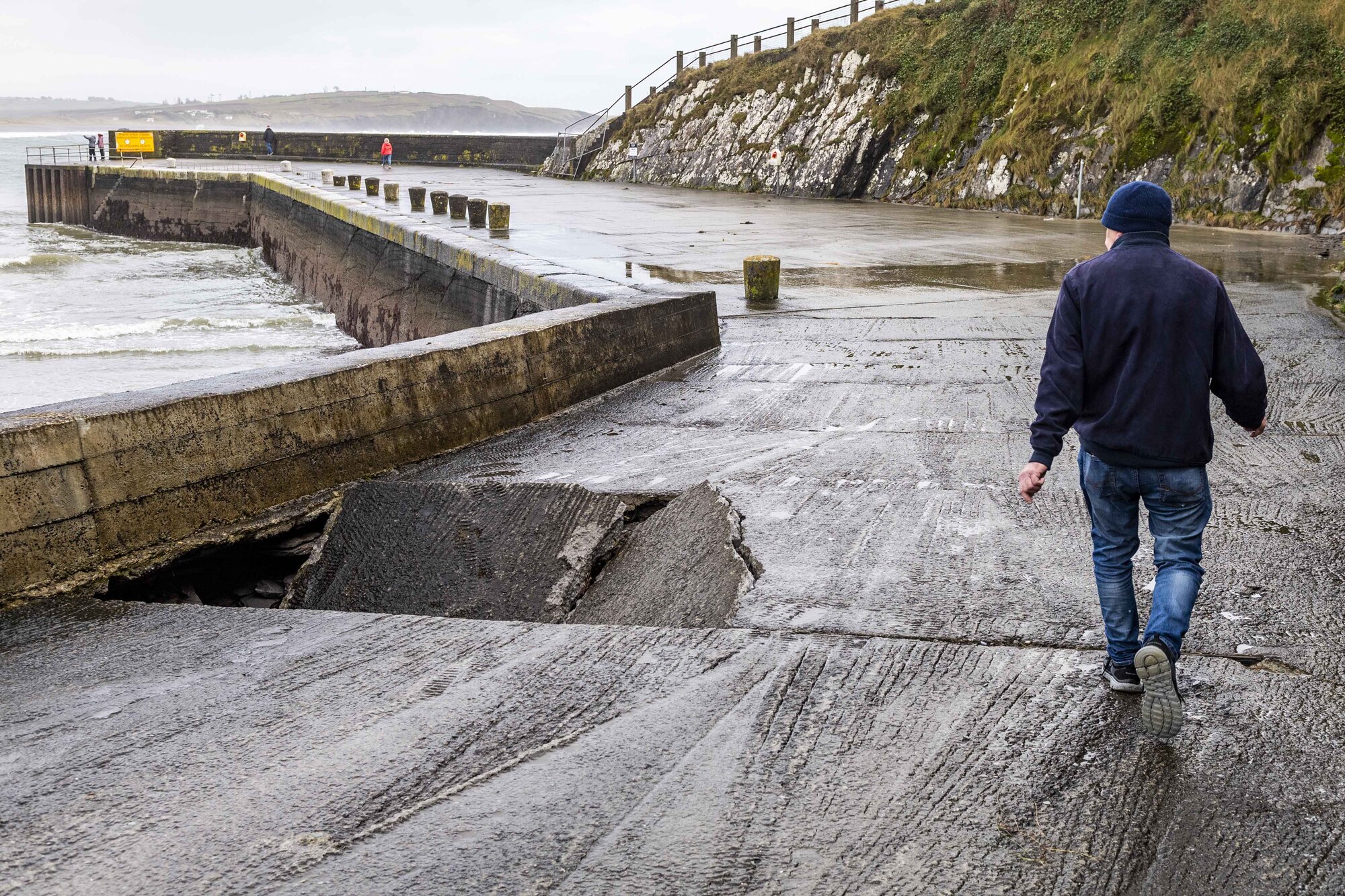
Part of Rosscarbery Pier collapsed into the sea back in February. It is thought coastal erosion is the cause. Picture: Andy Gibson.
Climate change will be among the most pressing topics being discussed at the G7 summit in Cornwall. Today’s Forum illustrates in stark detail just how urgent that issue has become as increasingly frequent storms and rising seas erode our coasts, sweeping away centuries of maritime history and archaeology with it.
Last month, archaeological excavations at Doon Point promontory fort on the Dingle Peninsula proved to be a literal race against the tide as the Cherish Project worked to garner as much evidence as possible before it collapsed into the sea.

CLIMATE & SUSTAINABILITY HUB
CONNECT WITH US TODAY



Be the first to know the latest news and updates