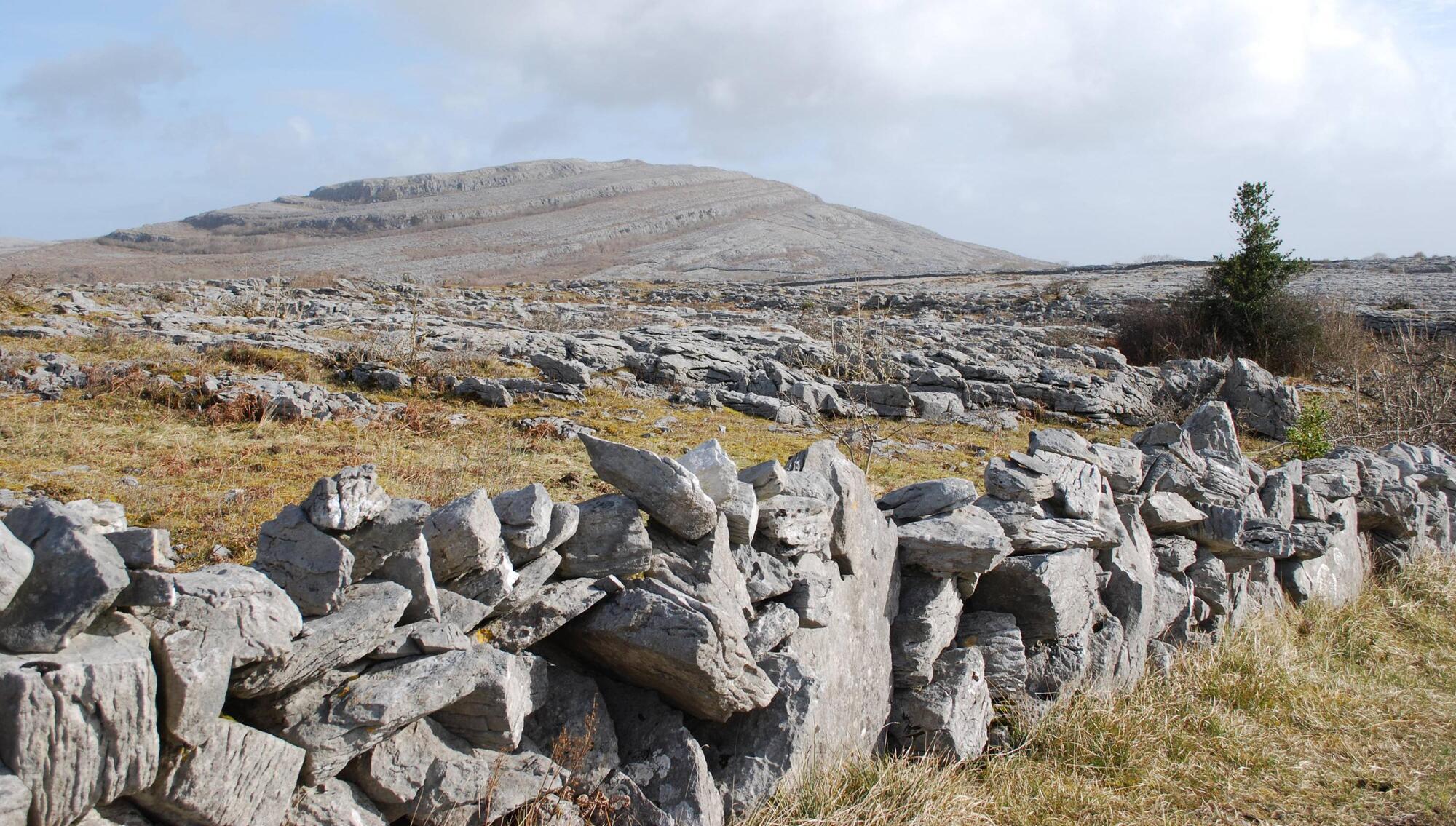
Earlier this week RTÉ broadcast the first of Katrina Costello’s two-part series Heart of Stone, a beautiful, heart-warming programme on the Burren.
It showed that magnificent limescape in all its glory and in some of its many moods.
It showed how farming evolves where “stone walls surround stony fields”. It touched on traditions, especially around herbal remedies.
It used that well-trodden landscape to tell part of the story of how millennia, and our ancestors, unfolded.
It reminded anyone who ever felt enriched by a Burren walk of the great pleasures that await when pandemic restrictions ease.
It, unintentionally, made the light at the end of the tunnel glow just a little brighter.
There is an argument, particularly in relation to next year’s Qatar World Cup, about whether sport should be influenced by politics.
That argument is unsettled but a twin argument around programmes celebrating our natural world is increasingly unsettled and vexatious.
A growing constituency sees nature programmes as expressions of political positions, or more usually, political inactivity.
Climate change
As climate change accelerates, it is hard to argue with that view as some of these programmes are more nostalgic reminiscences than accurate reflections of how we misuse this planet.
The argument that those, including David Attenborough, who depict our distressed world in a chocolate-box way are greenwashing gathers pace.
They are accused of betraying the very thing they celebrate.
That the Burren is a tiny percentage of Ireland’s landmass, a landmass where fertile ground is increasingly disfigured to build exports of milk formula, underpins that argument.
So too, albeit on a different stage, does Seaspiracy, a new documentary on commercial fishing.
The Burren is invigoratingly alive but it is not reflective of how Irish land is used.
It may never have been but the gap between the landscape so beautifully evoked by Heart of Stone and the intensively farmed majority of Irish land is deepening faster than the world’s inequality chasm widens.
Just days after that programme, BirdWatch Ireland gave a more real-time assessment of how nature fares today.
BirdWatch warned that our birds are in greater jeopardy than ever before.
The group recorded a 46% increase in the number of species in such difficulty that they have been added to the red-list detailing birds of highest conservation concern.
Destruction of wildlife
This destruction of wildlife, not just birds, is not news but that it continues shows we have been seduced, at least in part, by greenwashing or, worse, hollowed out by simple indifference.
Things, as a paltry €15,000 fine imposed for commercial dumping in recent weeks underlines, must change.
We can wallow on the couch admiring Attenborough’s amazing footage of Birds of Paradise or we can change our habits and help one of the 54 species of Irish birds on a lengthening red list, one that includes more than one in four of all Irish species.
Were we to do that we could enjoy our next visit to the Burren all the better and maybe if we can visit in July, enjoy the Field Gentian as it blooms.
Classified as near threatened, the gentian may also be on a red list before long.
How many lessons, how many warnings do we need?
CLIMATE & SUSTAINABILITY HUB
CONNECT WITH US TODAY
Be the first to know the latest news and updates