Irish Examiner view: Long-term planning offers the best options
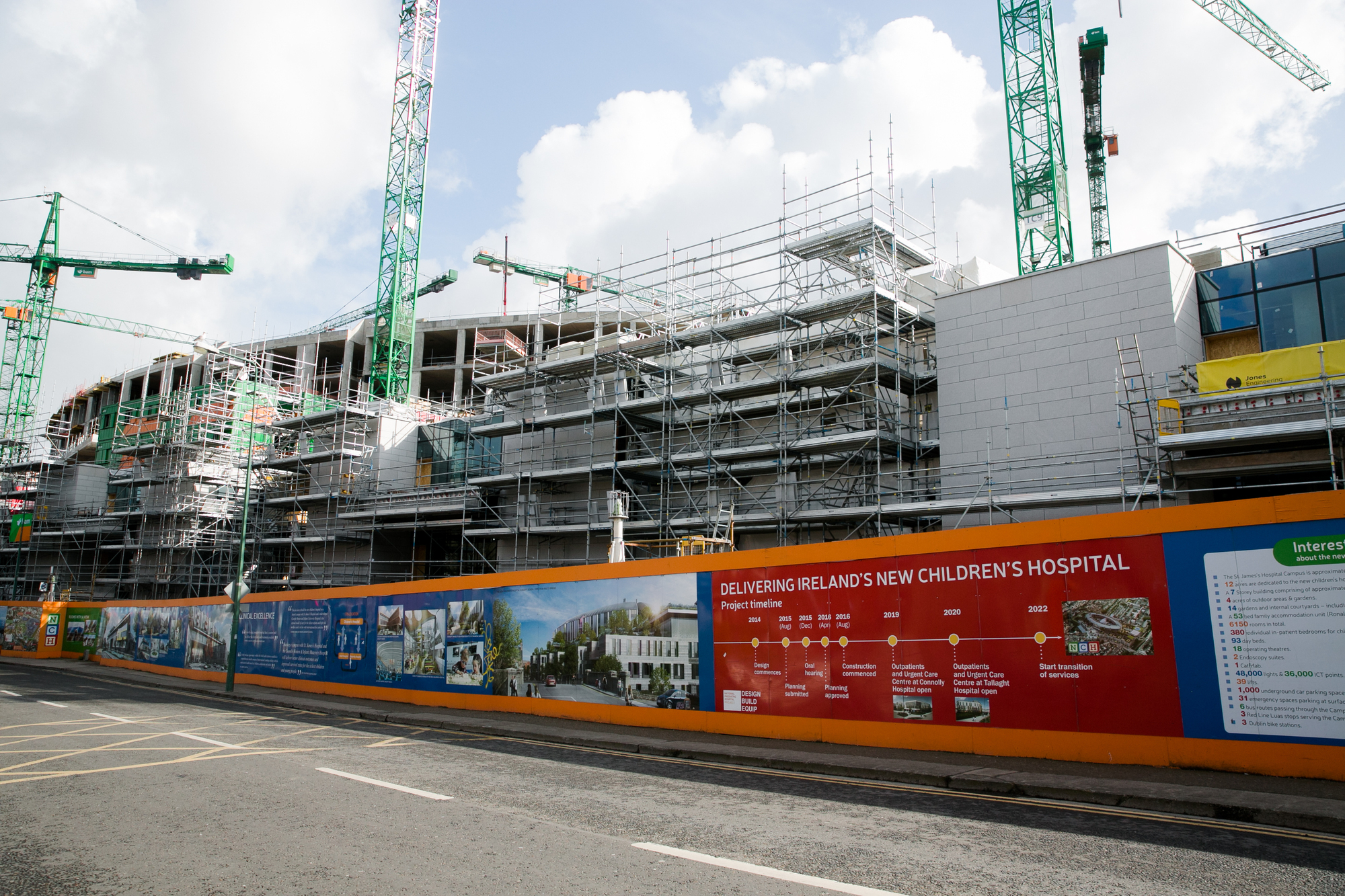
Ongoing work at the National Childrens' Hospital in Dublin is a glaring example of little or no long-term planning in this country. Picture:Gareth Chaney/Collins
The delivery of infrastructure, physical or social, begins with informed long-term planning. That delivery depends, largely, on politicians whose primary interest is power. Politicians achieve and maintain power, again largely, by delivering short-term objectives. Long-term planning, and the commitment of resources that entails, can run counter to the pressing election needs of vulnerable members of parliament. Striking a balance between using resources for immediate gain — career survival — or a project that may not deliver until after that politician has quit public life is a constant, underrated challenge. Prospects, patronage and prudence can be, and often are, in conflict. Muddle and delay, frustration and poor outcomes can ensue.
The mythical National Childrens' Hospital, first discussed in 1998, is today's glaring example. It is a goad that undermines on a daily basis, and certainly every time another €50m is added to the still-counting €2bn-plus cost, any reasonable citizen's capacity to have faith in how we deliver these projects.
Other projects that don't get beyond the discussion stage offer examples of where planning might have been more assertive, more visionary on behalf of the common good. The 1980s surrender of ambition around nuclear power is an example. Had we, as nearly all affluent European countries at that point did, committed to nuclear power our top-of-the-table carbon footprint might not be such a black mark today. Neither would we face annual fines nudging past the €900m mark because of disproportionate emissions. A tidal barrier for Cork Harbour, or any well-populated estuary, might be seen in a similar light today.
Many of those who, as young idealists, opposed nuclear power will feature in a well-flagged and fundamental change in this society's complexion. Four years ago the ESRI predicted that by 2030 the population aged 80 or above would increase by between 89% and 94%. A more recent Department of Public Expenditure review found that by 2031 more than a quarter of a million of us will be over 80. CSO figures predict that those aged 65 years or over will more than double from 2016's 629,800 to almost 1.6m by 2051. The vulnerabilities that will bring were laid bare when the pandemic got a toe hold in nursing homes.
The country's age profile was a force in our economic catch-up phase, loosely from the early 1990s to the end of the Celtic Tiger. Birth rates were high well into the 1980s delivering abundant working-age people. Earlier emigration meant that many old Irish-born people live outside the State which reduces the exchequer obligations.
New Department of Education figures recognise a demographic pincher movement that may add to the challenge of a higher ratio of older people in society. The number of children at mainstream primary schools in the Republic has, for the first time in almost two decades, fallen significantly. Some 553,003 pupils enrolled in the 2020/21 academic year, 6,300 fewer than the previous year. This reduction is seen as a new trend which will cut primary school numbers for the next 15 years.
This, and the post-pandemic bill, will force a day of reckoning for the public finances. If we are to avoid the errors of the past then long-term solutions rather than quick-fix, win-a-vote measures will be needed.
CONNECT WITH US TODAY



Be the first to know the latest news and updates