Our way of life is worth defending: Liberal values under attack
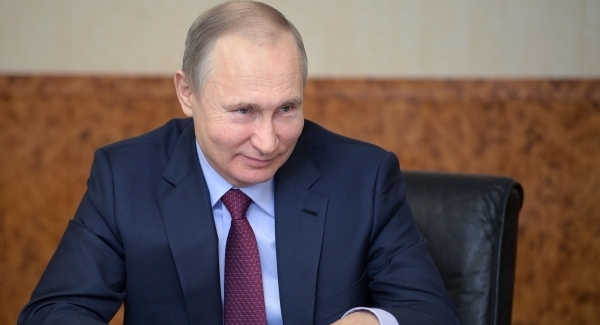
When Russia’s fourth-term dictator President Vladimir Putin poured his particularly chilling scorn on the idea of liberalism last week his demeanour, his stone-cold certainty suggested he is not a man to tolerate opposition.
Russia’s role in massacres in Grozny and Aleppo, and today in Idlib, and the deaths of Anna Politkovskaya, Alexander Litvinenko, Boris Nemtsov and the 298 people aboard Malaysia Airlines flight MH17 over Ukraine, and many more “security operations” confirm his and his unaccountable government’s indifference to the rule of law, a central tenet of liberalism.
Liberal ideas about refugees, migration, and LGBT issues were now opposed by “the overwhelming majority of the population”, he suggested without any substance or evidence.
Of course, as an unimpeachable dictator, it is not necessary to offer evidence especially if your objective is to encourage fear, to replace optimism with paranoia, to replace tolerance with hostility.
Tragically, the failures of Western democracies even if they pale compared to the institutionalised failures endured by the majority of Putin’s subjects, offer a fertile seedbed for those seduced by Putin’s posturing.
Saturday’s Gay Pride march in Dublin, attended by Taoiseach Leo Varadkar and official parties from An Garda Síochána and the PSNI, may offend Putin’s resentful homophobia but it was a small expression of the values defended by Donal Tusk, president of the European Council, who said: “Whoever claims that liberal democracy is obsolete also claims that freedoms are obsolete, that the rule of law is obsolete and that human rights are obsolete.”
That Dublin celebration will hardly register in Putin’s world and if it did he will dismiss it just as he did claims before the 2014 Winter Olympics in Sochi that there were gay Russians.
Neither will an analysis of the Brexit party’s European election campaign published this weekend discommode him. Nigel Farage’s party used simple messaging and an “overwhelmingly negative” attack to win the online battle according to the 89up digital agency.
The agency found the Brexit campaign prioritised older Facebook users in England rather than 18 to 24-year-olds, or residents of Scotland or Northern Ireland. The survey identified dozens of pro-Brexit party accounts with a “high likelihood of being inauthentic”.
The accounts were all created relatively recently, had Brexit party profile pictures, tweeted dozens to hundreds of times a day, and posted almost exclusively about Brexit.
Those conclusions put President Trump’s jokey finger wagging at Putin in Osaka last week over election meddling in the sinister, unsettling light it should always be seen.
It may be difficult to engage with these challenges on a July Monday as one of the great achievements of the European project is to give an impression that the security, the stability it oversees are permanent.
Putin, Trump, Orbán, Bolsonaro — and Brexit — challenge that complacency.
The incoming EU parliament and the American electorate face almost unprecedented challenges if they — we — are to show liberalism will outlast the growing threat from the world’s anti-democratic strongmen.
This obligation cannot be shirked.
CONNECT WITH US TODAY



Be the first to know the latest news and updates