Apprehension on Brexit deepens - Threatened by scornful indifference
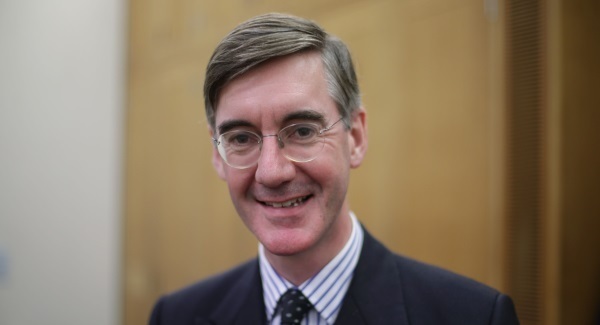
Just as it is tempting to ignore the harbingers of autumn, it is tempting to ignore increasingly grim Brexit speculation. After all, even those who appreciate Monty Python’s slapdash fantasy can endure only so much of Jacob Rees-Mogg.

Apprehension on Brexit deepens - Threatened by scornful indifference

Just as it is tempting to ignore the harbingers of autumn, it is tempting to ignore increasingly grim Brexit speculation. After all, even those who appreciate Monty Python’s slapdash fantasy can endure only so much of Jacob Rees-Mogg. Life might be even more cheering if summer went on forever or if we could dismiss the prospect of a no-deal or hard Brexit, but we cannot. This deepening apprehension is made unavoidable by the fast-approaching March divorce date. Unsettling uncertainty cannot be avoided — an unfortunate reality strengthened by the latest warning from the Central Bank and one exacerbated by England’s central bank.

Our central bank has warned that a no-deal or a hard Brexit would mean we would face the incalculable costs of the UK’s departure far sooner than has been imagined, and that this would bring considerable short-term disruption. This sobering intervention follows an earlier central bank warning that a hard Brexit could cost 40,000 jobs over a decade and shrink our economy by more than 3% over that period. It also warns that optimism around growth figures and budgetary flexibility would not survive a no-deal or a hard Brexit. This chastening analysis cannot be dismissed with the usual it’ll-be-alright-on-the-night bluff. There is far too much at stake.

In a briefing yesterday, one that would no doubt be fobbed off by Rees-Mogg as part of ‘project fear’ if he read it, the bank warned that a no-deal Brexit would “frontload” more of the costs onto this economy. Sectors exporting to the UK, or exposed to tariffs or barriers to trade — especially agriculture — would be particularly at risk, the bank warned.

Though it is well-harrowed ground, it is worth reviewing the farm sector’s dependence on the British market. The sector accounts for 10.7% of exports and 8.4% of jobs. In 2016, food and drink exports increased by an estimated 2% to approximately €11.15bn. The UK was the main buyer, accounting for 37% of farm exports. Continental EU markets took 32%. Already struggling to cope with a fodder and drought crisis sharpened by over-stocking, the sector would be decimated by a hard or no-deal Brexit. It is hard to imagine a more threatening tightening of the noose on one of the heartbeat sectors — even if it is one of the most environmentally destructive — of our economy.

That possibility is brought into sharper focus by political instability in Britain, especially since the aborted Chequers agreement. That provoked England’s central bank to, in its Financial Stability Report, warn that Brexit could have a huge impact on Britain’s over-the-counter €32trn derivative markets. High stakes indeed.

These are just the economic threats. Anglo-Irish relations are at a century-long high today but it is hard to imagine that that relationship would not be stretched to breaking point if Brexit wreaked such unnecessary havoc on this small economy. We must, it seems, not only try to protect our economy from Brexit, but we must try to remain good neighbours with those who have shown scornful indifference to how their fantasies might impact on others. What a toxic Pandora’s box has been opened. Monty Python could hardly describe it.

x

More in this section

Revoiced

Newsletter

Sign up to the best reads of the week from irishexaminer.com selected just for you.

Cookie Policy Privacy Policy Brand Safety FAQ Help Contact Us Terms and Conditions

© Examiner Echo Group Limited