Our money – and how they spend it
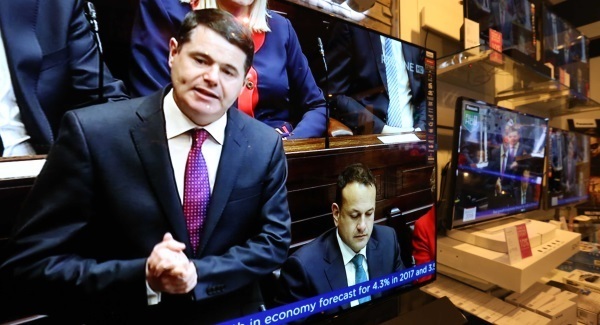
Here are questions this weekend for Ireland’s finance minister, who is also, relevantly, minister for public expenditure and reform. Is there a systemic, country-wide problem with the way in which State agencies, such as the Health Service Executive (HSE) and Tusla, the child and family agency, manage their money and, if so, what can be done to fix it?
They’re fair questions, since governments have no money other than that taken from taxpayers or borrowed on their behalf, and when pleas are made for more spending on schools, health and police services, and roads and transport, the response from ministers is that while the economy is certainly recovering from the 2008 crash, prudence remains the model for revenue and capital spending.
Where was prudence at the HSE, whose internal audits add up to an alarming litany of very expensive errors, and management bordering on casual when dishing out the dosh?
A payment north of €14,000 — plus hotel expenses — was made to an on-call consultant for one week’s work at Cork University Hospital. That’s nice work if you can get it, and someone did. Bantry General Hospital was paying €25,000 a month for radiology services on a contract awarded without the little matter of a tender process.
A recruitment company was paid €20,000 by University Hospital Kerry (UHK), as a fee for the hiring of a consultant who just happened, conveniently, to be a UHK staff member. Medical records storage for Galway University Hospitals was estimated to cost €7,000 a year when a contract was signed in 2008 but, by 2016, the bill had climbed, as if by magic, to €800,000.
At Tusla, auditors uncovered payroll overpayments in excess of €1m, €4.7m paid for services and goods without proper procurement procedures, and weaknesses in monitoring grants to outside agencies. Staff at a residential service carried on getting unsocial-hours and sleep-over payments for more than a year after the home had closed. The audit of a taxpayer-funded service provider for young people — Youth Advocate Programmes Ireland — merits special attention, with concern raised about spending on flights to the US, hotel and restaurant bills, gifts and credit card use for which the business purpose was questionable. No fewer than 42 of the auditor’s 60 findings on this programme’s financial management were about possible accounting errors and non-compliance, and significant risk of substantial financial loss.
Nothing and no-one is perfect; mistakes happen. Perhaps the shortcoming could be an over-reliance on software? Or could it be that some managers think money grows on trees?
Tusla’s chairwoman, Norah Gibbons, accepts there’s a problem to be fixed, saying: “The agency recognises that there is a need for continued emphasis on, and development of, the control environment and a focus on the need to drive a single organisation-wide culture of compliance.”
We think that, in plain English, she’s saying money must be managed more carefully.