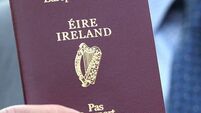
ID cards must be considered carefully
He was responding to a call from the Labour Party's spokesperson on Justice, Joe Costello. The Taoiseach acknowledged last week that al-Qaida sympathisers are operating in this country, but he said they are being watched carefully by the army and the gardaí.
The security authorities here have already passed on files to the British on about 40 al-Qaida sympathisers, who are being kept under surveillance.
The Americans have been highly critical of the Irish Government's timid approach to the dangers posed by al-Qaida sympathisers living in Dublin.
The threat posed by these people should not be underestimated, because links have already been established between sympathisers living in the Dublin area and the Madrid bombings, as well as a foiled plan to bomb the airport in Los Angeles.
It is important that people should remember that it has been a fundamental tenet of our foreign policy stretching back to even before our independence was recognised by any other country that Ireland would never allow itself to be used by any other power for an attack on Britain.
In the wake of last week's bombings in London, the question of the issuing of national identify is already being discussed in Britain and has sparked conflicting views among Government ministers here.
Foreign Affairs Minister Dermot Ahern has come out in favour of an identity card system, but the two ministers most connected with security Justice Minister Michael McDowell and Defence Minister Willie O'Dea are currently opposed the proposal.
"If ID cards were introduced in Britain, we would be forced to examiner the situation," Mr McDowell told the Oireachtas Committee on Justice. Maybe this is a sign of our own growing self-confidence.
There was a time that any Irish Government would be afraid to be seen to be following a British line, and political expediency often prompted the Government to act before the British in order to avoid the appearance of following their lead.
If we introduce identity cards it should be because the situation in this country demands it, not because other people are doing so.
Mr McDowell has expressed reservations, even though he recognised that the identity cards might pose difficulties as Britain and Ireland share a border and both are part of the European Union, with all its common travel ramifications.
He noted, however, that even American security officials acknowledge that identity cards are unlikely to be affective against a threat posed by indigenous people.
This may pose an argument against such cards in Britain, where the authorities suspect that the recent bombers may be British-born, but the same argument hardly applies to this country, where suspected al-Qaida sympathisers are from abroad.
Many people would probably consider the necessity of carrying an identity card an infringement of the freedom of movement that we have traditionally enjoyed.
When would people have to carry the card? It would seem ludicrous, for example, if they had to carry it, while going swimming, but this is the kind of thing that needed to be considered carefully before introducing such a system.
CONNECT WITH US TODAY



Be the first to know the latest news and updates