Road deaths - Drastic action needed to save lives
This could lead to drivers being targeted coming out of pub car parks at closing time, but the recommendation highlights the need for drastic action to curb the spiralling deaths on our roads.
It is necessary to get a message across to all people that there is zero tolerance for drink or drug-impaired driving. A constitutional referendum may be necessary to eliminate any confusion that random testing would be an infringement of somebody’s civil rights or liberties, but the real aim would be to protect everybody’s rights.
The goal in implementing random testing would not be to catch more people driving under the influence of alcohol, or other drugs, but to act as a deterrent in persuading such people not to get behind the wheel in the first place.
The Government is apparently reluctant to take the referendum route. While a referendum would eliminate any constitutional doubts about random testing, it should not be allowed to divert attention from other measures that should be taken.
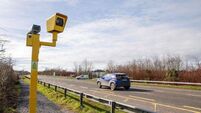
Fine Gael Transport spokeswoman Olivia Mitchell argues that a referendum would divert attention from road safety measures that could be introduced immediately, such as the implementation of nationwide speed cameras, more dedicated traffic gardaí, and the promised introduction of penalty points for a range of other driving offences. Something also needs to be done about the 380,000 drivers who have never passed a driving test.
The problem of impaired drivers is just one element contributing to deaths on our roads.
Speed is a much greater contributory factor, and the introduction of speed camera could have a tremendous impact. The issue of a referendum should not, therefore, be allowed to obscure other necessary measures.
Such measures should bring about a decrease in accidents. This, in turn, should lead to a saving on insurance costs, which should be passed on to motorists. But the Irish Insurance Federation (IIF) contends that the three-year National Road Safety Strategy has already failed during its first two years.
The Department of Transport has rejected the IIF’s assertion of failure. But the growing casualty figures on our road over the past two years, during which road deaths increased by 19%, are proof of the strategy’s failure. It would seem that the department has only succeeded in deluding itself with its expensive publicity campaign.
Transport Minister Martin Cullen has acknowledged that road deaths have increased in the previous two years, but he has been looking to a “significant extension” of the penalty points system to remedy the situation.
Eddie Shaw, the former chairman of the National Safety Council, has argued persuasively that the initial benefits of the penalty point system have worn off, because of a failure to implement the system properly.
Already in the first 10 days of this year 10 people have been killed in road accidents. The remedy is not just a question of introducing new measures but also the proper implementation of those already introduced.
CONNECT WITH US TODAY



Be the first to know the latest news and updates