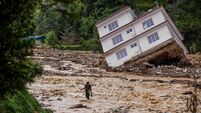
Ciaran Brennan: European Union is gaslighting us all with its simplification agenda on climate action
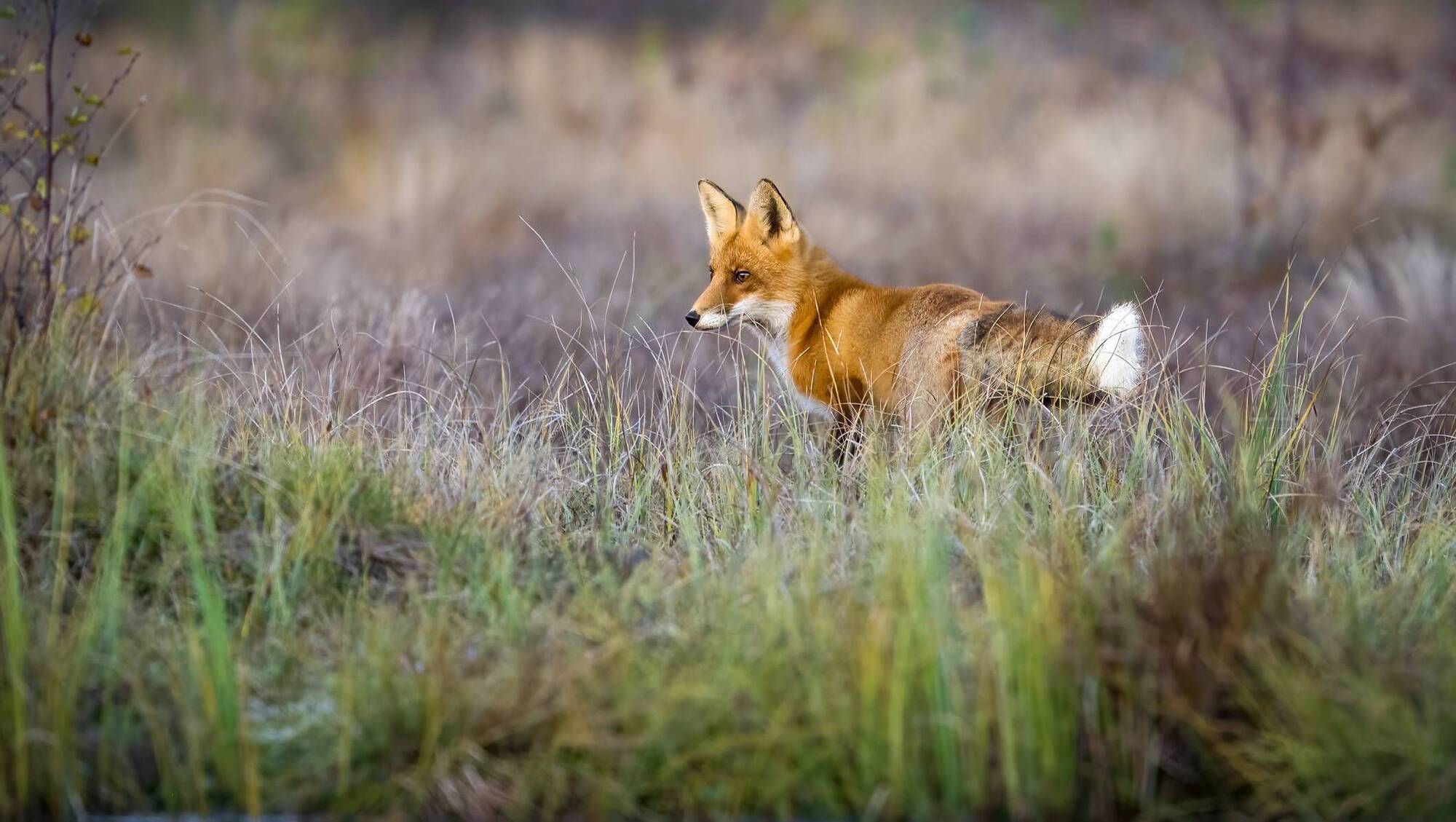
Despite some progress, most protected habitats and species have either poor or bad conservation status, according to the European Environment Agency.
Timing is everything when you’re doing a bit of political gaslighting. Telling people you’re going to save the environment by loosening environmental law is one thing. Doing it on the same day as a report is published showing that we’re going to miss our climate ambitions is really messing with everyone’s heads.
The European Commission launched its ‘environmental omnibus’ package to roll back EU environmental legislation on the same day that the European Environment Agency (EEA) officially released its assessment showing the EU will miss the majority of its biodiversity, environmental, and climate 2030 targets. If that doesn’t make you question reality and your own judgement, what will?
Or maybe I’m just cynical and it just was an unfortunate sense of timing, or maybe someone in the Commission has a dark and warped sense of humour.
Whatever the case, the Commission seems hellbent on weakening the foundations of environmental protection: Weakening environmental assessments, reducing protections for protected species and Natura 2000 sites, and undermining controls on pesticides.
They’re also hellbent on trying to convince us that this is going to be good for the environment.
But the EEA assessment would suggest that we need stronger laws. Despite some progress, most protected habitats and species have either poor or bad conservation status, according to the agency. Destruction of habitats, overexploitation of resources, pollution, climate change, the introduction of invasive species, urban sprawl and landscape fragmentation are only some of the reasons behind this decline, which affects terrestrial and aquatic species, their habitats and ecosystem services.
And our seas are also suffering. Almost every drop of our ocean is under stress, with an alarming 93% of European seas suffering from multiple, overlapping pressures from human activity, including overfishing, pollution and climate change.
The Commission also must have missed the memo about Europe being the fastest-warming continent in the world, warming more than twice as fast as the global average. Already Europe has warmed by around 2.5C compared to pre-industrial levels. That’s what science and research are telling us. Environmental laws are grounded in decades of research. These regulations are essential to preventing irreversible damage and safeguarding the public interest. Any weakening would endanger not just our ecosystems, but also our health, wellbeing, and ultimately, our future and our children’s futures.
Read More
In fact, given the dire state of the environment and biodiversity in Europe, it seems that the current laws are the bare minimum. The issue is not the laws themselves, but how they are implemented. What our ecosystems actually need is proper funding, stronger enforcement, and full implementation, not rollbacks. In fact, it could be reasonably argued that they probably should be strengthened rather than diminished.
But simplification and competitiveness seem to be the only game in town and the first target and casualty of the competitiveness and simplification agenda is the environment.
Behind the EU’s ‘simplification’ agenda, crucial environmental safeguards are being quietly dismantled. Essentially, it is deregulation in another name, using soothing words and neutral language to hide what is happening. The reality is that the EU is preparing to allow procedural and substantive shortcuts that legalise serious harm to the environment and human health.
In the crosshairs of this agenda are the basic legal protections for our birds and other protected species like otters, whales, dolphins and bats. For decades, the Birds and Habitats Directives have been the strongest defence of nature and biodiversity. They protect thousands of species and habitats and form the foundation of the Natura 2000 network, the EU’s network of protected areas are the largest in the world. These laws protect not only wildlife, but also the air we breathe, the water we drink, and the stability of our climate.
A ‘stress test’ of the Birds & Habitats Directive has been launched by the European Commission but it is also weakening the protections for wildlife through the back door making it easier for developers to kill birds, destroy nests and disturb wildlife.
As the European Environmental Bureau has pointed out, launching a “stress test” for the Birds & Habitats Directive is out of touch with the ongoing biodiversity crisis. EU Commission weakens another set of laws amid maladministration red flags. And this is the second evaluation of these laws in 10 years. The Commission undertook a “fitness check” on them in 2015 and these laws were found to be fit for purpose. The only issue was resourcing and the lack of implementation of the laws.
Those supporting the mega package of weakened laws say there will be no watering down of the EU’s objectives on the environment or human health, but have provided no evidence of this. And it’s not just environmental measures that are being watered down — the political will of Governments across the continent to deal with the climate and biodiversity crises seems to be ebbing away.
Of course, we can blame the European Commission all we like, but there doesn’t seem to be much pushback from EU nations — individually or collectively. In fact, it’s the opposite, with none more so than Ireland enthusiastically taking up the baton. The programme for Ireland’s presidency of the EU proudly declares: "Through initiatives such as the Environmental Simplification Omnibus, we aim to contribute to a reduction of the administrative burden for businesses, while maintaining the EU's ambitious objectives to protect the environment and human health." It’s telling that business gets mentioned before the environment and human health in that sentence.
And damage to the environment goes beyond the EU’s borders. Every minute, a hundred trees are lost due to the European Union’s demand for products like cocoa, beef, palm oil, soy, coffee, rubber, and wood. Between 2021 and 2023 alone, this demand led to the clearing of 149m trees worldwide.
However, the implementation of the EU Deforestation Regulation which could save nearly 50m trees in its first year by keeping products linked to deforestation out of the EU market, was delayed and won’t come into effect until the end of this year.
Just recently, it was reported that US corporate lobbyists launched a two-year “blitz” to postpone and weaken the legislation to protect forests.
The plenary vote on the omnibus in the European Parliament is due to take place in November. Maybe it’s time that our MEPs, government, other EU governments and the Commission started to listen to people rather than big business — nearly 1.3m people signed the Hands Off Nature petition demanding that our European leaders defend the laws that protect people and nature, and not bow to polluters and vested interests.
Here in Ireland, an Ireland Thinks poll found that a majority of the public want the Government to use Ireland’s presidency of the EU to uphold or strengthen environmental protection.
Gutting environmental law is a short-sighted act of self-destruction, undermining our very foundations and futures. Essentially, we’re cutting the bough we’re sitting on to make the tree look more streamlined. When the bough breaks, it’s not going to be a pleasant landing.
* Ciaran Brennan is Head of Communications with the Environmental Pillar https://www.environmentalpillar.ie/

CLIMATE & SUSTAINABILITY HUB
CONNECT WITH US TODAY



Be the first to know the latest news and updates