DRCC consent ad shows it's a huge risk to tell the State something it doesn't want to hear
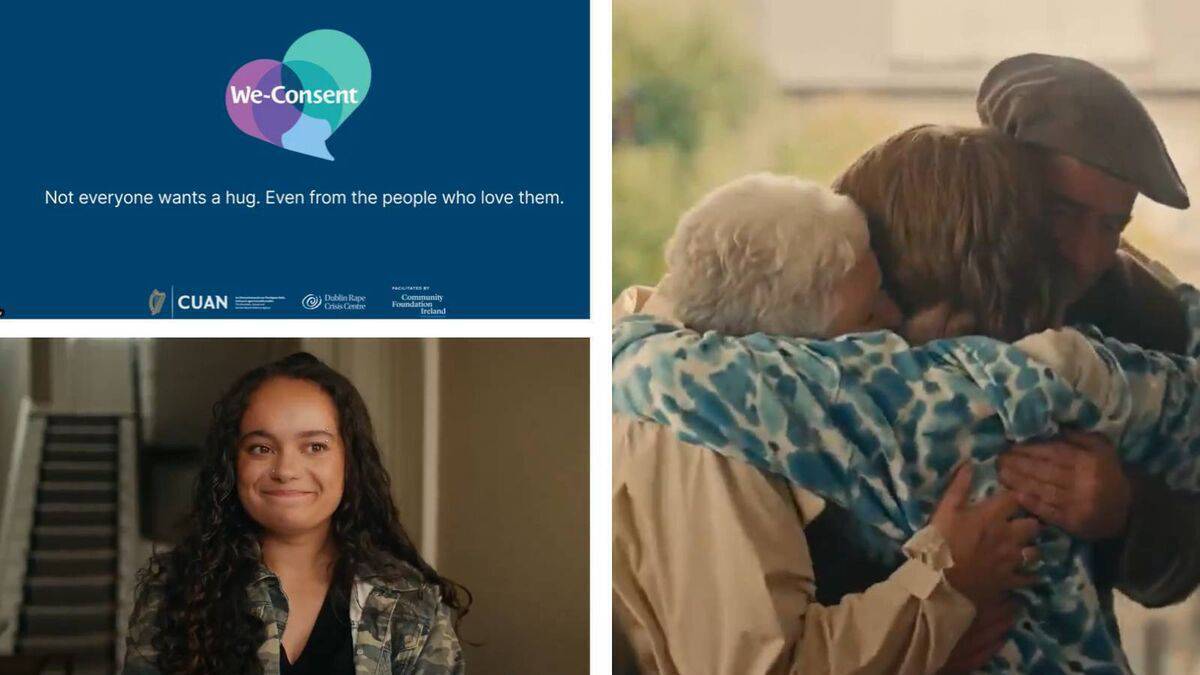
The Dublin Rape Crisis Centre 'WeConsent' advert. In 16 years of seeing first-hand how civil society has been hamstrung, nothing has scared me more than the justice minister’s recent actions against the Dublin Rape Crisis Centre.
For the past 16 years, I’ve continuously been involved in civil society groups in one capacity or another.
The groups have had varying missions, from conducting scientific research to addressing socio-economic issues, but one core challenge is omnipresent — telling the State something it doesn't want to hear puts funding at risk.
While this dynamic has always been an open secret in civil society, few have had the courage to bring public attention to the issue. There are exceptions, for example, activists Frank O'Connor and Jude Sherry have been very open in sharing how they were advised to stop highlighting the scourge of dereliction lest they be blacklisted from public funding.
Others have opted to forgo public funding altogether to avoid compromising on their capacity to speak independently. Nonetheless, a culture of staying silent to protect organisations still prevails.
I recently spoke with a charity worker who addresses domestic abuse about this self-censorship. They highlighted the depressing irony of being unable to speak openly about a power imbalance that perfectly mirrors the power dynamics of coercive control in relationships.
Read More
By keeping charities in a perpetual state of reliance, they are kept compliant. Sadly, these anecdotal cases reflect a broader trend, as documented in a 2024 report from the Irish Council For Civil Liberties.
One question within the survey perfectly encapsulates how this power imbalance promotes self-censorship: When asked “Have you ever curtailed advocacy, campaigning, or communications for fear of risk to your organisation’s funding?”, 63% of respondents answered “Yes”.
This culture of self-censorship doesn’t just breed compliance, it undermines service provision. It introduces inefficiency by preventing service providers from advocating for best practices when those practices run contrary to Government policy.
It foments competition and conflict between potential collaborators, and it even facilitates open abuse of charity workers from State Body representatives.
In one such instance, I was prepared to challenge the abuser but was reminded by a colleague that it wasn’t just my role at stake. If funding was pulled, staff across the organisation could lose their jobs and the critical work wouldn’t get done.
Therein lies the rub. The work done by civil society is almost always addressing a void in state provision. Work that needs to be done in a functioning society. If a charity can’t address that need, it doesn’t go away, it goes unmet.
Charities are not simply Good Samaritans troubleshooting minor bugs in the code of an otherwise functional society. They’re bellwethers for the very health of our State. They are among the first to see warning signs that policies are failing; the first to notice a looming threat. They are sentinels at the gates of our society.
This is what worries me most about our culture of silence. A silenced sentinel is not just ineffective, it is dangerous. It offers a false assurance that we can afford to be less vigilant because others are standing watch.
You have no doubt noticed the irony inherent in me writing about self-censorship, willingly, in the pages of a national broadsheet. I don’t do so lightly. I believe there is a very real possibility that this piece could curtail my future opportunities.
I’m doing it because in 16 years of seeing first-hand how civil society has been hamstrung, nothing has scared me more than the justice minister’s recent actions against the Dublin Rape Crisis Centre.
Whatever challenges speaking out may present for my career, they pale in comparison to the challenges that will face our country if we don’t resist this assault on democratic norms.
I feel the gravity of this violation has been overshadowed by debate about the content of the message that prompted it, so let me restate what happened plainly: The minister for justice silenced a civil society group because their message (in his words) did not reflect the views of government.
At best his actions represent a bumbling breach of democratic norms. At worst political reprisal, from an embattled minister, against an organisation deemed to have been unsupportive of him in the past.
This action has subsequently been supported unequivocally by Government. The censorship of this video on consent has been justified consistently by the assertion that it does not reflect the views of Government.
The natural inference is that Ireland’s understanding of the concept of consent is to be dictated by the State. A State that has overseen prolific clerical abuse, obstetric violence, forced adoption, and countless other violations of bodily autonomy.

The most seismic victories for civil freedoms over the past 30 years have been won against State positions that violated consent. I can’t imagine a better example to highlight what is at stake than allowing Irish society’s conversations around consent to be subjected to Government approval.
The time for compliant silence is over. It’s time to sound the alarm.

CONNECT WITH US TODAY



Be the first to know the latest news and updates