Stripe Young Scientist winner spends summer developing blood heaemorrhage detection device
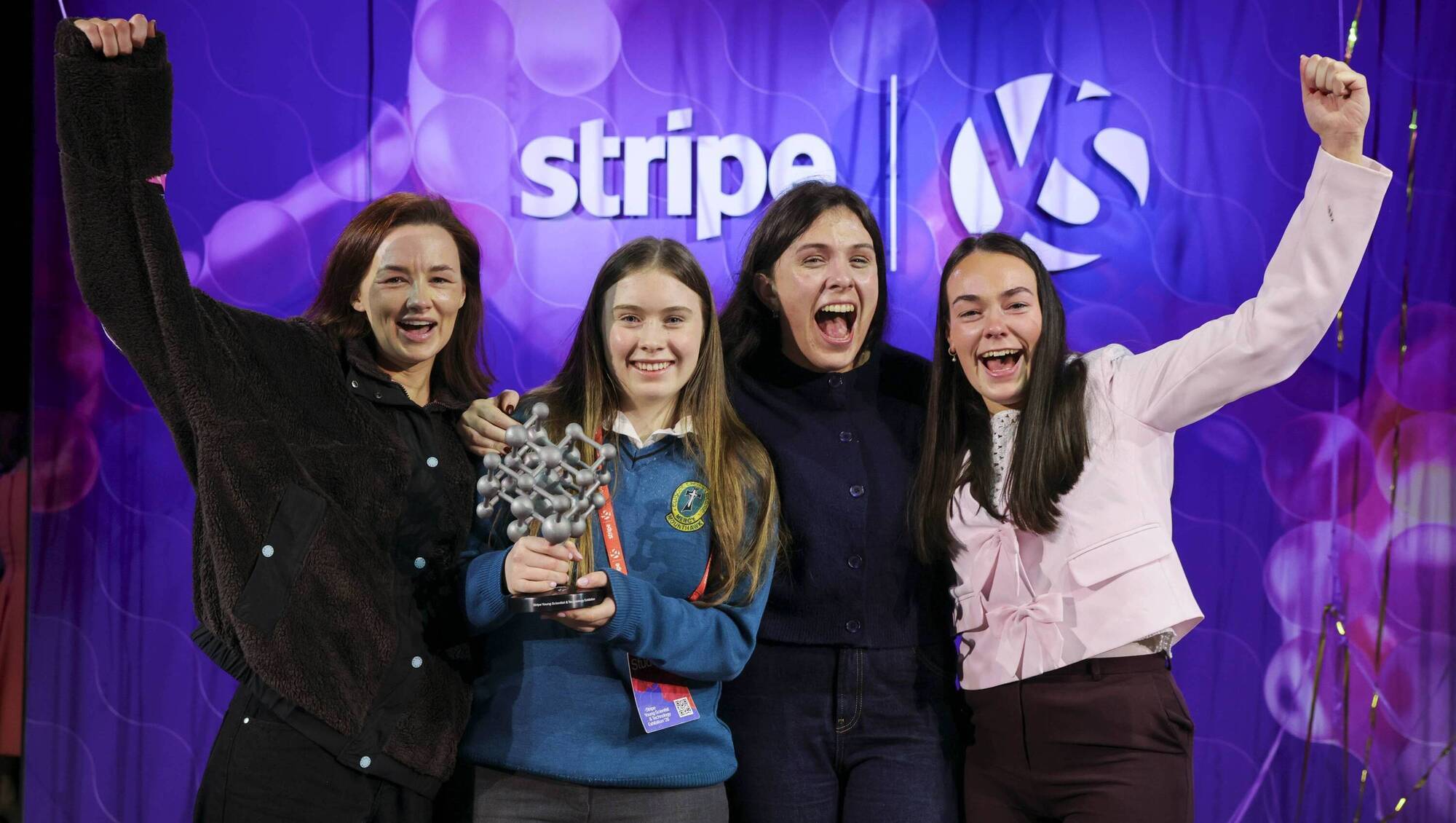
Teachers Eimer Nolan, Roisin Riordan and Siobhan O'Dononhoe with Aoibheann Daly after winning the 2026 Stripe Young Scientist and Technology Exhibition, for her project 'GlioScope: Multi-task Deep Learning and Causal AI for Glioma & Glioblastoma Profiling'. File picture: Chris Bellew/Fennell Photography
Aoibheann Daly, the overall prize winner at this year’s Stripe Young Scientist & Technology Exhibition, is just finishing up at the Patch summer programme when she speaks to the
Together with her team at the full-time, seven week accelerator programme, she has spent the summer developing a device for the early detection of post-partum haemorrhage which she says is "one of the leading causes of maternal death, especially in lower resource areas”.
“I think it’s one woman every 12 minutes dies of it, and its most common during c-sections. We developed a device to detect the haemoglobin levels of the fluids flowing through the suction tube that they use when they are sucking up the blood, the amniotic fluid, the saline, during the surgery," she said.
“You clip the device on to the tube and its able to tell you the amount of blood that’s been lost. It tells you the rate and volume of blood loss, and its low cost, so it can be easily used in lower-resource areas.”
From a young age, the student at Mercy Secondary School Mounthawk in Tralee, Co Kerry has been interested in how biomedical engineering can be used to improve the chances of early detection when it comes to serious and often fatal medical conditions.
‘Glioscope’, her winning entry to the 2026 Stripe Young Scientist & Technology Exhibition focused on improving the treatment of adult diffused gliomas, brain tumours that have spread into surrounding tissue, making them difficult to remove.
Read More
“To treat them effectively, you have to know the genetics, the grade, but the only way to find that out is through an invasive biopsy which take weeks to come back,” she said.
With a survival of usually around 12 months, these are weeks that many patients do not have.
“My solution was basically to use machine learning models to detect all the relevant information from MRI scans so that doctors could start treatment earlier and potentially reduce the use of biopsies in the future.”
Her early interest in the topic was sparked as a first year student while attending the Centre for Talented Youth Ireland (CTYI) at Dublin City University (DCU).
“I spent three weeks studying medicine. It was really interesting, and we came across brain tumours in it. I suppose it kind of struck me at the time how low the survival rate [for brain tumours] was. At the same time, I had read about a model in MIT called Sybil. Its able to predict lung cancer up to five years in advance. My tiny little brain was blown, and I wondered if there was any way I could combine the two of them.
“There are a lot of US sources that have publicly available MRI data and I coded a machine learning model that could analyse them.”
She also spent time looking through other scientific papers. “The structure they use, and how they write, analysing them to see if I could present my work in that way.”
2026 wasn't the first time she entered the competition. “I actually entered Young Scientist in first year with a recycling project but I didn’t get in," she said.
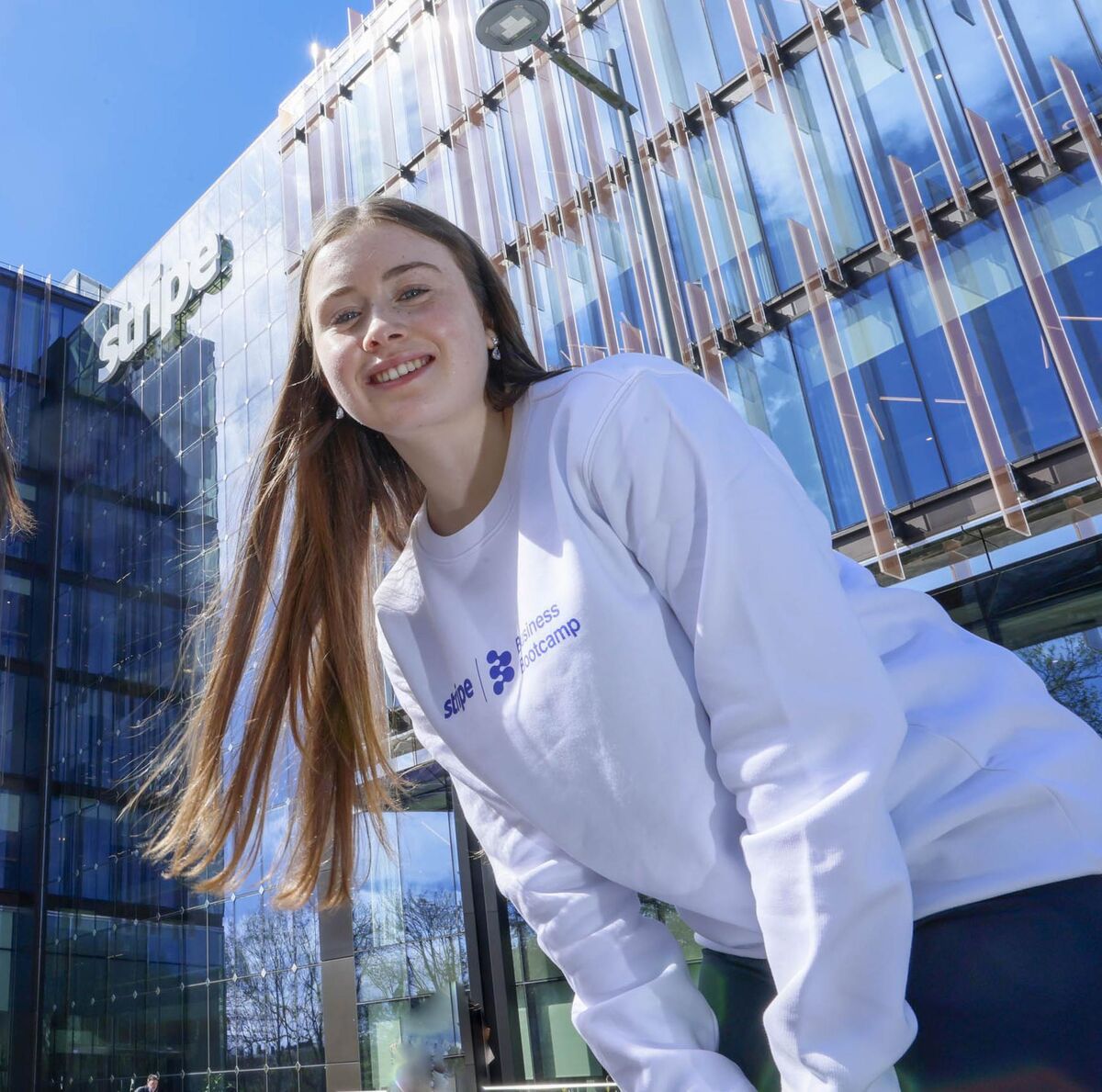
Having been "just happy to be there" at the YSTE in January, 22 judges visited her over the course of the exhibition. "You are supposed to get three,” she said. “So I thought ‘ok, so that might mean something’ but at the same time, you don’t want to get your hopes up too early.”
Winning the overall competition was "bit of a shock".
"It was a bit overwhelming walking up, and seeing all the faces in the crowd and there was lights shining on you, but obviously it was amazing and I was so happy I won," Aoibheann said. "But a bit of a shock at the start.
"I've had a really amazing year, I've gotten so many opportunities from it."
This has included travelling to San Fransisco, where she attended a lecture at the world renowned Stanford University, visited the Arc Institute in Palo Alto, and showcased her project at YSTE sponsor Stripe's headquarters, at their Stripe Sessions event.
For any students considering entering this year's competition, her advice is simple: "I think just go for it. Its such a good experience, you lose nothing from applying. You’ll learn so much from doing the actual project. From being there, you’ll meet so many new people, you’ll have so much craic. I think just go for it, and just have a go.”
Applications are now open for the 2027 exhibition, which includes a top prize of €10,000 for the student, or students, who take home the Young Scientist & Technologist of the Year award. The winner of the competition will also go on to represent Ireland at the European Union Contest for Young Scientists.
To enter, students must complete an online application and submit a one-page project proposal by September 25, 2026. Finalists will be announced on October 23, 2026, with selected projects showcased at the RDS from January 6 to 9, 2027.
The 2027 Stripe YSTE will award prizes across five categories: Biological and ecological science; chemical, physical and mathematical science; health and wellbeing; social and behavioural science; and technology.
- Jess Casey is Education Correspondent.
CONNECT WITH US TODAY



Be the first to know the latest news and updates