Karol Balfe: Ireland cannot tackle climate change while billions remain invested in fossil fuels
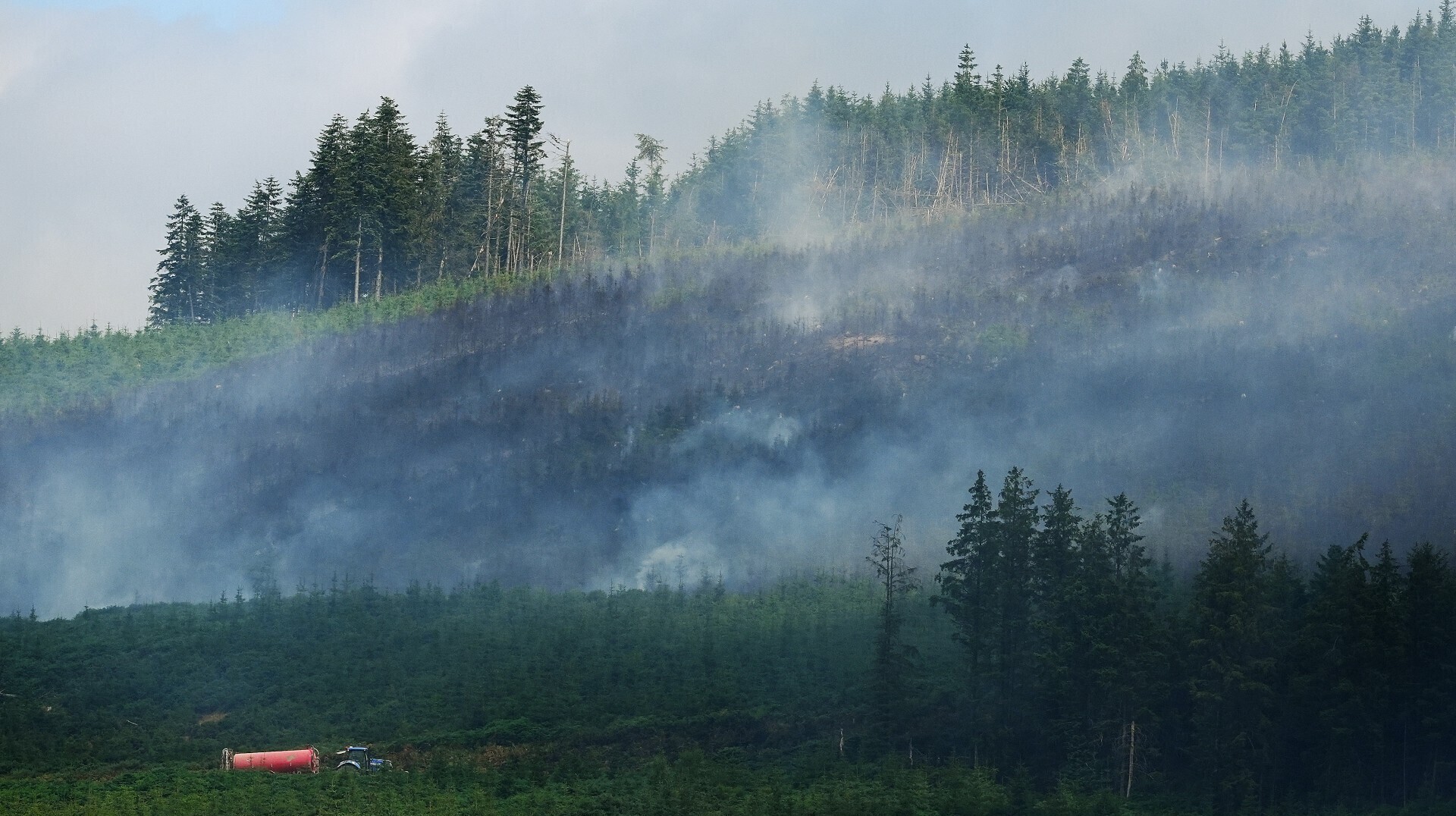
Farmers transport tankers of water in an effort to tackle the major wildfire at Slievenamon in Co Tipperary last month. Ireland’s reminder about the impacts of climate change is seasonal, hitting home only when there is an extreme weather event. File photo: Brian Lawless/PA
This summer, the reality of climate change hit home. Communities in Tipperary are still reeling following the fires on Slievenamon. Irish holiday makers on the continent had to evacuate campsites that were ablaze. Europe is now the fastest warming continent, and this is only going to get worse if we don’t face up to what’s driving it.
Ireland’s reminder about the impacts of climate change is seasonal, hitting home only when there is an extreme weather event. But it is a constant, ongoing threat for communities in the Global South. They face unpredictable seasons, rising sea levels and erratic rainfall, which contribute to floods, droughts and crop failures.
Millions of people, already struggling to survive, are finding it even more difficult to grow food, get clean water and access shelter. The poorer people are, the harder it is to recover from failed harvests, destroyed homes, water scarcity and deepening health crises.
Climate change affects women and girls most acutely and worsens already entrenched gender inequality. In many contexts, climate-related disasters like floods or drought result in household livelihood insecurities which lead to girls being taken out of school.
Read More
Girls may then help to manage the household, or are moved into domestic work, which exposes them to risk. When parents struggle to feed their children, some feel they have no choice but to give their daughters away for early marriage, often resulting in early pregnancy.
And when the worst effects of climate change make work on the land impossible, women are often less able than men to turn to alternative forms of work. Many countries worldwide have laws impeding women’s economic opportunities, such as those which bar women from factory jobs, working at night, or getting a job without permission from their husband.
This is the human impact of climate change, it is felt in Ireland, it is felt acutely in the Global South. Lives destroyed, futures limited and prolonged suffering.
Yet, as the climate crisis escalates, fossil fuels and industrial agriculture — the two industries that are the largest contributors to climate change — continue to expand and thrive.
Fossil fuels — comprising coal, oil, and gas — are responsible for over 75% of global greenhouse gas emissions and almost 90% of total carbon dioxide emissions. They are by far the leading cause of climate change.
But they remain incredibly profitable, as companies and investors seek to extract every last drop of value from an imploding system. The 2026 Banking on Climate Chaos report shows that a decade past the Paris Agreement, overall bank financing for fossil fuels (both lending and underwriting) continues to rise.
Notwithstanding some notable improvements to move to financing renewable energy, the top 65 banks committed $906 billion to fossil fuel companies in 2025, up nearly 8% from 2024. $508 billion of this finance went to companies expanding oil, gas, and/or coal developments, pipeline and LNG operations, or new downstream fossil power projects. This represents a 27% jump in expansion finance in a single year.
ActionAid research in 2023 looked at financial flows from banks to the Global South for fossil fuels for the seven-year period from the Paris Agreement. This research found that banks have provided an annual average of 20 times more financing to fossil fuels and agriculture activities in the Global South than Global North governments have provided as climate finance to countries on the front lines of the climate crisis.
In Ireland, we have our own particular problem. Further research by ActionAid Ireland and Trocaire revealed that as of June 2024, Irish-based subsidiaries of investment companies held €31.76 billion ($34 billion) in fossil fuel investments.
This puts Ireland 14th globally in terms of fossil fuel investment by manager location, alongside economies that have substantial fossil fuel industries.
With Switzerland, Ireland is one of the only two jurisdictions with such significant fossil fuel investments without having a major fossil fuel industry of its own, putting Ireland ahead of fossil fuel producers like Brazil, Russia and Kuwait.
This means that Ireland plays an outsized role in facilitating investments into fossil fuel companies.
In 2023, the investments made into fossil fuel companies by investment managers based in Ireland generated an estimated 72.5 million tons of COe.
This is more than the COe emissions for the entire country of Ireland, and more than 10 times that generated by Sierra Leone.
The legally binding Paris Agreement on climate change explicitly acknowledges the importance of tackling private finance. Its three overarching goals are: keeping below 1.5C of warming; increasing adaptation; and making finance flows consistent with low emissions and resilience.
This gives a clear mandate for action. Both tax reform and corporate regulation are needed to tackle financial flows. In Ireland and at EU level “polluter pays’ taxes are lacking, and regulation of the financial sector remains weak and fragmented.
While EU regulation exists, it is designed more to nudge investors toward more sustainable investment practices by increasing transparency and reporting levels than to enforce strict standards. And it is moving in the wrong direction.
The recently passed EU Corporate Sustainability Due Diligence Directive excluded investments and now the EU Commission’s Omnibus legislative proposal has undone the limited gains made on climate plans, as well as blocking future attempts for stronger action at national level.
The climate crisis is here and with us now. It is causing disproportionate harm in the Global South, and now it is coming hard and fast to Europe. In Ireland we are feeling this.
This is just one country of many.
We need to re-imagine our economies to a just transition of food and energy systems, based on real and systemic transformations that are anchored in human rights, and that put people, not corporate profits, at the centre.
Ensuring access to energy is crucial to breaking out of poverty. Decentralised, small scale renewable energy — particularly solar, wind and micro-hydro — can and must be scaled up to replace fossil fuels and address energy poverty, while avoiding the climate-devastating emissions associated with fossil fuels.
A just transition is needed. This means valuing the universal provision of public services, which will directly benefit women by reducing their disproportionate role in unpaid care work.
It means challenging the role in climate change of big oil and gas companies whose main drive is profit. It means redistributing value and power across global supply chains. It means an economy and flow of money that is not harmful but rather one that benefits all.
Across the world, we are missing the political vision and drive to bring this to life. Unless we confront the economic model that is driving this, we are all doomed. And we don’t have to be — a greener, safer and more equal future is ours to claim.


CLIMATE & SUSTAINABILITY HUB
CONNECT WITH US TODAY



Be the first to know the latest news and updates